
Puppy Guide
Goldendoodle Puppy Care: The Complete Australian Guide (2026)

Jan
Your goldendoodle puppy will become one of the most affectionate, intelligent dogs you’ll ever own. They’ll also require more grooming than you expect, more exercise than you planned, and more patience than the breeder mentioned.
This guide covers everything Australian goldendoodle owners need to know — from the first week home through the challenging adolescent phase. We’ve groomed thousands of goldendoodles at WoofSpark, and we’ve seen what works and what goes wrong.
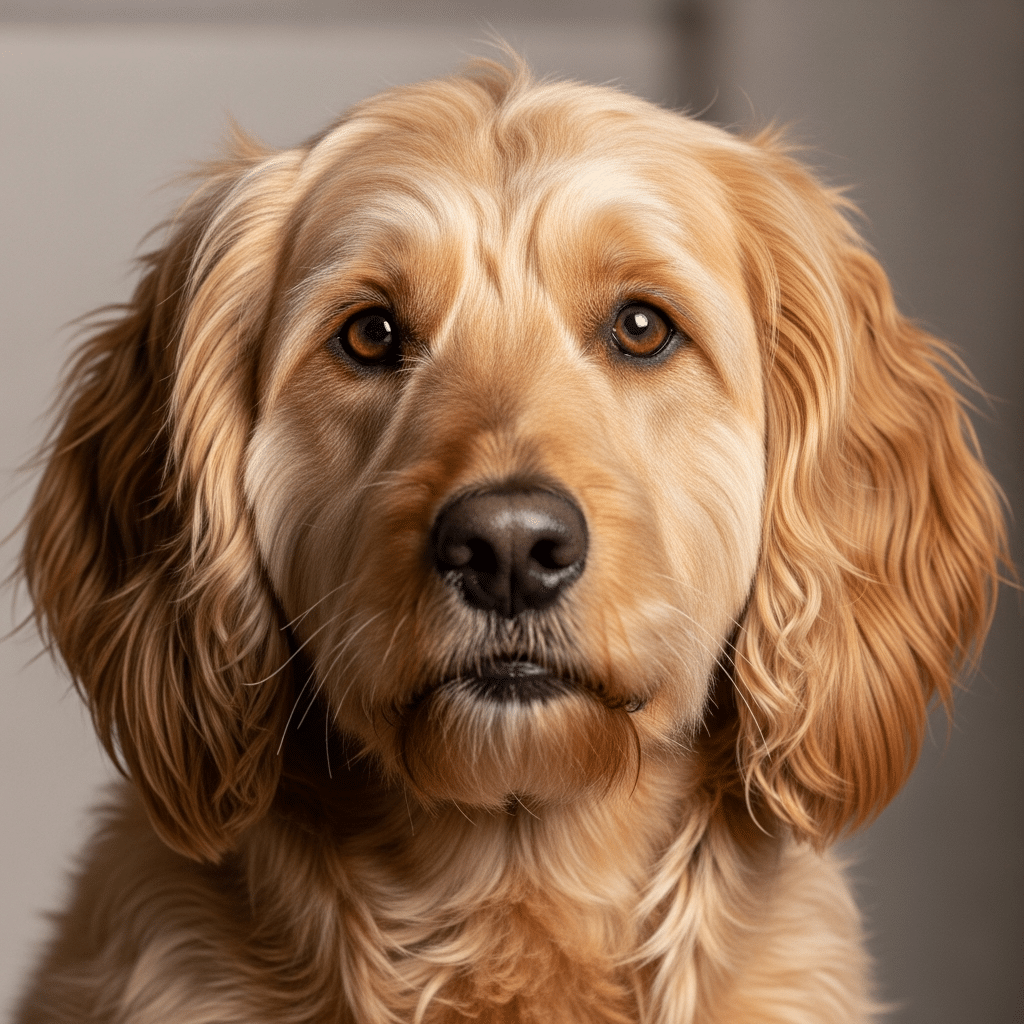
If you’re researching before getting a goldendoodle puppy, or you’ve just brought one home and you’re already overwhelmed, you’re in the right place.
What to Expect With a Goldendoodle Puppy
The Goldendoodle Personality
Goldendoodles inherit traits from both golden retrievers and poodles — generally the best of both breeds. Here’s what that looks like in practice:
- Highly social: They want to be with you. All the time. This sounds cute until you need to leave the house.
- Intelligent and trainable: Both parent breeds rank in the top 5 for canine intelligence. Your goldendoodle will learn quickly — good habits and bad ones.
- Energetic: More active than many owners anticipate, especially in the first two years.
- Eager to please: Makes training easier, but they’re sensitive to harsh corrections.
- Mouthy as puppies: Those golden retriever genes show up as constant mouthing and chewing. This is normal but needs management.
Size Variations
Goldendoodles come in three size categories, determined by the poodle parent:
- Standard: 20-30+ kg, 50-65 cm tall. The most common size in Australia.
- Medium/Moyen: 15-20 kg, 40-50 cm tall. Growing in popularity.
- Miniature: 7-15 kg, 35-45 cm tall. Bred from miniature poodles.
Size matters for grooming costs (larger dogs cost more), exercise needs (standards need more space and activity), and living arrangements. Ask your breeder about expected adult size based on the parent dogs.
Coat Types and What They Mean for You
Your goldendoodle’s coat determines how much grooming work you’re signing up for:
Curly/Wool Coat: Looks most poodle-like. Minimal shedding, maximum maintenance. Mats within 3-4 days without grooming brushes and toolsing. Needs our professional grooming services every 4-6 weeks.
Wavy/Fleece Coat: The most common type. Moderate shedding, moderate maintenance. Mats within 5-7 days. Professional grooming every 6-8 weeks.
Straight/Hair Coat: More golden retriever-like. Higher shedding, easier maintenance. Professional grooming every 8-10 weeks.
The reality check: You won’t know your puppy’s adult coat type until around 6-12 months when the coat changes. That fluffy, easy puppy coat? It gets replaced with the adult coat, and that’s when grooming challenges begin.
Essential Goldendoodle Puppy Care
Grooming Requirements
This is where most new goldendoodle owners get caught off guard. These dogs need significant grooming maintenance.
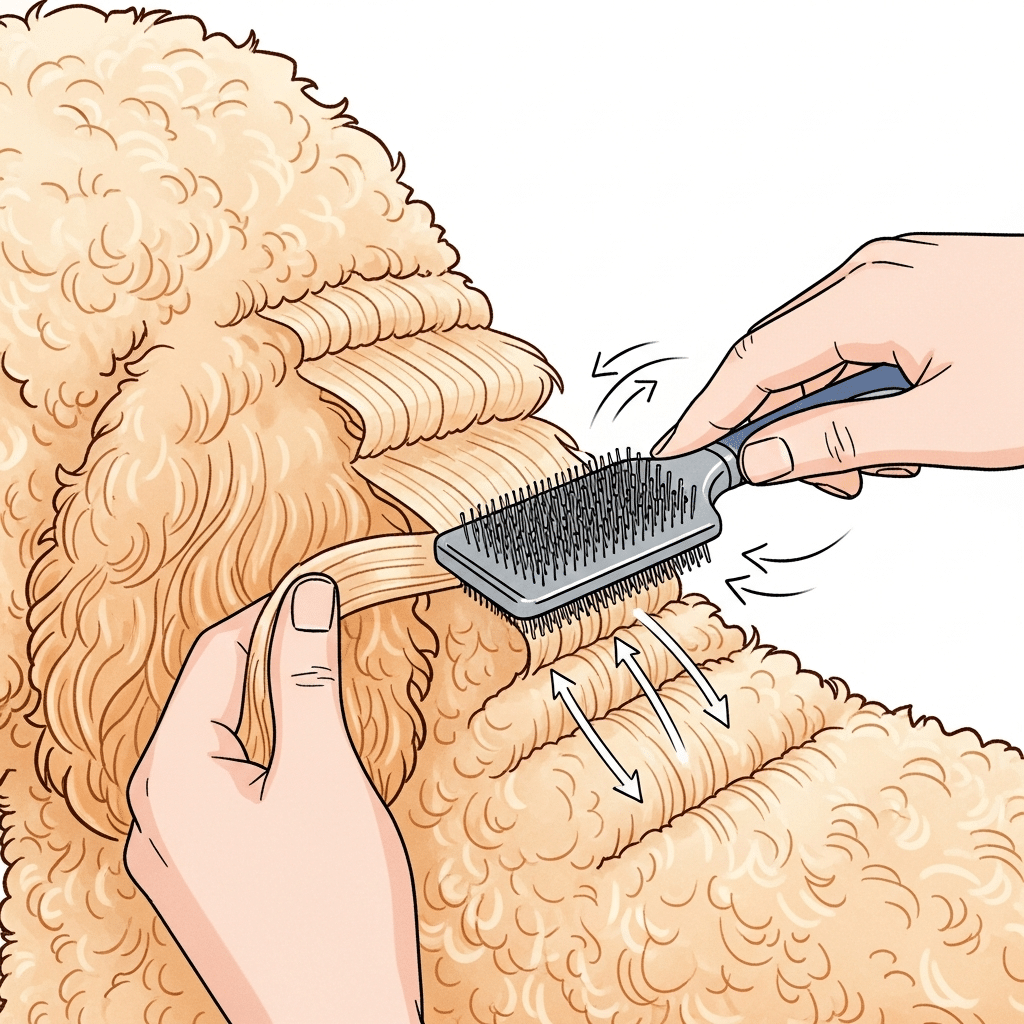
Daily brushing (5 minutes minimum):
- Use a slicker brush and steel comb
- Always spray with detangler first — never brush dry
- Focus on mat-prone areas: behind ears, armpits, collar area, groin
- Brush to the skin, not just the surface
Professional grooming schedule:
- First puppy groom: 12-16 weeks old (after second vaccination)
- Ongoing: Every 4-8 weeks depending on coat type
- Budget $80-150 per groom for a standard goldendoodle
The coat change warning: Around 6-12 months, your goldendoodle’s puppy coat transitions to adult coat. The old coat sheds internally while new coat grows in. If you’re not brushing thoroughly during this period, severe matting happens fast. We see goldendoodles come in with completely pelted coats during this stage. The fix is a short clip — sometimes right down to the skin.
Build the daily brushing habit now, before you need it.
Exercise Needs
Goldendoodles are athletic dogs that need real exercise — not just a quick walk around the block.
Puppy exercise (under 12 months):
- Rule of thumb: 5 minutes of exercise per month of age, twice daily
- A 4-month-old puppy: 20 minutes, twice daily
- Focus on play and short walks, not forced jogging or long hikes
- Avoid repetitive high-impact activity while bones are developing
Adult exercise (12+ months):
- Minimum 60-90 minutes daily of active exercise
- Swimming is excellent (and goldendoodles usually love it)
- Fetch, running, hiking, dog sports all work well
- Mental stimulation is as important as physical exercise
Mental exercise matters: An under-stimulated goldendoodle becomes a destructive goldendoodle. Include puzzle feeders, training sessions, nose work, and interactive play. A tired brain is as valuable as tired legs.
Health Considerations
Goldendoodles are generally healthy, but they can inherit conditions from both parent breeds.
Common health concerns:
- Hip and elbow dysplasia: Request health clearances from breeders
- Eye conditions: Progressive retinal atrophy, cataracts
- Ear infections: Those floppy ears trap moisture — check and clean weekly
- Skin allergies: Common in Australian goldendoodles, often triggered by environmental factors
- Bloat (gastric torsion): More common in larger dogs — learn the signs
Australian vaccination schedule:
- 6-8 weeks: First C3 vaccination (distemper, hepatitis, parvovirus)
- 10-12 weeks: Second vaccination
- 14-16 weeks: Third vaccination
- 12-15 months: First annual booster
- Kennel cough: Recommended if boarding or attending daycare
Find a vet you trust early. Ask for recommendations from your breeder, groomer, or local dog groups. A good relationship with your vet makes everything easier.
Nutrition Guidelines
Puppy feeding:
- High-quality puppy food formulated for medium-large breeds
- 3-4 meals daily until 4 months, then 2-3 meals until 12 months
- Follow package guidelines but adjust based on body condition
- Avoid overfeeding — chubby puppies are not healthy puppies
Australian brands worth considering: Black Hawk, Advance, Ivory Coat, Ziwi Peak. Premium costs more but often means fewer vet visits for diet-related issues.
Foods to avoid: Grapes, raisins, onions, garlic, chocolate, macadamia nuts, xylitol (artificial sweetener), cooked bones.
Growth rate: Standard goldendoodles typically reach adult size by 12-18 months. Growing too fast can stress developing joints. Your vet can advise on appropriate weight gain.
Common Challenges and Solutions
Puppy Biting and Mouthing
Goldendoodles are notorious for mouthing. Those golden retriever genes make them want to carry and chew everything — including your hands, clothes, and furniture.
What works:
- Redirect to appropriate chew toys immediately
- Yelp and withdraw attention when teeth touch skin
- Provide frozen healthy dog treatss and ice cubes during teething
- Enforce regular nap times — overtired puppies bite more
- Puppy school for proper socialisation with other dogs
What doesn’t work: Punishment, holding mouths closed, scruff shaking. These damage trust and don’t solve the problem.
Mouthing typically decreases significantly by 6-7 months as adult teeth come in. Manage it consistently until then.
Separation Anxiety
Goldendoodles bond closely with their families. Too closely, if you’re not careful.
Prevention (start immediately):
- Practice short absences from day one
- Create a positive association with being alone (treats, puzzle toys)
- Don’t make departures or arrivals dramatic
- Crate training provides a secure space
- Build independence by not allowing constant contact
If anxiety develops:
- Consult a qualified veterinary behaviourist
- Consider medication in severe cases
- Never punish anxious behaviour — it makes it worse
Prevention is far easier than treatment. Invest time early.
House Training
Goldendoodles are generally quick to house train, but it requires consistency.
The formula:
- Take outside after every meal, nap, and play session
- Every 2-3 hours during the day for young puppies
- Praise heavily when they go in the right spot
- Clean accidents with enzymatic cleaner (not ammonia-based)
- Supervise constantly or confine when you can’t watch
Timeline: Most goldendoodles are reliably house trained by 4-6 months, but accidents may happen until 12 months. Patience pays off.
Coat Matting
The number one issue we see at WoofSpark. Matted goldendoodles come in constantly.
Preventing mats:
- Daily brushing (not optional)
- Remove collar and harness at home
- Dry thoroughly after swimming or rain
- Brush before getting wet — water tightens existing tangles
- Increase brushing during coat change (6-12 months)
If you find a mat:
- Small mats: Spray with detangler, wait 2 minutes, work apart with fingers, then brush
- Large mats: See your groomer — attempting removal at home risks cutting skin
- Never cut mats with scissors — we see scissor injuries regularly
Australian-Specific Tips
Managing Heat and Humidity
Australian summers are brutal for goldendoodles. Their coats insulate, but excessive heat is dangerous.
Summer strategies:
- Schedule walks for early morning or evening (before 8am, after 6pm in peak summer)
- Provide access to cool water and shade at all times
- Consider a summer clip — shorter coats help with heat
- Never leave in cars, even for “just a minute”
- Learn the signs of heat stroke: excessive panting, drooling, lethargy, vomiting
- Provide a paddling pool or regular access to swimming
Humidity and coat care: Humid conditions increase matting and hot spots (moist skin infections). Rinse and dry thoroughly after beach visits. Check ears weekly for moisture and infection.
Finding Quality Vets and Groomers
Choosing a vet:
- Ask other goldendoodle owners for recommendations
- Look for Fear Free certified practices
- Visit before you have an emergency
- Check after-hours arrangements
- Consider pet insurance (health cover, not just accident)
Choosing a groomer:
- Ask about experience with doodle breeds specifically
- Request a salon tour to see how dogs are handled
- Look for groomers who explain what they’ll do
- Check reviews, but trust your observations
- Book early — good groomers have wait lists
Australian Product Recommendations
Grooming tools:
- Chris Christensen slicker brushes (available through pet supply stores)
- Steel greyhound comb with wide and fine teeth
- Detangling spray (Plush Puppy, Hydra, or similar quality brand)
Food: Black Hawk, Advance, Ivory Coat, Meals for Mutts — all Australian-made premium options.
Training: Look for positive reinforcement trainers certified through Delta Institute or similar bodies.
Outdoor Safety
Australia has specific hazards goldendoodle owners should know:
Paralysis ticks:
- Found along the eastern seaboard, especially in bushland
- Can be fatal if untreated
- Use tick prevention year-round in tick areas (Nexgard, Bravecto, Simparica)
- Check your dog daily during tick season
- Know the signs: weakness in back legs, change in bark, vomiting
Snakes:
- Keep dogs on lead in bushland during warmer months
- Learn snake avoidance training (available in many areas)
- Know your nearest emergency vet
Grass seeds:
- Common in spring and summer
- Check paws, ears, eyes, and coat after walks
- Can burrow into skin and cause serious problems
- Keep paw hair trimmed short during grass seed season
Heat stress:
- Test pavement with your hand — if it’s too hot for you, it’s too hot for paws
- Carry water on walks
- Know the closest air-conditioned space if you’re out when it heats up unexpectedly
The First Year Timeline
8-12 weeks: Focus on socialisation, house training basics, and crate training. Short play sessions, lots of sleep. Begin handling exercises for future grooming tolerance.
12-16 weeks: Complete vaccinations, start puppy school, first professional groom. Establish daily brushing routine.
4-6 months: Teething peaks — provide appropriate chew outlets. Continue training and socialisation. House training should be mostly reliable.
6-12 months: Coat change begins. Increase grooming vigilance. Adolescence brings testing behaviour — stay consistent with training. Transition to adult food around 10-12 months.
12-18 months: Adult size reached. Maintain exercise and training. Goldendoodles often calm significantly around 2-3 years old.
The Bottom Line
Goldendoodles make wonderful family dogs for the right owners. That means owners who:
- Can commit to daily grooming
- Have time and space for regular exercise
- Are home enough to prevent separation anxiety
- Can budget for professional grooming every 4-8 weeks
- Understand the long-term commitment (12-15 year lifespan)
If that’s you, you’ll have an incredible companion. If you’re questioning any of those points, think carefully before bringing a goldendoodle home.
The work is worth it. We groom goldendoodles all day, and the well-cared-for ones are among the happiest dogs we see.
Frequently Asked Questions
How often should I groom my goldendoodle puppy?
Brush daily for 5 minutes, focusing on mat-prone areas. Professional grooming every 4-8 weeks depending on coat type. Start professional grooming at 12-16 weeks to build positive associations.
Are goldendoodles good for Australian summers?
They can handle Australian heat with proper management: early/late walks, access to water and shade, summer clips, and never being left in cars. Monitor for heat stress signs during extreme weather.
How much exercise does a goldendoodle puppy need?
Use the 5-minute rule: 5 minutes of exercise per month of age, twice daily. A 4-month-old needs about 20 minutes twice daily. Avoid high-impact exercise until skeletal maturity (12-18 months).
When do goldendoodles calm down?
Most goldendoodles remain energetic until 2-3 years old. Adequate exercise and mental stimulation help manage energy levels. An under-exercised goldendoodle of any age will be difficult to live with.
Do goldendoodles shed?
It depends on coat type. Curly/wool coats shed minimally. Wavy coats shed lightly. Straight/hair coats shed moderately. No goldendoodle is truly non-shedding — marketing that claims otherwise is misleading.
What’s the best food for goldendoodle puppies in Australia?
Choose a high-quality puppy food for medium-large breeds. Australian brands like Black Hawk, Advance, and Ivory Coat offer good options. Consult your vet for specific recommendations based on your puppy’s needs.
Need help with your goldendoodle’s grooming? Book an appointment at WoofSpark — we specialise in doodle breeds and can set you up with the right maintenance routine for your dog’s specific coat type.
WoofSpark is a premium dog grooming salon in Australia. We’ve groomed thousands of doodles and we’re happy to share what we’ve learned. Questions? Just ask at your next appointment.
Recommended Grooming Tools
Professional-quality tools to keep your dog’s coat looking great at home.


Your Goldendoodle Deserves to Be Art
We’ve groomed thousands of Goldendoodles — and every single one has a face worth framing. Upload a photo, pick your style, and we’ll turn your dog into a custom portrait. 10 styles. From $29. Ready in minutes.
See Your Goldendoodle as a Portrait