
Uncategorized
Puppy Grooming Guide: Start Your Pup Right
Jan

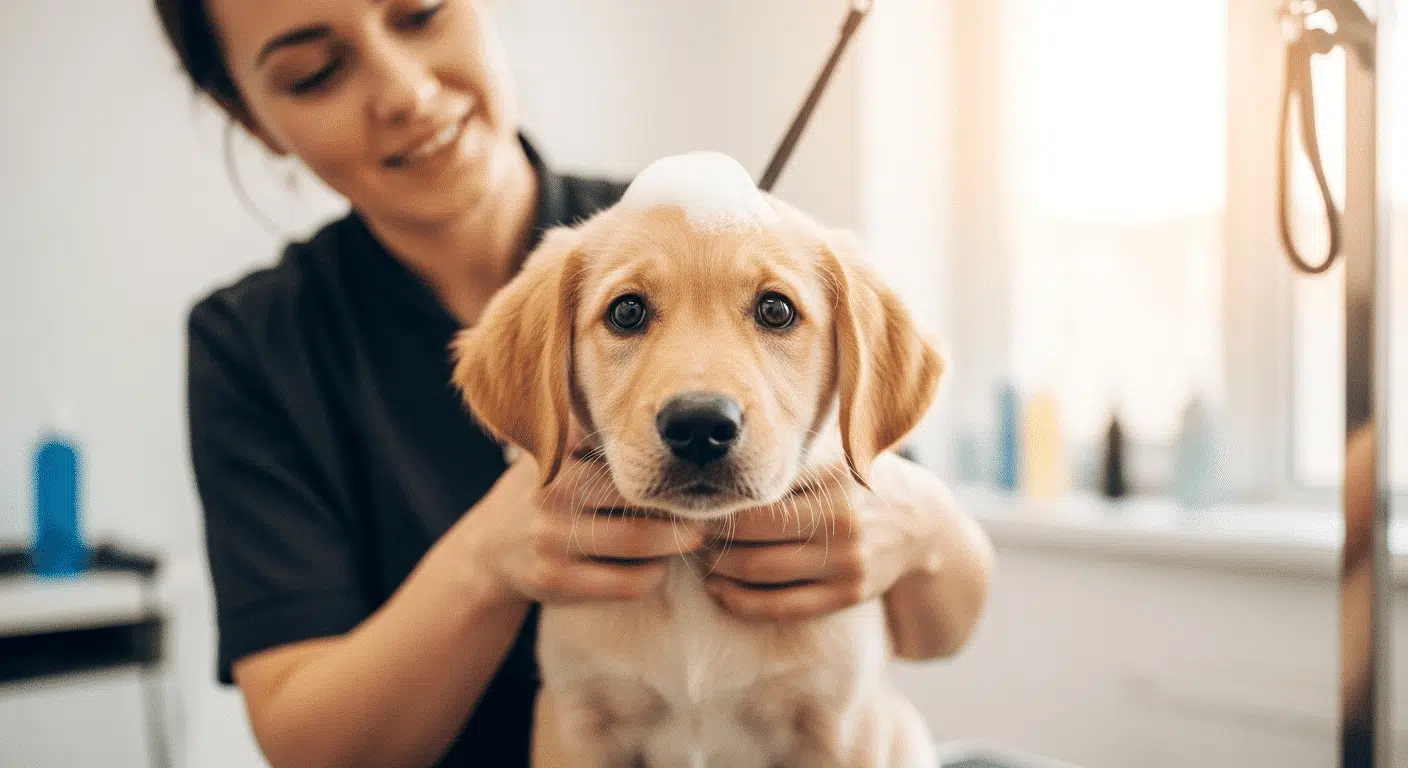
Puppy grooming is one of the best habits to start early. Indeed, puppies who learn grooming young grow into dogs who enjoy it. Specifically, early brushing and bathing creates good habits for life.
In this guide, we share our tips for puppy grooming. Additionally, you’ll learn when to start, what tools you need, and how to make it fun for your pup.
When to Start Puppy Grooming
Generally, you can start gentle grooming as soon as your puppy comes home. Typically, this is around 8-10 weeks old. However, the goal now is to get them used to it, not to be perfect.
First, start with short sessions of just 2-3 minutes. Then, slowly make them longer as your puppy gets used to it. Remember, patience matters more than being thorough.
The First Few Weeks
Initially, focus on gentle handling rather than real grooming. Specifically, touch your puppy’s paws, ears, mouth, and tail often. Consequently, this gets them ready for nail trims and ear cleaning later.
Furthermore, the RSPCA puppy care guide says early positive handling is key for your dog’s wellbeing.
Essential Puppy Grooming Tools
Fortunately, you don’t need many tools to start. Essentially, a few good basics will do the job well.
Your Starter Kit
Soft Bristle Brush
First, choose a brush with soft bristles. Specifically, puppy coats are soft, so avoid harsh brushes at first. Generally, a soft brush or rubber mitt works best for young pups.
Puppy Shampoo
Importantly, always use shampoo made for puppies. Certainly, their skin is more sensitive than adult dogs. Additionally, puppy shampoos are gentle and safe for young skin.
Small Nail Clippers
Ideally, get puppy-sized nail clippers or a small nail file. Obviously, adult tools are too big for tiny puppy nails. Furthermore, short nails from the start prevent problems later.
Treats
Undoubtedly, this is the most important tool! Naturally, treats make every session a good time. Therefore, always have small, tasty treats ready.
Building Good Habits
Essentially, your main goal is to make grooming a good thing. Consequently, your puppy should look forward to it, not fear it.
The Reward System
- Show the tool – First, let your puppy sniff the brush or clippers.
- Give a treat – Next, reward them just for being calm.
- Brief touch – Then, touch them gently with the tool for one second.
- Treat again – Subsequently, reward the calm behaviour.
- Build up slowly – Finally, do a bit more each time over many sessions.
Remember, rushing creates fear. However, patience builds trust. Overall, a few weeks of slow work pays off for years of easy grooming.
Your First Puppy Grooming Session
Typically, your first real session should be short and sweet. Ideally, aim for just 5-10 minutes at most.
Step-by-Step First Session
- Pick the right time – First, choose a moment when your puppy is calm, maybe after play or a nap.
- Set up a good space – Next, use a non-slip mat on a table or floor.
- Start with petting – Then, begin by petting and praising them.
- Try the brush – Subsequently, make a few gentle strokes with the brush.
- End on a high note – Finally, stop while your puppy is still happy and give lots of treats.
Importantly, it’s better to do less and end happy than push too far. Indeed, you can always do more next time.
Brushing Basics
Generally, most puppies need brushing 2-3 times per week. However, this varies by coat type. Essentially, long-haired and curly breeds need more.
Proper Technique
First, always brush in the way the hair grows. Additionally, use gentle pressure. Furthermore, watch their body language and stop if they seem stressed.
Notably, the areas behind ears and under the collar often mat first. Therefore, include these spots early. Consequently, your puppy will get used to having these areas touched.
Bath Time Tips
Initially, puppies don’t need many baths. Typically, once every 4-6 weeks is enough unless they get very dirty. Certainly, too many baths can dry out their skin.
The Bath Process
First, get everything ready before you bring your puppy to the bath. Specifically, have shampoo, towels, and treats within reach. Obviously, you can’t leave a wet puppy alone.
- Warm water only – First, make sure the water is warm, not hot or cold.
- Wet slowly – Then, start from the back and work toward the head.
- Gentle massage – Next, apply shampoo and rub gently.
- Rinse well – Subsequently, remove all the shampoo.
- Dry carefully – Finally, towel dry and keep them warm until fully dry.
Remember, many puppies find baths scary at first. However, with patience and treats, most learn to like bath time. Our groomers can help if baths stay hard.
Common Puppy Grooming Mistakes
Unfortunately, owners sometimes make mistakes that create fear. Therefore, here’s what to avoid:
Mistakes to Avoid
- Rushing – Certainly, this is the most common mistake. Essentially, puppies need time to adjust.
- No rewards – Obviously, without treats, grooming becomes something to endure.
- Waiting too long – Indeed, starting late makes it harder.
- Too much at once – Naturally, long sessions overwhelm puppies. Instead, keep it short.
- Punishing fear – Never scold your puppy for being scared. Instead, go slower and give more treats.
Additionally, the Australian Veterinary Association says to see a pro if your puppy stays scared of grooming.
When to Start Professional Puppy Grooming
Generally, puppies can see a groomer after their shots are done, usually around 12-16 weeks. Importantly, pick a groomer who knows puppies well.
The First Pro Visit
Ideally, book a “puppy intro” visit rather than a full groom. Typically, this includes:
- Gentle handling and meeting new people
- Hearing grooming tool sounds
- A mini bath or brush
- Nail trim if the puppy is calm
- Lots of treats and praise
Furthermore, at WoofSpark, we love puppy intro visits that set your pup up for life.
Final Puppy Grooming Tips
In conclusion, good puppy grooming comes down to patience and positive vibes. Ultimately, the work you do now pays off for years.
Key points:
- First, start early and go slow.
- Additionally, always use treats and praise.
- Furthermore, keep sessions short and fun.
- Indeed, handle paws, ears, and mouth daily.
- Finally, see a groomer after shots are done.
Remember, every puppy is different. Consequently, some learn fast while others need more time. However, with patience, nearly every puppy can learn to enjoy grooming.
Have questions about puppy grooming? Contact us – we love helping new puppy parents.
Skip the Guesswork. Start With the Right Tools.
The Cavoodle Puppy Kit is everything Marine wishes new owners had from the start. The right brush for a doodle coat, salon-grade shampoo, and a voucher for their first professional groom. Three tiers: Essential ($69), Complete ($149), and Premium ($249).
See What’s in the Kit