
Uncategorized
Anxious Doodle Grooming: Calm Session Tips
Jan
Anxious doodle grooming is one of the most common challenges we see at our salon. Indeed, many doodle owners tell us their pup transforms into a trembling, panting mess the moment they spot a brush or hear the dryer.
The good news? Generally, grooming anxiety is manageable with the right approach. Furthermore, most nervous doodles can learn to tolerate – even enjoy – their grooming sessions.
Why Some Doodles Get Anxious About Grooming
First, let’s understand what’s happening. Doodles are sensitive, intelligent dogs who pick up on our emotions quickly.
Additionally, their dense coats mean more handling than many other breeds. Subsequently, negative experiences (even just one) can create lasting anxiety.
Common triggers include:
- Loud dryer noise
- Being restrained on a grooming table
- Having sensitive areas touched (paws, face, rear)
- Unfamiliar environments
- Past painful experiences (matting, tight collar)
Notably, some doodle breeds are more prone to anxiety than others. Specifically, Cavoodles and Labradoodles tend to be more sensitive.
Signs Your Doodle Is Anxious About Grooming
Certainly, recognising anxiety early helps you address it. Watch for these signals during anxious doodle grooming sessions.
Physical signs:
- Panting when not hot
- Trembling or shaking
- Tucked tail
- Ears pinned back
- Whale eye (showing whites of eyes)
- Trying to escape or hide
Behavioural signs:
- Refusing to walk toward the grooming area
- Becoming stiff or frozen
- Excessive yawning or lip licking
- Sudden shedding
- Loss of bladder control (in severe cases)
Importantly, never punish these behaviours. Essentially, your doodle is communicating fear, not misbehaving.
Home Grooming Tips for Anxious Doodles
Fortunately, you can build positive associations at home. Indeed, regular positive experiences reduce anxiety significantly.
Start With Desensitisation
Gradually introduce grooming tools without actually using them. Initially, just leave the brush near your doodle during treat time.
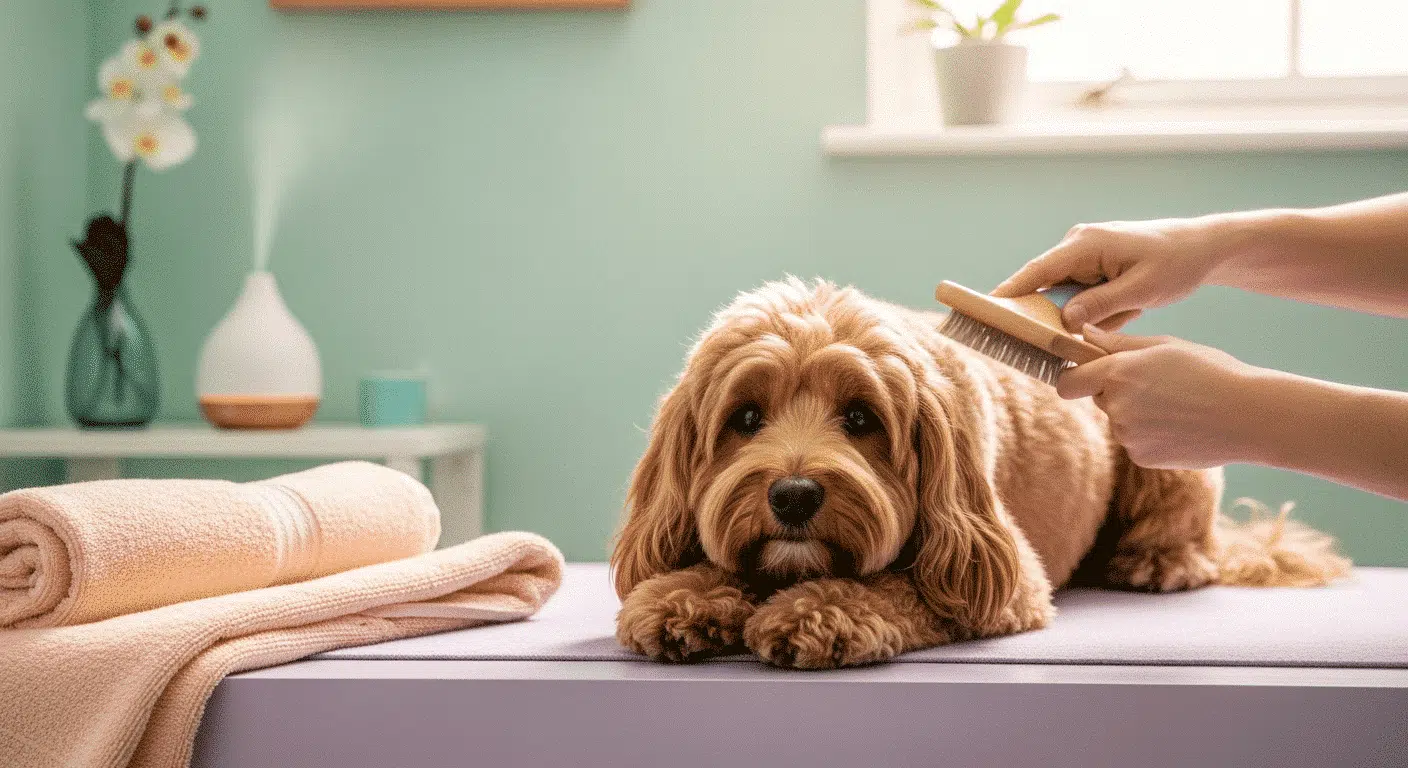
Then, touch them gently with the brush while giving treats. Subsequently, work up to short brushing sessions.
Create a Calm Anxious Doodle Grooming Environment
Choose a quiet room away from distractions. Additionally, use non-slip mats so your doodle feels secure.
Furthermore, keep your own energy calm. Remarkably, doodles sense our stress, so deep breaths help everyone.
Use High-Value Treats
Generally, regular treats don’t cut it for anxious doodle grooming. Instead, use something special your pup only gets during grooming:
- Small pieces of chicken
- Freeze-dried liver
- Cheese cubes
- Lickable treats (Lick Mats work brilliantly)
Ideally, pair every touch with a treat initially. Eventually, you can reduce the frequency.
Keep Sessions Short
Initially, aim for just 2-3 minutes. Importantly, end on a positive note before your doodle becomes stressed.
Naturally, you can extend sessions as your pup relaxes. However, pushing too hard sets back progress.
Focus on Problem Areas Gradually
Typically, paws, face, and rear cause the most anxiety. Subsequently, work on these areas separately.
For paws:
- Touch paw briefly, treat, release
- Hold paw for longer periods
- Touch between toes
- Finally, introduce nail clippers (without clipping)
Remember, this process takes weeks, not days. Undoubtedly, patience pays off.
Professional Anxious Doodle Grooming Tips
When it’s time for a salon visit, preparation makes all the difference. Naturally, professional groomers have strategies too.
Choose the Right Groomer
Importantly, not all salons are equipped for anxious doodles. Look for groomers who:
- Offer quiet times or private sessions
- Use fear-free techniques
- Allow breaks during grooming
- Never force or rush anxious dogs
At WoofSpark, we tailor our approach to each dog’s comfort level. Indeed, some of our most anxious clients are now relaxed regulars. Learn more about our grooming services.
Consider Calming Products
Several products can help with anxious doodle grooming. Specifically, these work best when started days before the appointment:
- Adaptil spray or collar – Dog appeasing pheromones
- Calming supplements – L-theanine, chamomile, valerian
- Thunder shirts – Gentle pressure reduces anxiety
However, always consult your vet before using supplements. Additionally, start with lower doses to check for reactions.
Book Strategically
Generally, quieter times reduce stress. Furthermore, shorter appointments work better initially.
Ask about:
- First appointments of the day
- Days with fewer dogs booked
- Express groom options (basic tidy-up only)
What to Do Before the Appointment
Subsequently, tire your doodle with a walk beforehand. Additionally, avoid big meals but do offer a small snack.
Importantly, stay calm during drop-off. Notably, long, emotional goodbyes increase anxiety. Instead, a quick, cheerful handover works best.
When Anxious Doodle Grooming Needs Professional Help
Sometimes, home techniques aren’t enough. Certainly, seek professional help if your doodle:
- Shows aggression during grooming
- Has panic attacks
- Cannot be groomed safely
- Shows anxiety in multiple situations
Options include:
- Veterinary behaviourist consultation
- Medication-assisted grooming (vet-prescribed)
- Sedation grooming (for severe cases)
- Working with a certified dog trainer
According to the RSPCA, professional intervention is worthwhile when anxiety affects quality of life.
Building Long-Term Anxious Doodle Grooming Confidence
Ultimately, the goal is a doodle who tolerates grooming calmly. Remarkably, this is achievable for most dogs.
Keys to success:
- Consistency – regular short sessions beat occasional long ones
- Patience – progress takes months, not days
- Positive association – treats, praise, calm energy
- Professional support – groomers and vets who understand anxiety
The Australian Veterinary Association recommends early positive grooming experiences for all puppies.
Common Anxious Doodle Grooming Questions
Q: Will my doodle ever enjoy grooming?
Realistically, some dogs learn to tolerate rather than enjoy it. However, many do become relaxed with time.
Q: Should I stay during professional grooming?
Generally, no. Surprisingly, most dogs behave better without their owners present. The owner’s anxiety often increases the dog’s stress.
Q: How long does it take to reduce anxiety?
Typically, noticeable improvement takes 4-8 weeks of consistent training. Subsequently, continued progress happens over months.
Q: Is sedation safe for grooming?
Indeed, when prescribed by a vet, sedation can be a humane option for severely anxious dogs. Importantly, this allows grooming to happen without trauma.
Your Next Steps for Anxious Doodle Grooming
Indeed, helping an anxious doodle takes time and patience. Furthermore, every small step forward is worth celebrating.
Start with daily handling at home. Additionally, use high-value treats consistently. Gradually, your doodle will learn that grooming isn’t scary.
If you need support, our experienced groomers are here to help. Book a consultation to discuss your doodle’s specific needs, or contact us with any questions.
Related Reading
Continue exploring our grooming guides:
- Doodle Summer Grooming: Heat Safety Guide
- Doodle Anxiety: How to Help Anxious Dogs
- How to Keep Your Dog Calm During Grooming: Tips from Professional Groomers
Ready to book a professional grooming session? Book your appointment or view our services.