
Puppy Guide
Pin Brush vs Slicker Brush: Doodle Grooming
Jan
Pin brush vs slicker—which one belongs in your grooming kit? Indeed, we get this question almost daily from doodle owners. Fortunately, the answer is clear once you understand what each brush does.
In this guide, we’ll settle the pin brush vs slicker debate definitively. Additionally, you’ll learn which brush is essential and which is just nice to have.
Pin Brush vs Slicker: Quick Verdict
Here’s the pin brush vs slicker comparison in brief:
- Best for detangling: Slicker brush (essential)
- Best for finishing: Pin brush (optional)
- Best for curly coats: Slicker brush
- Best for straight coats: Pin brush
Importantly, if you only buy one brush, make it a slicker. Therefore, prioritize accordingly.
Understanding Pin Brush vs Slicker Differences
The pin brush vs slicker comparison starts with understanding each tool’s design and purpose.
What Is a Pin Brush?
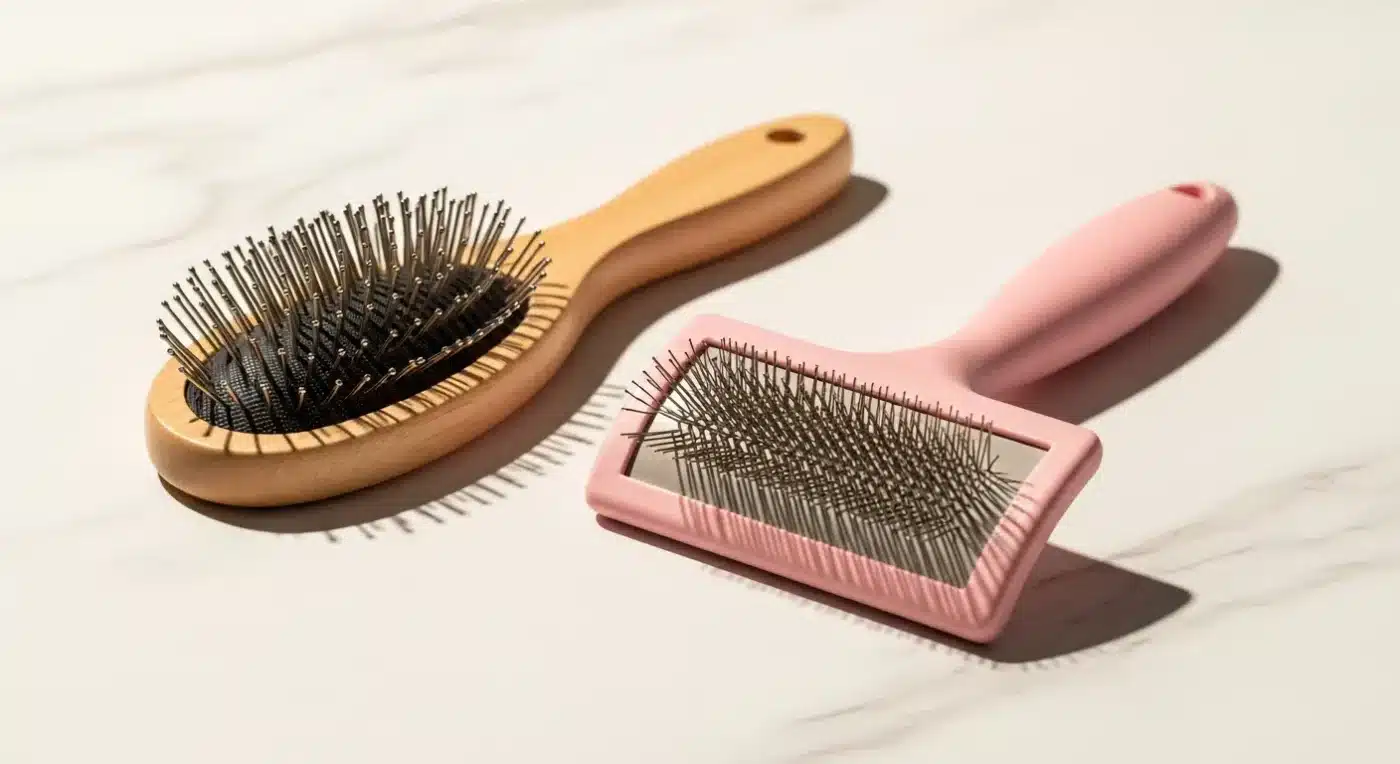
A pin brush features widely-spaced pins with rounded tips on a cushioned base. Specifically, it glides through straight and wavy coats smoothly. Furthermore, it’s gentle and great for finishing work.
Pin brushes excel at:
- Smoothing already-brushed coats
- Adding shine and fluff
- Gentle daily maintenance
- Working through straight, silky fur
What Is a Slicker Brush?
A slicker brush has densely-packed fine wire pins on a flat or curved base. Consequently, it penetrates deep into the coat. Additionally, it removes tangles that pin brushes simply glide over.
Slicker brushes excel at:
- Removing tangles and small mats
- Reaching the undercoat
- Preventing matting
- Working through curly and wavy coats
Pin Brush vs Slicker: Why Slicker Wins for Doodles
In the pin brush vs slicker debate, slickers are essential for doodles. Indeed, here’s why professional groomers agree:
Doodle coats tangle easily. Specifically, the curly or wavy texture creates knots that pin brushes miss entirely. Furthermore, missed tangles become mats that require professional removal.
At our salon, we see dogs where owners used only pin brushes. Subsequently, these dogs often need extensive dematting. Therefore, we always recommend slicker brushes as the primary tool.
When to Use Each Brush
Understanding when each tool shines helps you master the pin brush vs slicker choice.
Reach for your slicker brush when:
- Starting your grooming session
- Working through any tangles
- Grooming curly or wavy coats
- Your dog hasn’t been brushed recently
Reach for your pin brush when:
- Finishing an already-detangled coat
- Adding final fluff and shine
- Quick touch-ups on straight coats
- Your dog has very sensitive skin
Professional Pin Brush vs Slicker Technique
How you use these brushes matters as much as which you choose. Indeed, proper technique prevents discomfort and skin damage.
Slicker brush technique:
- Work in sections from bottom to top
- Use gentle, short strokes
- Brush in the direction of hair growth
- Don’t press too hard against the skin
Pin brush technique:
- Use long, flowing strokes
- Follow the coat’s natural direction
- Let the pins glide through
- Use for finishing only
According to RSPCA grooming guidelines, regular brushing prevents painful matting.
Building Your Grooming Kit
Now that you understand pin brush vs slicker, here’s how to build your kit:
Essential (buy first):
- Quality slicker brush
- Steel comb for mat detection
Optional (add later):
- Pin brush for finishing
- Detangling spray
Our professional grooming services include detailed brushing. Furthermore, we can demonstrate proper technique during your visit.
The Bottom Line: Pin Brush vs Slicker
The pin brush vs slicker debate has a clear winner for doodles: the slicker brush. Indeed, it’s the tool that prevents matting and keeps coats healthy. Remember, pin brushes are nice but slickers are necessary.
Questions about grooming your doodle? Contact WoofSpark or book an appointment. We’ll show you exactly which tools your dog needs.