
Puppy Guide
Cavoodle Coat Types: Fleece, Wool & Hair
Feb
One of the most common questions we hear from new Cavoodle owners is:
“What type of coat does my puppy have?”
It’s an important question. The answer determines your grooming
routine, how often you’ll need professional grooming, and what
maintenance products to buy. Get it wrong, and you’re set up for matting
disasters and unexpected shave-downs.
After grooming over 450 Cavoodles at WoofSpark, we’ve seen every coat
variation possible. This guide explains the three main coat types, how
to identify yours, and what each one needs.
The Three Cavoodle Coat
Types
Cavoodles can have one of three distinct coat types, inherited in
varying degrees from their Cavalier and Poodle parents.
1. Fleece Coat
The most common Cavoodle coat type.
Appearance: – Soft, silky texture – Loose waves or
gentle curls – Flows and moves naturally – Often described as “teddy
bear” soft
Shedding: Very low. You might find the occasional
hair but nothing significant.
Feel: Like stroking silk. Soft, smooth, with a
slight wave.
Why it’s popular: The fleece coat is often
considered the “ideal” Cavoodle coat—low shedding with manageable
grooming requirements. It’s what most people picture when they think of
a Cavoodle.
Grooming requirements: – Brush thoroughly every 2-3
days – Professional groom every 6-8 weeks – Mats can form but are
manageable with regular brushing – Easier to maintain longer styles
2. Wool Coat
The Poodle-like coat.
Appearance: – Tight, springy curls – Dense and thick
texture – Doesn’t flow or move much – More “poodle” look than “cavoodle”
look
Shedding: Almost none. This is the most
“hypoallergenic” coat type.
Feel: Springy and dense. The curls bounce back when
pressed.
Why people choose it: Owners with allergies often
seek out wool-coated Cavoodles for their minimal shedding.
Grooming requirements: – Brush daily—this coat mats
easily – Professional groom every 4-6 weeks – Requires the most
maintenance of all coat types – Difficult to keep in long styles – Mats
form quickly and hide under the surface
The reality check: Wool coats are beautiful but high
maintenance. We see more wool-coated Cavoodles needing shave-downs than
any other coat type—usually because owners underestimated the daily
brushing commitment.
3. Hair Coat
The Cavalier-like coat.
Appearance: – Straighter, with minimal wave – Softer
and flatter than fleece – More like traditional dog fur – Often longer
around ears and chest
Shedding: Some shedding, similar to a Cavalier. Not
heavy, but you’ll notice hair on clothes and furniture.
Feel: Soft and silky, but flatter than fleece. Less
body.
Why it’s less common: Most Cavoodle breeders breed
for low-shedding coats, so hair coats appear less frequently.
Grooming requirements: – Brush 2-3 times per week –
Professional groom every 8-10 weeks – Less prone to matting than fleece
or wool – Easier to maintain but does shed
Quick Comparison Chart
| Feature | Fleece | Wool | Hair |
|---|---|---|---|
| Texture | Soft, wavy | Tight curls | Straight/slight wave |
| Shedding | Very low | Almost none | Some |
| Matting risk | Moderate | High | Low |
| Brushing needed | Every 2-3 days | Daily | 2-3 times per week |
| Professional grooms | Every 6-8 weeks | Every 4-6 weeks | Every 8-10 weeks |
| Maintenance level | Medium | High | Low-medium |
| Best for allergies | Good | Excellent | Not ideal |
How to Identify Your
Cavoodle’s Coat Type
When Puppies Are Young
It’s difficult to identify coat type before 8-10 weeks. Puppy coats
are often different from adult coats. Here’s what to look for as they
grow:
Early signs of fleece coat: – Soft, slightly wavy
fur – Some movement when they shake – Not too dense or thick
Early signs of wool coat: – Curls appearing early
and tight – Dense, thick coverage – Fur stands up rather than lying
flat
Early signs of hair coat: – Straighter texture from
early on – Fur lies flat – Less dense than other types
The Coat Change
Between 6-12 months, your Cavoodle will shed their puppy coat and
grow their adult coat. This is a critical time because:
- The adult coat may be different from the puppy coat
- This transition period is when many mats form
- Grooming needs often increase during this time
What to expect: – Coat may become curlier or wavier
– Texture might change – Matting increases as old coat sheds underneath
new growth – This transition can take several weeks to complete
What to do: – Increase brushing frequency during
coat change – Consider a shorter haircut to manage the transition –
Professional groom partway through to remove loose puppy coat – Don’t
panic if the coat looks different—it will settle
When to Ask a Professional
Still not sure what coat type you have? A professional groomer can
tell you definitively. We assess coat type at every first puppy groom
and advise owners on what to expect.
How Generation Affects Coat
Type
The generation of your Cavoodle influences the likelihood of each
coat type.
| Generation | Most Likely Coat |
|---|---|
| F1 (Cavalier x Poodle) | Wide variation—can be any type |
| F1B (F1 x Poodle) | Usually fleece or wool (more Poodle genes) |
| F1BB (F1B x Poodle) | Almost always wool (highest Poodle percentage) |
| F2 (F1 x F1) | Variable—can favour either parent |
| Multigen | More predictable, often fleece |
What this means for you:
If you want a specific coat type, knowing the generation helps
predict (but doesn’t guarantee) what you’ll get. Breeders can often give
guidance based on the parents’ coats and previous litters.
Grooming Requirements by
Coat Type
Fleece Coat Maintenance
Daily: – Check for tangles behind ears and under
armpits – Wipe face if light-coloured (tear stains)
Every 2-3 days: – Full brush using line brushing
technique – Comb through to check for hidden mats – Pay attention to
collar area, legs, and belly
Weekly: – Ear check and clean – Paw pad check
Every 6-8 weeks: – Professional groom
Recommended tools: – Slicker brush (flexible pins) –
Metal comb (for checking) – Detangling spray
Wool Coat Maintenance
Daily: – Full brush—no days off with wool coats –
Line brushing technique essential – Check all the hiding spots (behind
ears, armpits, groin)
Weekly: – Ear check and clean – More thorough mat
check – Face/eye area clean
Every 4-6 weeks: – Professional groom
Recommended tools: – Firm slicker brush – Metal comb
(essential for checking) – Detangling spray (use generously) – Consider
a dematting comb for small tangles
Honest advice: If you have a wool-coated Cavoodle
and can’t commit to daily brushing, keep them in a very short clip. A
half-inch all over still looks cute and only needs weekly brushing.
There’s no shame in a practical haircut.
Hair Coat Maintenance
2-3 times per week: – Full brush – Less intensive
than fleece or wool – Focus on ears, chest, and leg feathering
Weekly: – Ear check and clean – Check for minor
tangles
Every 8-10 weeks: – Professional groom
Recommended tools: – Pin brush or slicker brush –
Metal comb – Deshedding tool during seasonal changes
The Truth About
“Hypoallergenic”
No dog is truly hypoallergenic. The term refers to dogs that produce
fewer allergens or shed less, reducing allergic reactions for some
people.
What actually causes allergies: – Dander (dead skin
cells)—the primary allergen – Saliva – Urine proteins
Why low-shedding helps: Less shedding means less
dander distributed around your home. The hair itself isn’t the allergen,
but it carries dander.
Coat type and allergies:
| Coat Type | Allergy-Friendliness |
|---|---|
| Wool | Best—minimal shedding, minimal dander spread |
| Fleece | Very good—low shedding |
| Hair | Not ideal—sheds and spreads dander |
Important: If allergies are a concern, spend time
with the specific puppy before committing. Individual reactions vary
even within the same coat type.
Common Coat Questions
“My puppy had a fleece coat but it’s getting curlier. What’s
happening?”
Coat change. Between 6-12 months, the adult coat comes in and may be
different from the puppy coat. Curlier adult coats are common,
especially in F1B and F1BB Cavoodles.
“Can coat type change after they’re adults?”
Not significantly. Once the adult coat is established (around 12-18
months), it stays consistent. Minor seasonal variations are normal, but
the fundamental type doesn’t change.
“My Cavoodle’s coat is patchy with different textures. Is
this normal?”
Mixed coats happen, especially in F1 Cavoodles. Some dogs have fleece
on their body and wool on their legs, or hair on their back and fleece
on their chest. This just means varied grooming needs in different
areas.
“Why does my wool-coated Cavoodle mat so
easily?”
Wool coats are dense and curly. The curls interlock and trap loose
hair, forming mats. Without daily brushing to separate the curls and
remove loose hair, mats form at skin level and spread rapidly.
“Does coat type affect personality?”
No. Coat type is purely physical and doesn’t influence
temperament.
Choosing a Cavoodle
Based on Coat Type
If you haven’t got your puppy yet and coat type matters to you:
If you want minimal grooming: Look for hair coats
(rare) or be prepared to keep fleece/wool in short clips.
If you have allergies: Seek out wool-coated puppies
from F1B or F1BB litters. Spend time with them first to test your
reaction.
If you want the classic teddy bear look: Fleece
coats hold this style best. Ask breeders about coat predictions.
If you can’t commit to daily brushing: Any coat type
works if kept short. Be honest with yourself about maintenance
commitment.
Final Thoughts
Coat type isn’t good or bad—it just determines your maintenance
routine. We’ve groomed beautiful, healthy Cavoodles of all three types.
The difference is whether the owner knows what they have and grooms
accordingly.
The biggest mistake we see is underestimating wool coat requirements.
These dogs end up matted and need shave-downs that their owners didn’t
expect.
Not sure what you have? Bring your Cavoodle to us. We’ll identify
their coat type and show you exactly how to maintain it.
Related Guides
- Cavoodle Puppy Checklist —
Complete guide for new owners - How Often to Groom a
Cavoodle — Scheduling guide - Preventing Cavoodle
Matting — Keep that coat tangle-free - Cavoodle Haircut Styles —
Popular looks for each coat type
About WoofSpark
We’re professional groomers in Cessnock, NSW, with over 450 Cavoodles
groomed. We know these coats inside out.
If you’re unsure about your Cavoodle’s coat type or need help with a
grooming routine, we’re here.
Final Notes
- /cavoodle-puppy-checklist/
- /how-often-groom-cavoodle/ (C2)
- /preventing-cavoodle-matting/ (C4)
- /cavoodle-haircut-styles/ (C3)
- /book
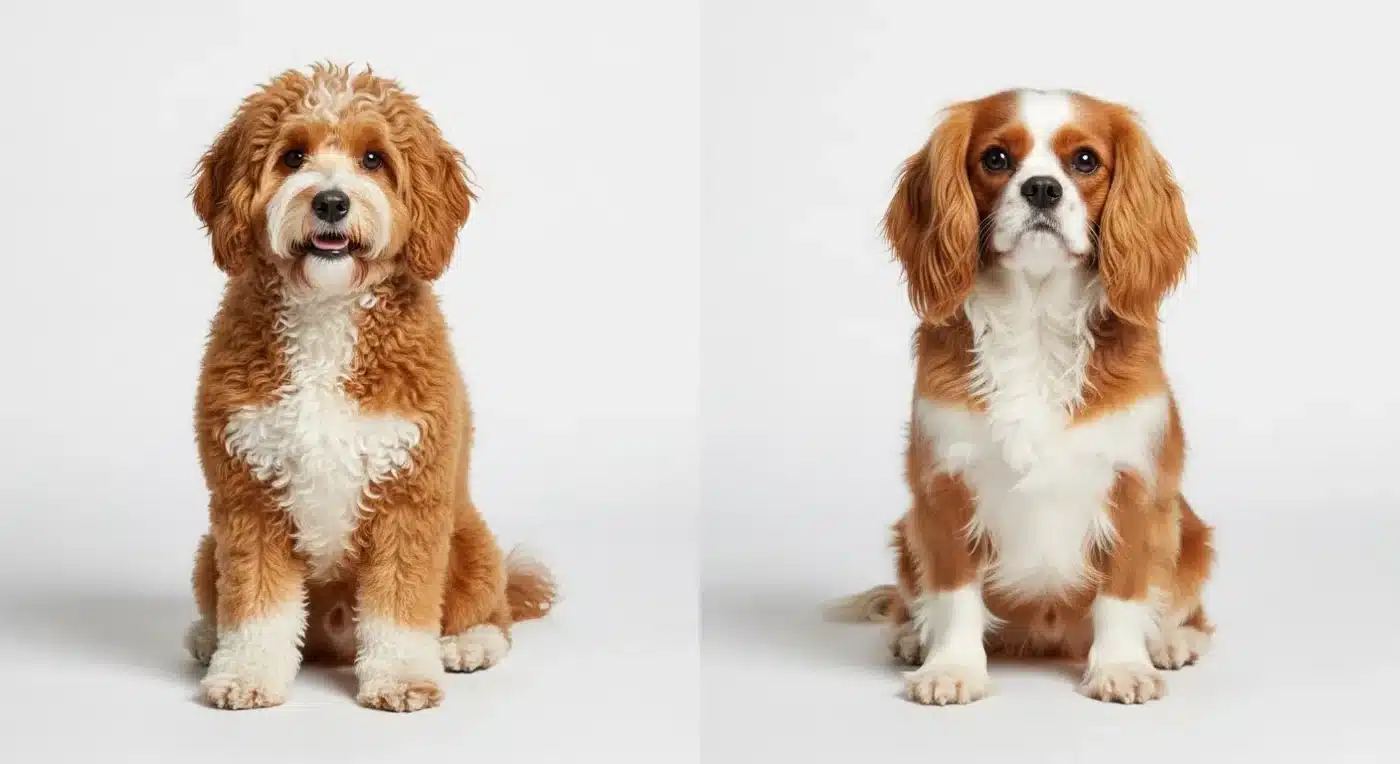
Featured image: Comparison of Cavoodle coat types,
or close-up of Cavoodle coat
Schema markup: Article + FAQ
Publishing notes: 1. Upload to WordPress 2. Set
featured_media (ideally showing different coat types) 3. Update AIOSEO
via MySQL 4. Cross-link with other Cavoodle content