

Puppy Guide
How to Stop Puppy Biting: Proven Methods
Feb
Your hands look like chew toys. Your ankles are covered in tiny puncture marks. You love your puppy, but honestly, sometimes you want to cry.
🎯 Quick Answer
To stop puppy biting: (1) Yelp “OW!” and stop play when they bite hard, (2) redirect to appropriate toys, (3) use time-outs for persistent biting, (4) ensure enough sleep (18-20 hours for puppies). The goal is teaching bite inhibition—controlling bite pressure—not eliminating all mouthing. Most puppies improve by 4-5 months.
Puppy biting is normal. It’s also painful, frustrating, and exhausting when you’re living with a tiny land shark. This guide covers why puppies bite, how to stop puppy biting, and what to do when nothing seems to work.
Why Puppies Bite
| Reason | Signs | What Helps |
|---|---|---|
| Teething | Chews everything; red/swollen gums; 3-6 months old | Frozen washcloths, frozen Kongs, teething toys |
| Play | Playful body language; how they played with littermates | Teach bite inhibition; redirect to toys |
| Exploration | Mouths everything including your fingers | Redirect to appropriate objects |
| Overstimulation | Wild energy; can’t focus; zoomies ending in biting | Enforced nap—they’re overtired |
💡 Marine’s Pro Tip
In the salon, I see a lot of bitey puppies—especially during grooming. Nine times out of ten, the bitiest puppies are the overtired ones. If your puppy is going crazy with biting, try putting them down for a nap. Puppies need 18-20 hours of sleep. Most aren’t getting it.
The Goal: Bite Inhibition
The goal isn’t to stop all mouthing immediately. The goal is to teach bite inhibition—the ability to control bite pressure.
Stage 1: Reduce bite pressure (teach them hard bites end play)
Stage 2: Reduce frequency (then teach any mouthing ends play)
Skipping straight to stage 2 means they never learn to control pressure.
How to Stop Puppy Biting
Method 1: Yelp and Withdraw
This mimics what their littermates did.
- When puppy bites hard, say “OW!” in a high-pitched yelp
- Immediately stop all interaction
- Turn away or walk away
- Wait 10-30 seconds
- Resume play calmly
Note: Some puppies get MORE excited by the yelp. If yours escalates, skip the yelp and just withdraw.
Method 2: Redirect to Toys
- Keep toys within reach at all times
- When puppy goes for your hands, redirect to a toy
- Praise them for biting the toy
- Make the toy more exciting than your hands
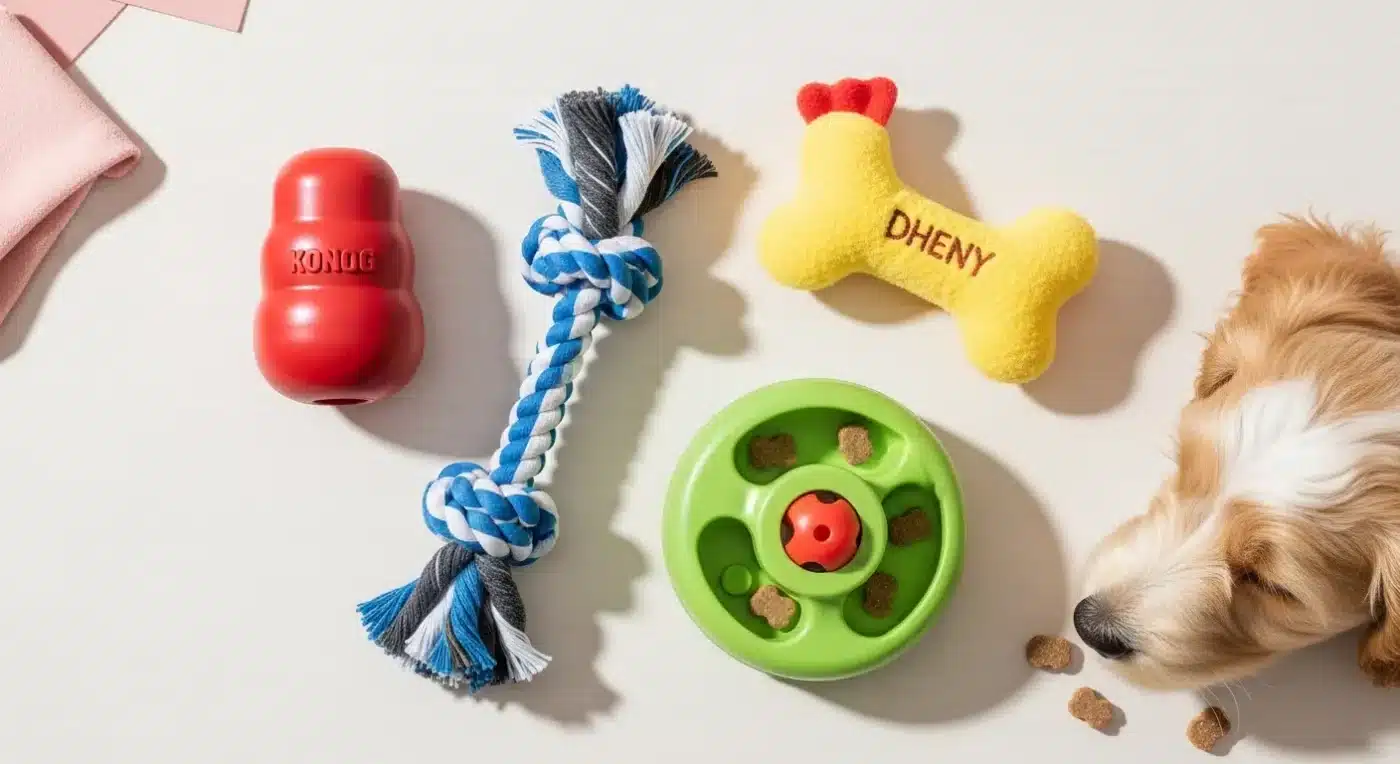
Best toys: Long rope toys (keeps hands away), tug toys, anything they can really sink their teeth into.
Method 3: Time Out
For persistent biting or overstimulated puppies.
- Say a calm “too bad” or “that’s enough”
- Stand up and leave the room
- Wait 30-60 seconds
- Return and try again
Three time outs in a row = puppy needs a nap.
💡 Marine’s Pro Tip
We handle puppies every day at the salon, including the bitey ones. The puppies who do best are the ones whose owners have practiced handling at home from day one—short sessions, lots of treats, stopping before frustration builds. That groundwork makes our job possible.
What NOT to Do
| Don’t Do This | Why |
|---|---|
| Hold their mouth closed | Makes hands near face scary; can trigger defensive biting |
| Alpha roll or pin them | Outdated; creates fear; damages trust |
| Spray with water | Creates negative associations with you, not biting |
| Yell or get angry | Either scares them or excites them—neither helps |
| Flick their nose | Painful; damages trust; may cause reactivity |
Age-Related Expectations
- 8-10 weeks: Biting is constant. This is normal. Focus on redirecting.
- 10-14 weeks: Peak biting for many puppies (teething). Stay consistent.
- 14-18 weeks: Should see significant improvement. Bites getting softer.
- 18-24 weeks: Teething winds down. Biting much less frequent.
- 6+ months: Biting should be rare. If still major problem, consult a trainer.
When Nothing Works
If you’ve been consistent for 2-3 weeks with no improvement:
- Check sleep: Is your puppy getting 18-20 hours?
- Check exercise: Enough but not too much?
- Check consistency: Are all family members responding the same way?
- Consider puppy kindergarten: Teaches bite inhibition with other puppies
- Vet check: Pain can cause biting
The Light at the End of the Tunnel
By 6 months, most puppies have dramatically reduced their biting. By 12 months, mouthing is typically rare.
One day, probably sooner than you think, you’ll realise it’s been days since your puppy tried to eat your hand.

Written by Marine Ponchaut
Marine is the founder of WoofSpark, a professional dog grooming salon in Cessnock, NSW. Since founding WoofSpark in 2019, she has groomed thousands of puppies—including plenty of bitey ones.
Related Guides
- New Puppy Checklist Australia — Everything you need
- Puppy Barking Solutions — Another common challenge
- Puppy Whining — Why they whine and what to do
We Specialise in Gentle Puppy Introductions
We know how to work with bitey puppies—it’s part of the job. Book a puppy groom or contact us.