
Grooming Tips
How to Bathe Your Dog: The Complete Guide to a Stress-Free Bath Time
Jan

Bath time doesn’t have to be a wrestling match. With the right setup, technique, and products, you can turn bathing from a dreaded chore into a manageable—even pleasant—routine.
This guide covers everything from preparation to the final dry, with tips for dogs who’d rather be anywhere else.
How Often Should You Bathe Your Dog?
There’s no universal answer. Bathing frequency depends on:
| Factor | Recommendation |
|---|---|
| Most dogs (general maintenance) | Every 4-6 weeks |
| Oily coat breeds (Basset Hounds, Cocker Spaniels) | Every 2-3 weeks |
| Doodles and curly coats | Every 3-4 weeks |
| Double-coated breeds (Huskies, Golden Retrievers) | Every 6-8 weeks |
| Hairless breeds | Weekly (prone to skin issues) |
| Dogs with skin conditions | As directed by vet |
Signs your dog needs a bath:
- Noticeable odour
- Visible dirt or debris in coat
- Coat feels greasy or dull
- They rolled in something they shouldn’t have
Caution: Over-bathing strips natural oils, leading to dry, itchy skin. Unless your dog has specific needs, monthly bathing is usually plenty.
What You’ll Need
Essential Supplies
- Dog-specific shampoo — Human shampoo has wrong pH for dogs
- Conditioner — Especially important for long or curly coats
- Towels — More than you think you’ll need
- Non-slip mat — For tub or shower floor
- Treats — High-value rewards
Helpful Extras
- Handheld shower head or hose attachment
- Bucket or jug for rinsing
- Cotton balls (for ears)
- Brush (for pre-bath detangling)
- Blow dryer (low heat setting)
Choosing the Right Shampoo
- Normal coat: General purpose dog shampoo
- Sensitive skin: Oatmeal or aloe-based, fragrance-free
- Itchy skin: Medicated shampoo (discuss with vet)
- White coat: Whitening shampoo
- Puppies: Tearless puppy formula
- Curly/doodle coats: Moisturising shampoo + conditioner
Before the Bath
Brush First
Always brush your dog before bathing. Water tightens mats, making them nearly impossible to remove afterwards. For doodle and curly-coated breeds, this step is critical.
See our brushing frequency guide for technique tips.
Protect the Ears
Place cotton balls loosely in your dog’s ears to prevent water from getting in. Water in the ear canal can lead to infections—especially in floppy-eared breeds.
Gather Everything
Once your dog is wet, you don’t want to be searching for towels. Set everything within arm’s reach before starting.
Check Water Temperature
Lukewarm is best—comfortable to your inner wrist. Dogs have more sensitive skin than humans; water that feels “just warm” to you may be too hot for them.
The Bathing Process
Step 1: Wet the Coat Thoroughly
- Start from the neck and work backward
- Leave the face for last (dogs dislike water on their faces)
- Make sure water reaches the skin, not just the top of the coat
- Double-coated breeds need extra time—the undercoat is water-resistant
Step 2: Apply Shampoo
- Dilute shampoo with water first (easier to distribute)
- Apply in a line down the back, then work into coat
- Massage thoroughly, reaching the skin
- Pay attention to: paws, belly, armpits, behind ears, sanitary areas
- Avoid eyes, nose, and inside ears
Step 3: Rinse Completely
This is the most important step. Shampoo residue causes itching, flaking, and skin irritation.
- Rinse until water runs completely clear
- Then rinse again
- Lift ears and rinse underneath
- Check armpits and belly—residue hides in folds
Step 4: Condition (If Using)
- Apply conditioner, avoiding the face
- Let sit for 2-3 minutes (or as directed)
- Rinse thoroughly
Step 5: Face (Last)
- Use a damp washcloth rather than running water
- Wipe around eyes, muzzle, and ears
- For tearstain-prone breeds, use a tearstain remover
Drying Your Dog
Proper drying matters more than most people realise—especially for thick or curly coats.
The Shake
Let your dog shake. Stand back. They’ll remove a significant amount of water this way.
Towel Drying
- Blot and squeeze—don’t rub vigorously (causes tangles)
- Use multiple towels if needed
- Pay attention to ears, paws, and belly
- Microfibre towels absorb more water
Blow Drying
For thick or curly coats, air drying isn’t enough and can lead to matting or skin issues.
- Use low heat — Dogs can burn easily; cool or warm setting only
- Keep moving — Don’t concentrate heat in one spot
- Brush while drying — Prevents mats from forming
- Professional dryers — High-velocity, no-heat dryers are ideal (but loud)
Double-Coated Breeds
These dogs MUST be dried thoroughly. Moisture trapped in the undercoat can cause hot spots and skin infections. This can take significant time—be patient or consider professional grooming.
Handling Dogs Who Hate Baths
Bath anxiety is common. Here’s how to make progress:
Desensitisation
- Week 1: Treats near the bathroom/tub. No bath.
- Week 2: Treats while standing in empty, dry tub.
- Week 3: Treats while standing in tub with a small amount of water.
- Week 4: Wet paws only. Treats throughout.
- Week 5+: Gradually add more water, then shampoo.
During Bath Time
- Stay calm — Your anxiety transfers to your dog
- Use a calm voice — No exciting or nervous chatter
- Non-slip mat — Slipping creates panic
- Lick mat with peanut butter — Stick to wall as distraction
- Keep water off the face — Major trigger for most dogs
- Don’t force — End before they’re overwhelmed
Alternative Options
- Outdoor bath — Less confined, may feel less threatening
- Waterless shampoo — For between-bath freshening or dogs who can’t handle water
- Professional grooming — Sometimes it’s easier for everyone to let experts handle it
Common Bathing Mistakes
Not brushing first
Creates mats that can’t be removed after bathing.
Water too hot
Dogs have sensitive skin. Lukewarm always.
Incomplete rinsing
Shampoo residue causes itching and skin problems.
Skipping conditioner on curly coats
Doodles and poodles need conditioner to prevent tangling.
Air-drying thick coats
Leads to matting and can cause skin issues.
Bathing too often
Strips natural oils, causing dry, itchy skin.
Special Situations
Puppies
Start bath training early with positive experiences. Use warm water, tearless shampoo, and keep sessions short. The goal is building comfort, not perfection.
Senior Dogs
May have trouble standing—use a non-slip mat and support them. Consider a professional groomer with lifting equipment for large seniors.
Dogs with Skin Conditions
Follow your vet’s recommendations for shampoo type and bathing frequency. Medicated baths may need longer contact time.
After Swimming
Rinse with fresh water after swimming in pools (chlorine) or ocean (salt). Chlorine and salt can irritate skin and damage coat.
The Bottom Line
A proper bath involves more than getting wet and applying soap. Preparation, technique, and thorough drying all matter—especially for certain coat types.
If bath time is a struggle, work on desensitisation between baths. Progress takes time, but most dogs can learn to tolerate—or even enjoy—being clean.
For complete coat care guidance, especially for doodle breeds, download our free Doodle Coat Care Guide.
Deep Clean After Swimming
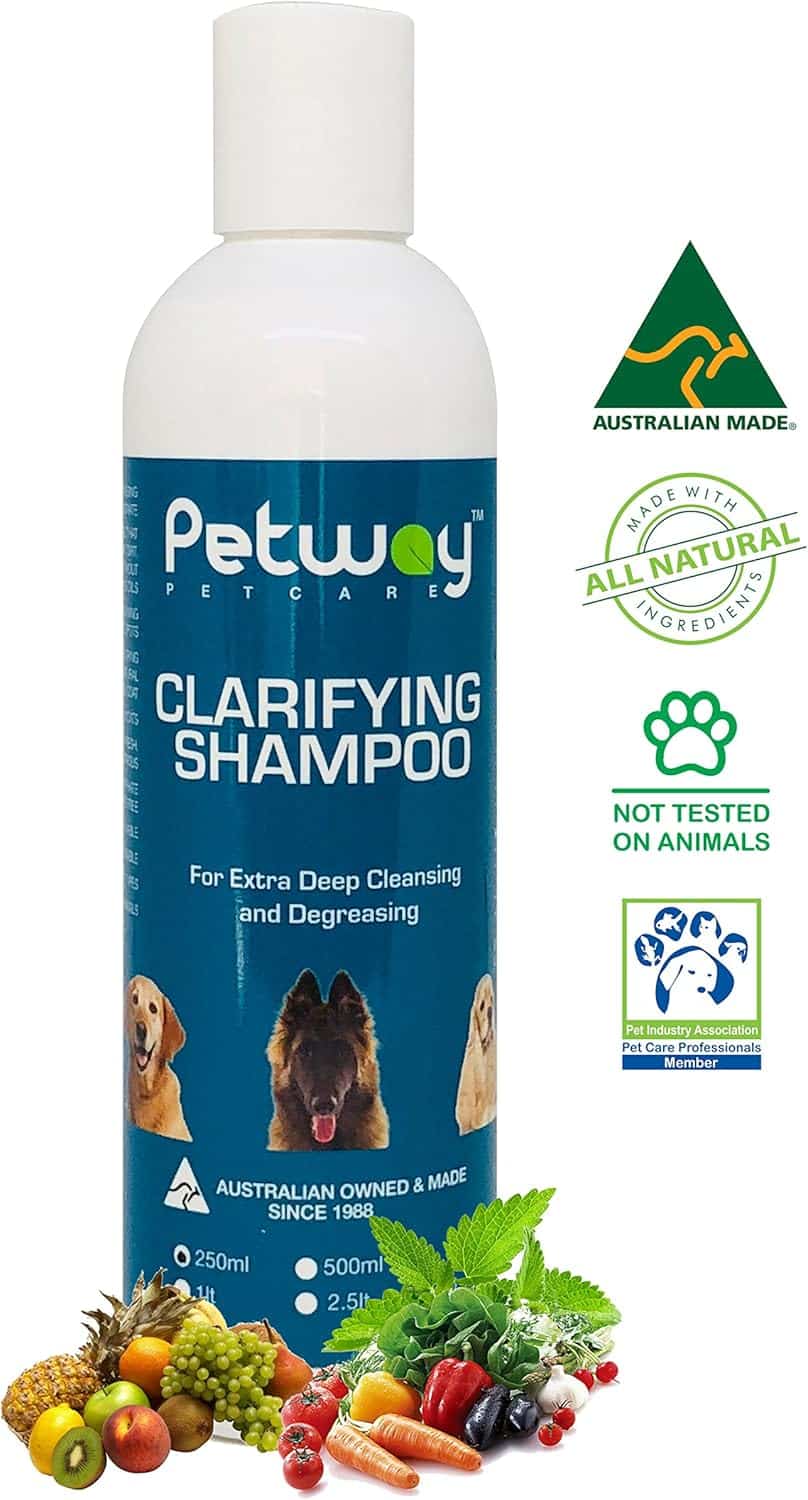
After swimming or heavy outdoor play, Petway Clarifying Shampoo ($25) removes chlorine, salt, dirt, and product build-up without stripping the coat. Essential for dogs who love the water.
Related Reading
Continue exploring our grooming guides:
- Natural Dog Shampoo vs Regular Shampoo
- How to Keep Your Dog Calm During Grooming
- Doodle Sensitive Skin: Solutions That Work
Ready for professional grooming? Book your appointment or view our services.