
Breed Guides
Labradoodle Grooming Guide: How to Manage That Curly Coat Like a Pro
Jan

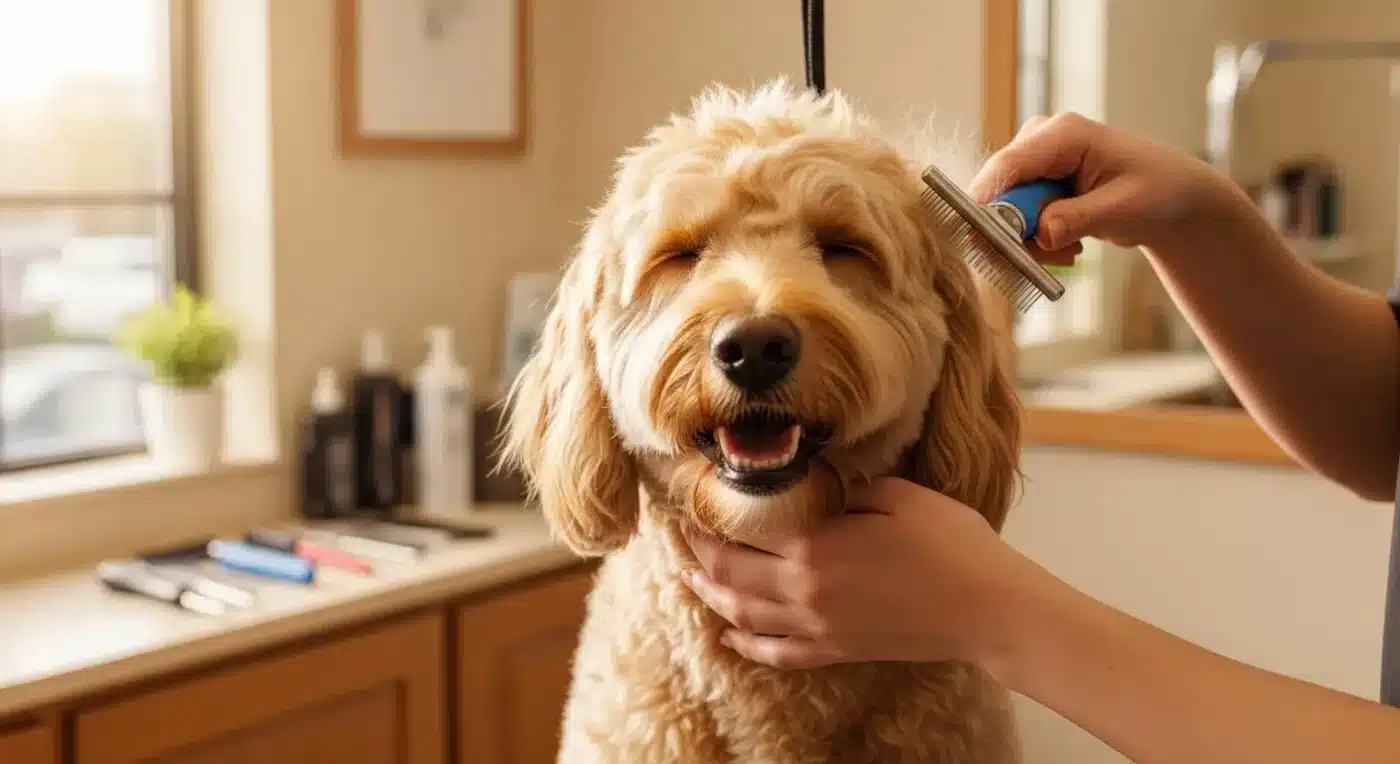
Labradoodles are everywhere—and their coats are as varied as their personalities. Some have loose waves, others have tight curls, and a few have surprisingly straight hair. No matter which type you’ve got, one thing is certain: that coat needs regular attention.
As professional groomers who work with Labradoodles daily, we’ve developed a deep understanding of these coats. We’ve also seen what happens when they’re neglected. Spoiler: it’s not pretty, and it often means a sad shave-down.
This guide will help you keep your Labradoodle looking fantastic between professional grooms—no surprise matting, no tears, no coat emergencies.
Understanding Labradoodle Coat Types
Before you can properly groom your Labradoodle, you need to know what you’re working with.
The Three Main Coat Types
Wool Coat
- Tight, dense curls similar to a Poodle
- Little to no shedding (great for allergies)
- Highest maintenance—requires daily brushing
- Most prone to matting
- Needs professional grooming every 4-6 weeks
Fleece Coat
- Soft, wavy texture with a flowing appearance
- Low shedding
- Medium maintenance—brush every 2-3 days
- The most popular “doodle look”
- Professional grooming every 6-8 weeks
Hair Coat
- Straighter, more Labrador-like texture
- Sheds more than wool or fleece
- Lower maintenance but still needs regular brushing
- Less common in Labradoodles
- Professional grooming every 8-10 weeks
How Coat Types Change
Many Labradoodle owners are surprised when their puppy’s coat changes around 6-12 months old. That soft puppy fluff often transitions into a denser, curlier adult coat that requires more maintenance.
If your puppy’s coat seems “easy” right now, enjoy it—but prepare for the adult coat to arrive. Building good grooming habits early makes the transition much smoother.
Essential Grooming Tools
The right tools make all the difference. Here’s what we use and recommend:
Must-Have Tools
Slicker Brush
Your most important tool. Look for one with fine, flexible pins that reach through curly coats to the skin. Cheap slicker brushes have stiff pins that scratch—invest in quality.
Metal Comb (Greyhound Comb)
For checking your brushing work. If the comb glides through smoothly, you’ve done a proper job. If it snags, go back with the slicker brush.
Detangling Spray
Makes brushing easier and more comfortable for your dog. Spray lightly before brushing to help the brush glide through without pulling.
Dematting Comb/Mat Splitter
For working through tangles before they become solid mats. Use carefully and gently.
Rounded-Tip Scissors
For trimming around eyes, paws, and sanitary areas between professional grooms.
How Often to Groom Your Labradoodle
Consistency is everything with Labradoodles. Here’s what we recommend:
Brushing Frequency by Coat Type
| Coat Type | Minimum | Recommended |
|---|---|---|
| Wool | Every day | Every day |
| Fleece | Every 2-3 days | Every other day |
| Hair | Weekly | Every 3-4 days |
The Truth About “Low Maintenance” Doodles
Let’s be direct: Labradoodles are not low-maintenance dogs. They were bred to be low-shedding, which they are. But low-shedding coats require more brushing to prevent matting.
The trade-off is:
- Shedding dogs: Less brushing, more vacuuming
- Non-shedding dogs: More brushing, less vacuuming
Pick your battle—but know that Labradoodles require commitment.
Professional Grooming Schedule
| Coat Type | Frequency |
|---|---|
| Wool | Every 4-6 weeks |
| Fleece | Every 6-8 weeks |
| Hair | Every 8-10 weeks |
If you find mats between appointments, you need to either brush more frequently at home or book professional grooms closer together.
Complete Brushing Technique
This is where most owners go wrong. Here’s how to brush a Labradoodle properly:
The Line Brushing Method
Surface brushing doesn’t prevent mats—you need to brush down to the skin.
- Mist with detangling spray — Lightly spray the section you’re about to brush.
- Part the coat horizontally — Use your free hand to hold the coat above where you’re brushing.
- Brush from the skin outward — Start at the skin and brush small sections at a time. Work in “lines” from bottom to top.
- Move up the body systematically — Part the next section and repeat until you’ve covered the entire body.
- Check with the comb — Run a metal comb through each area. If it catches, you missed something.
The Trouble Spots
These areas mat first. Check them every single time:
- Behind the ears — Hair here is finer and tangles quickly
- Under the collar/harness — Friction creates mats
- Armpits — Hidden and forgotten, often severely matted
- Between back legs — Friction zone
- Around the tail — Especially if they have a fluffy tail
- Chest and belly — Soft hair that tangles easily
How Long Should Brushing Take?
- Quick maintenance brush: 10-15 minutes
- Thorough weekly brush: 30-45 minutes
- After swimming or getting wet: Add 20+ minutes
If you’re only spending 5 minutes, you’re probably not brushing thoroughly enough.
Bathing Your Labradoodle
Before You Bathe
Always brush first. This is critical. Wet mats tighten and become nearly impossible to remove. If you bathe a matted dog, you’re making the problem worse.
If you find mats while preparing to bathe, work them out first—or call your groomer.
Bathing Steps
- Brush thoroughly — Remove all tangles
- Wet the coat completely — Curly coats take time to saturate. Be patient.
- Apply shampoo — Dilute according to instructions and work through the entire coat
- Rinse thoroughly — Residue causes itching and dullness
- Condition — Optional but helpful for detangling and softness
- Rinse again — Until water runs completely clear
Drying (The Crucial Step Most Skip)
Do not air dry your Labradoodle. The dense coat stays damp for hours, creating perfect conditions for:
- Hot spots
- Skin infections
- Intense “wet dog” smell
- Matting as the coat dries
Proper drying options:
1. High-velocity dryer — Best option. Blasts water out and separates the coat. What we use professionally.
2. Regular blow dryer on cool — Works but takes longer. Keep it moving to avoid heat damage.
Brush while drying. This prevents tangles from forming as the coat dries and removes additional loose hair.
Common Coat Problems
Matting
The #1 issue we see with Labradoodles.
Why it happens:
- Infrequent or surface-only brushing
- Moisture (swimming, rain, baths) without proper drying
- Friction from collars, harnesses, or lying down
- Coat transition from puppy to adult
Prevention:
- Brush properly and consistently (see technique above)
- Dry completely after getting wet
- Remove collar/harness during brushing
What to do when you find mats:
- Small tangles: Spray with detangler, hold at the base, gently work through with slicker brush
- Larger mats: Use a mat splitter to separate, then brush out
- Severe matting: See a professional. Brushing out painful mats is cruel—sometimes shaving is the kindest option.
“Velcro” Coat (Everything Sticks)
Some Labradoodle coats attract every leaf, twig, and burr they pass.
Solutions:
- Quick brush after outdoor adventures
- Keep coat shorter if you live in a debris-heavy area
- Detangling spray helps release stuck items
Dull or Dry Coat
Common causes:
- Poor nutrition
- Overbathing
- Low-quality shampoo
- Underlying health issues
Solutions:
- Add omega-3 supplements to diet
- Use moisturising, quality shampoo
- Reduce bathing frequency if overdoing it
- See your vet if issues persist
Grooming Between Professional Visits
Here’s what you can (and should) do at home:
Weekly Tasks
- Thorough full-body brush
- Check and clean ears
- Wipe eye area
- Check for mats in trouble spots
As Needed
- Sanitary trim (keep bottom area clean)
- Paw pad hair trim (prevents slipping and debris collection)
- Face trim if hair is blocking eyes
- Freshen with cologne between baths
Leave to the Professionals
- Full haircuts and shaping
- Deshedding/coat thinning
- Clipper work
- Dealing with severe matting
- Anal gland expression
Finding the Right Grooming Style
Labradoodles can wear many different looks. Here are the most popular:
The “Teddy Bear” Cut
- Medium length all over (1-2 inches)
- Round face, fluffy ears
- Classic doodle look
- Requires consistent brushing to maintain
The “Puppy Cut”
- Shorter version of the teddy bear
- Even length all over
- Lower maintenance than longer styles
- Still needs regular brushing
The Short Clip
- Short all over (1/2 inch or less)
- Minimal home maintenance
- Grows out quickly
- Good option if you struggle to keep up with brushing
Pro tip: If you’re finding mats between every appointment, ask your groomer to go shorter. A shorter coat you can maintain is better than a long coat that mats.
Seasonal Considerations
Spring/Summer
- Swimming season—rinse and dry thoroughly every time
- Watch for grass seeds in paws and coat
- Check for ticks regularly
- Hot spots are more common in warm, humid weather
Autumn/Winter
- Coat may thicken—increase brushing
- Dry thoroughly after wet walks
- Mud can create mats—clean and brush regularly
- Indoor heating can dry out coat—consider conditioning treatments
When to Call a Professional
Book a grooming appointment when:
- It’s been 6-8 weeks (or sooner for wool coats)
- You feel mats forming that you can’t easily brush out
- The coat looks unkempt or overgrown
- Eyes are being blocked by hair
- Nails are clicking on the floor
- Ears smell or look dirty
- You’re overwhelmed and need help
There’s no shame in needing professional help. That’s what we’re here for. A groomer can reset the coat and give you a fresh start.
The Bottom Line
Labradoodles are wonderful dogs with wonderful coats—but those coats need work. The owners who succeed are the ones who:
- Brush properly and consistently
- Understand their dog’s specific coat type
- Use quality tools
- Dry their dog properly after baths and swimming
- Work with a professional groomer regularly
If you commit to the maintenance, you’ll be rewarded with a beautiful, healthy, mat-free Labradoodle. If you can’t commit to regular brushing, opt for a shorter haircut that’s more forgiving.
Your Labradoodle’s coat is only as good as the care you put into it. And trust us—they’re worth the effort.
Have a Labradoodle grooming question? Reach out—we love helping fellow Doodle owners.
Related Reading
Continue exploring our grooming guides:
- The Complete Shih Tzu Grooming Guide: Expert Tips for That Luxurious Coat
- Poochon Grooming Guide: Expert Coat Care
- Irish Doodle Grooming Guide: Expert Coat Care
Ready to book a professional grooming session? Book your appointment or view our services.
Your Labradoodle Deserves to Be Art
We’ve groomed thousands of Labradoodles — and every single one has a face worth framing. Upload a photo, pick your style, and we’ll turn your dog into a custom portrait. 10 styles. From $29. Ready in minutes.
See Your Labradoodle as a Portrait