
Breed Guides
Poodle Grooming Guide: Professional Tips for Every Coat Style
Jan

Poodles have one of the most distinctive and demanding coats in the dog world. That curly, non-shedding fur is beautiful—but it grows continuously and mats easily without consistent care.
As professional groomers who work with Toy, Miniature, and Standard Poodles regularly, we’ve learned exactly what these coats need. This guide shares everything you need to know about maintaining a Poodle’s coat between professional grooms.
Understanding the Poodle Coat
The Unique Poodle Fur
Poodle “fur” is technically hair—it grows continuously like human hair rather than growing to a set length and shedding. This means:
- Continuous growth — Without trimming, the coat just keeps growing
- Non-shedding — Great for allergies, but requires more maintenance
- Curly texture — Naturally forms tight curls that can trap debris and mat
- Single coat — No undercoat, which makes grooming somewhat easier
Coat Changes Through Life
Puppy Coat (Birth to ~9 months)
- Softer, less curly texture
- Easier to maintain
- May not show true adult curl pattern yet
Coat Transition (9-18 months)
- Puppy coat transitions to adult coat
- Often the most difficult grooming period
- Increased matting as coats change
- Requires more frequent brushing
Adult Coat (18+ months)
- Full curl pattern established
- Consistent texture
- Maintenance becomes routine once you know the coat
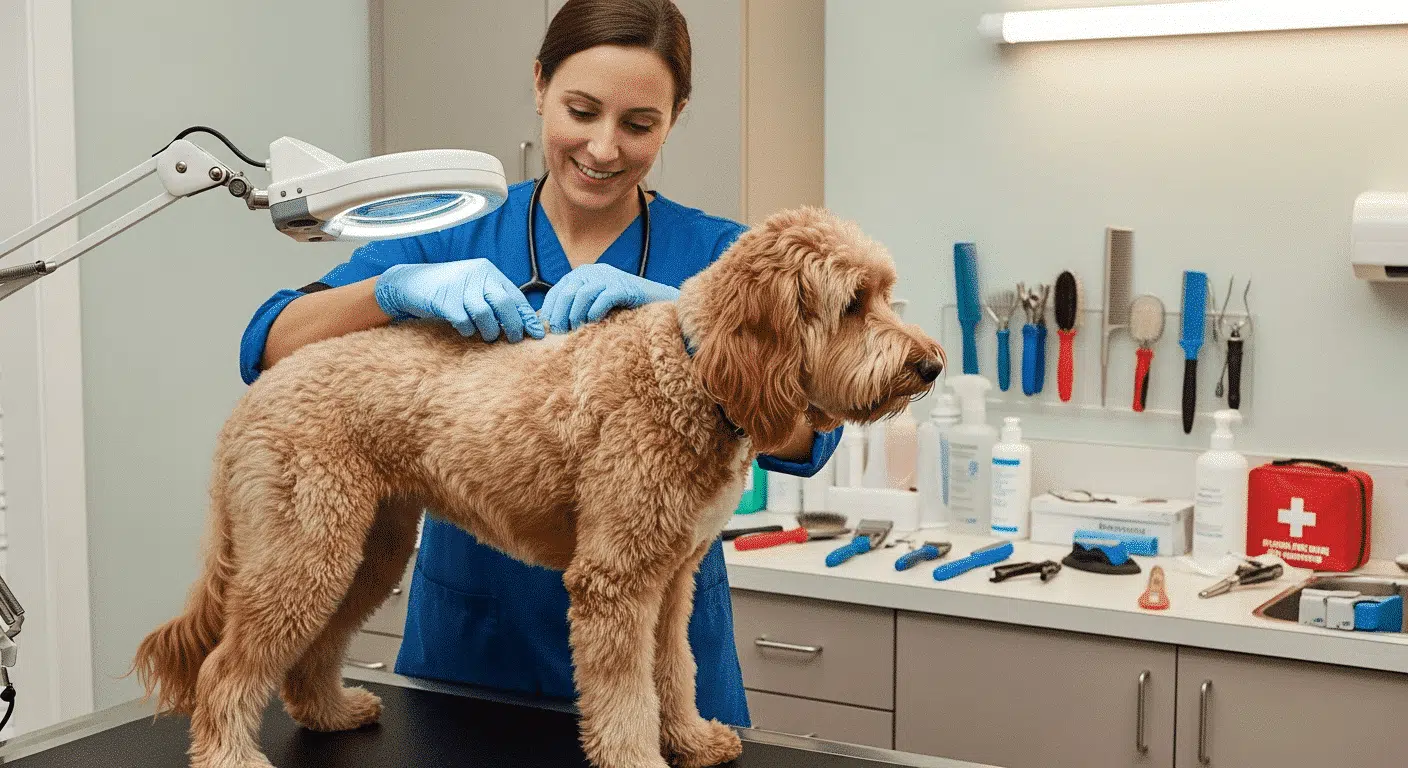
Essential Grooming Tools
Must-Have Tools
Slicker Brush
Your primary tool for daily maintenance. Look for a high-quality brush with fine, flexible pins that reach through the curls to the skin.
Greyhound Comb (Metal Comb)
For checking your brushing work and finishing. The comb should glide through completely—any snags mean you missed something.
Detangling Spray
Makes brushing easier and more comfortable. Spray lightly before brushing sessions.
Rounded-Tip Scissors
For maintenance trims around eyes, paws, and sanitary areas between professional grooms.
Pin Brush
Useful for longer Poodle styles. Gentler than a slicker for everyday maintenance on longer coats.
Brushing Technique
Poodle coats require thorough, regular brushing. Surface brushing won’t cut it.
The Line Brushing Method
- Spray with detangler — Light mist on the section you’re about to brush.
- Part the coat — Use your free hand to create a “line” in the coat.
- Brush from skin outward — Start at the skin and brush through to the ends. Work in small sections.
- Move systematically — Create new lines and work from the bottom of the dog upward.
- Comb through — Finish each section with the metal comb. If it catches, go back with the slicker.
Trouble Spots to Check Every Time
- Behind and under ears — Fine hair that tangles quickly
- Under the collar — Friction creates mats
- Armpits — Often missed, often severely matted
- Between toes — Hair grows here and needs regular trimming
- Tail base — Where tail meets body
- Belly and chest — Especially if coat is kept long here
How Long Should Brushing Take?
| Coat Length | Frequency | Time Per Session |
|---|---|---|
| Short clip | Every 2-3 days | 10-15 minutes |
| Medium length | Every 1-2 days | 15-25 minutes |
| Long/show coat | Daily | 30-45 minutes |
Popular Poodle Haircuts
Low-Maintenance Cuts
Puppy Cut / Teddy Bear Cut
- Same length all over (typically 1-2 inches)
- Round face, fluffy ears
- Most popular pet style
- Easier maintenance than longer styles
- Still requires regular brushing
Kennel Cut / Short All-Over
- Very short clip (1/2 inch or less)
- Minimal home maintenance
- Good for active dogs or owners who struggle with brushing
- Grows out quickly
Medium-Maintenance Cuts
Lamb Clip
- Short body, longer legs
- Clean face (shaved muzzle)
- Elegant but practical
- Popular for pet Poodles
Miami / Bikini Clip
- Shaved body with pom-poms at ankles
- Clean face and feet
- Moderate maintenance
High-Maintenance Cuts
Continental Clip
- Traditional show clip
- Elaborate pattern with shaved areas and pom-poms
- Requires professional maintenance every 4-6 weeks
- Not practical for most pet owners
Face Styles
Clean Face (Shaved)
- Traditional Poodle look
- Requires clipper maintenance every 2-3 weeks
- Easier to keep clean
Teddy Bear Face
- Fluffy, rounded face
- Popular with pet owners
- Requires more maintenance than clean face
Bathing Your Poodle
Before You Bathe
Always brush thoroughly first. Wet Poodle curls tighten, and any existing mats become nearly impossible to remove. If you find mats, work them out before getting the coat wet.
Bathing Frequency
| Lifestyle | Frequency |
|---|---|
| Indoor pet, short clip | Every 3-4 weeks |
| Active pet, medium coat | Every 2-3 weeks |
| Show coat | Weekly (specific show products) |
Bathing Steps
- Brush completely — Ensure no mats before wetting
- Wet thoroughly — Poodle coats take time to saturate completely
- Apply shampoo — Dilute as directed; work through entire coat
- Massage to the skin — Ensure product reaches past the curls
- Rinse completely — Residue causes itching and dull coat; rinse until water runs clear
- Condition — Helps with detangling and keeps curls defined
- Rinse again — Thorough conditioning product removal
Drying Poodles
Proper drying is critical for Poodle coats.
If you air dry a Poodle, the coat will:
- Dry in a matted, tangled mess
- Lose curl definition
- Take forever to dry (creating skin issues)
Proper drying method:
- Towel dry — Squeeze (don’t rub) excess water
- High-velocity dryer or blow dryer — Dry while brushing with a slicker or pin brush
- Work in sections — Dry completely before moving to next section
- Brush as you dry — This is what creates that fluffy Poodle look
The post-bath brush-dry is when Poodle coats look their best. This is also when you’ll remove the most loose hair.
Common Poodle Coat Problems
Matting
Why it happens:
- Infrequent or surface-only brushing
- Moisture (rain, swimming, baths) without proper drying
- Coat transition period (puppy to adult)
- Friction from collars or harnesses
Prevention:
- Consistent, thorough brushing
- Always brush before and after baths
- Dry completely with dryer and brush
- Remove collar for brushing
Dealing with mats:
- Small tangles: Spray with detangler, hold base, brush out gently
- Larger mats: Use mat splitter to separate before brushing
- Severe mats: See professional; don’t cause your dog pain
Tear Staining
Common in lighter-colored Poodles. That reddish-brown staining under the eyes.
Prevention/Management:
- Wipe eyes daily with damp cloth
- Keep face hair trimmed
- Consider tear stain products
- Check with vet if excessive
Dry or Dull Coat
Causes:
- Poor nutrition
- Over-bathing
- Harsh products
- Not rinsing products completely
- Health issues
Solutions:
- Use quality shampoo and conditioner
- Add omega-3 supplements
- Ensure complete rinsing
- Reduce bathing frequency if excessive
- See vet if diet is good but coat is poor
Ear Care
Poodles are prone to ear infections due to:
- Hair that grows inside the ear canal
- Floppy ears that trap moisture
- Curly ear hair that traps debris
Regular Ear Maintenance
Weekly:
- Check ears for redness, odor, or discharge
- Clean visible ear with dog ear cleaner
- Dry thoroughly after swimming or bathing
Signs of Infection:
- Bad smell
- Redness or swelling
- Dark or yellow discharge
- Head shaking or scratching
- Pain when ears touched
See your vet if you notice infection signs.
Foot Care
Poodle feet require regular attention.
Hair Between Toes
- Hair grows between paw pads and can cause slipping
- Collect debris, dirt, and ice
- Should be trimmed regularly
How to maintain:
- Use rounded scissors or clippers to trim hair level with pads
- Check weekly
- Remove any debris caught in the hair
Nail Care
- Trim every 2-4 weeks
- If you hear clicking on hard floors, nails are overdue
- Keep styptic powder handy in case of bleeding
Professional Grooming for Poodles
What Happens at a Professional Groom
- Brush out — Full coat check for mats
- Bath — With appropriate products for coat type
- Blow dry — With brushing for volume and fluff
- Haircut — Style of your choice
- Face grooming — Clean face or teddy bear
- Feet trimming — Pads and styling
- Ear cleaning — And possibly ear hair removal
- Nail trim — Unless recently done
- Finishing — Cologne, bows if desired
Time: 2-3 hours depending on size and style
How Often?
| Style | Recommended Frequency |
|---|---|
| Kennel cut | Every 6-8 weeks |
| Puppy cut | Every 4-6 weeks |
| Lamb/Miami | Every 4-6 weeks |
| Show coat | Every 2-4 weeks |
Tips by Poodle Size
Toy Poodles
- Smaller = harder to hold still; work in short sessions
- Smaller ears can hide infections; check regularly
- Watch tear staining—prominent on light-colored Toys
Miniature Poodles
- Good balance of size and manageability
- Most popular pet size
- Standard grooming recommendations apply
Standard Poodles
- More coat = more time required
- Invest in quality tools—you’ll use them a lot
- Consider a grooming table for your back’s sake
- Larger ears mean more infection risk
The Bottom Line
Poodles are high-maintenance dogs—there’s no getting around it. That beautiful, non-shedding coat requires consistent attention. But with the right approach:
- Brush thoroughly and regularly — Not just the surface
- Choose a maintainable style — Be realistic about your time
- Dry properly after baths — Dryer + brush, not air drying
- See a professional regularly — Every 4-6 weeks for most styles
- Check trouble spots daily — Ears, eyes, and mat-prone areas
If you commit to the maintenance, you’ll have a dog that always looks fantastic and never sheds on your furniture. That’s the Poodle trade-off—more brushing, less vacuuming.
Questions about Poodle grooming? Reach out—we’re always happy to help.
Related Reading
Continue exploring our grooming guides:
- Poochon Grooming Guide: Expert Coat Care
- Irish Doodle Grooming Guide: Expert Coat Care
- Yorkipoo Grooming Guide: Expert Coat Care Tips
Ready to book a professional grooming session? Book your appointment or view our services.
Your Poodle Deserves to Be Art
We’ve groomed thousands of Poodles — and every single one has a face worth framing. Upload a photo, pick your style, and we’ll turn your dog into a custom portrait. 10 styles. From $29. Ready in minutes.
See Your Poodle as a Portrait