
Grooming Tools
Slicker Brush vs Deshedding Tool: Which One Does Your Dog Actually Need?
Jan

Walk into any pet store and you’ll find dozens of brushes and tools claiming to be “the best” for your dog. Two of the most common? The slicker brush and the deshedding tool. But here’s the problem: they do completely different things, and using the wrong one can actually damage your dog’s coat.
After years of grooming dogs of every breed and coat type, we see the confusion regularly. Pet parents buy a FURminator for their Cavoodle (ouch) or try to tackle a Golden Retriever’s undercoat with a slicker brush (frustrating). Let’s clear this up once and for all.
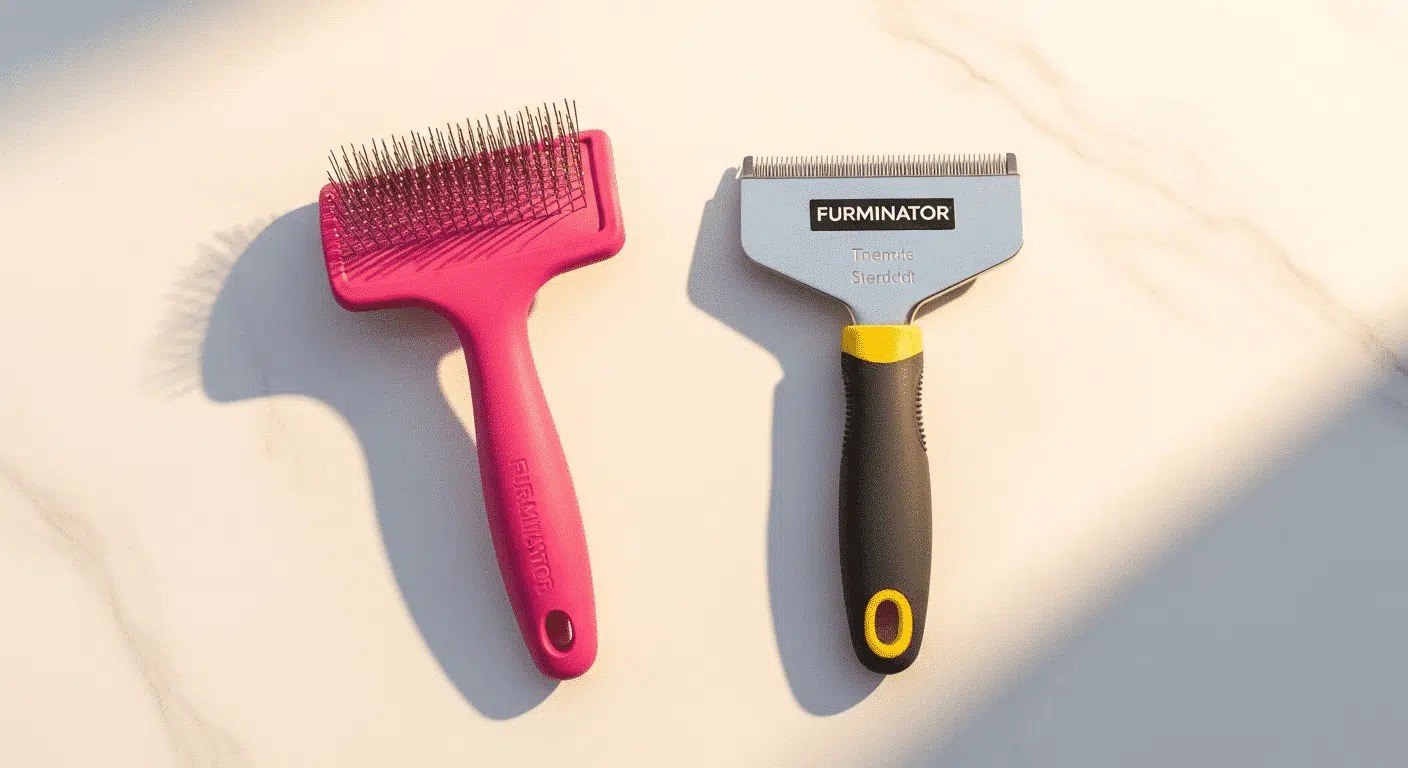
The Quick Answer
Slicker Brush: Best for detangling, removing debris, and daily maintenance on curly, wavy, or long coats. Think Poodles, Doodles, Shih Tzus, Maltese.
Deshedding Tool: Best for removing loose undercoat from double-coated breeds during shedding season. Think Golden Retrievers, Huskies, German Shepherds, Corgis.
That’s the simple version. Now let’s dig into why.
What Is a Slicker Brush?
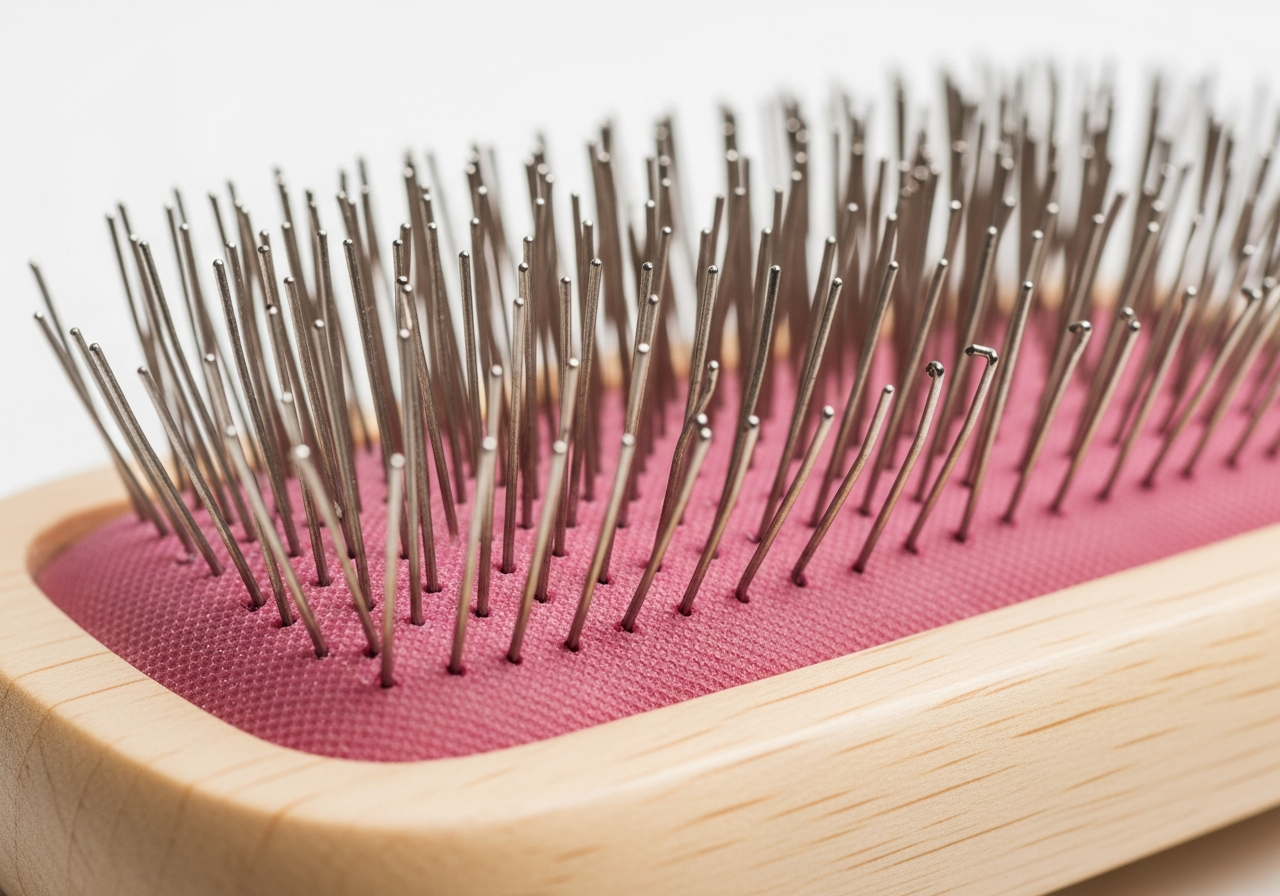
A slicker brush has a flat or slightly curved head covered with fine wire pins. These pins are typically angled to glide through the coat and catch tangles without scratching the skin.
What It Does
- Removes tangles and mats — The primary job. Fine pins work through knots gently.
- Removes loose hair and debris — Leaves, grass, dust, dried mud.
- Distributes natural oils — Creates that healthy shine.
- Fluffs the coat — Essential for that “just groomed” look.
Best For
- Poodles and Poodle mixes (Cavoodles, Labradoodles, Groodles)
- Bichon Frise, Maltese, Shih Tzu
- Long-coated breeds (Yorkshire Terriers, Lhasa Apsos)
- Any curly, wavy, or long coat prone to matting
Price Range
Quality slicker brushes range from $15-50. Budget options work but wear out faster. Premium brushes (like Chris Christensen) last years and are gentler on the coat.
What Is a Deshedding Tool?
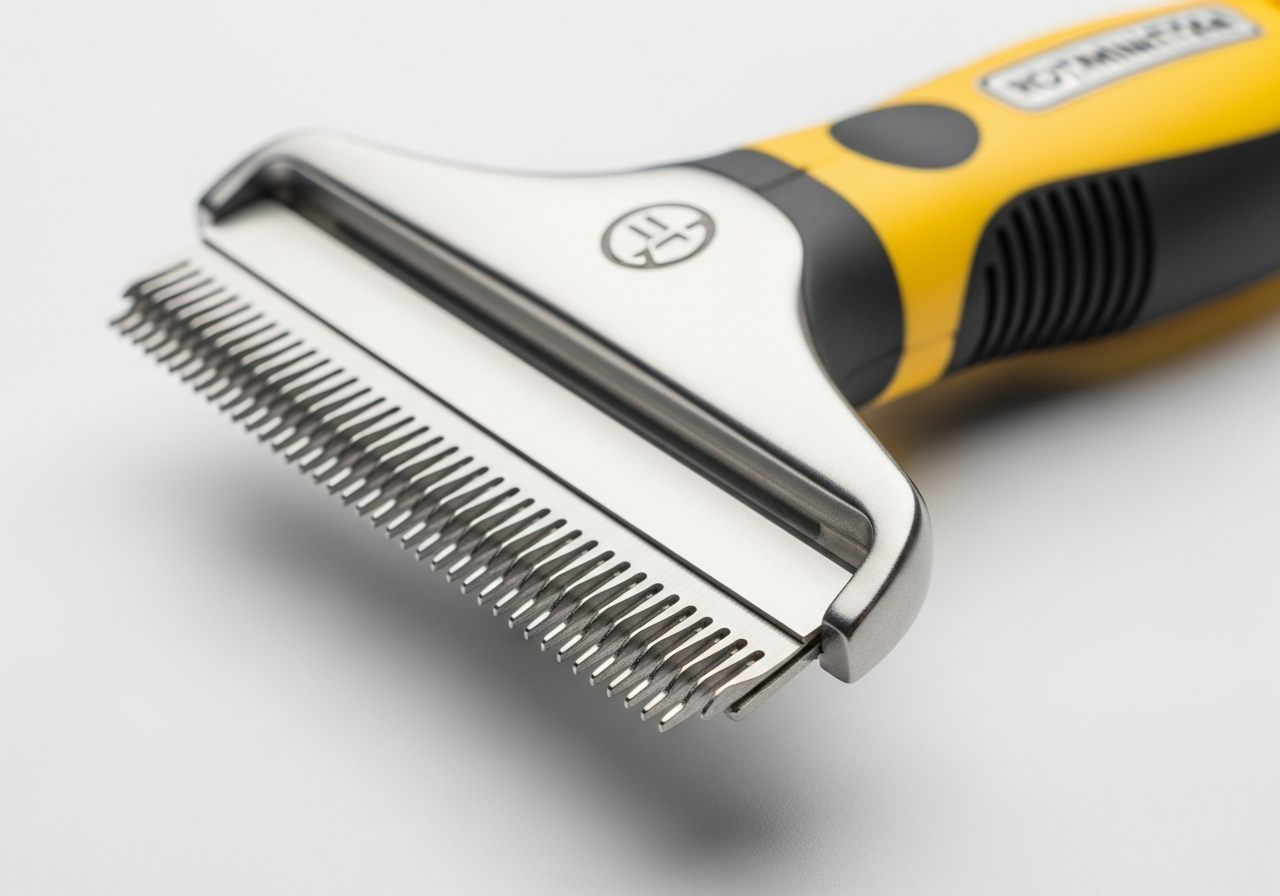
A deshedding tool (like the FURminator) has a metal edge with teeth designed to reach through the topcoat and rake out loose undercoat. It’s essentially a mini shedding blade.
What It Does
- Removes loose undercoat — The fluffy, dense layer that sheds seasonally.
- Reduces shedding dramatically — Up to 90% when used correctly.
- Prevents matting in undercoat — Removes dead hair before it tangles.
Best For
- Golden Retrievers, Labrador Retrievers
- German Shepherds, Huskies, Malamutes
- Corgis, Australian Shepherds
- Any breed with a thick double coat
NOT For
- Poodles and Poodle mixes (no undercoat to remove)
- Single-coated breeds
- Dogs with thin or fine coats
- Curly-coated breeds
Price Range
Genuine deshedding tools like the FURminator cost $30-60. Cheaper knock-offs exist but may have sharper edges that damage coat.
Key Differences: Side-by-Side
| Feature | Slicker Brush | Deshedding Tool |
|---|---|---|
| Primary function | Detangling | Undercoat removal |
| Pin/blade type | Fine wire pins | Metal teeth/edge |
| Use frequency | Daily or every other day | Weekly or during shedding season |
| Best coat type | Curly, wavy, long | Double coat with undercoat |
| Risk of overuse | Low (gentle on skin) | High (can damage topcoat) |
| Removes tangles | Yes | No |
| Removes undercoat | Partially | Yes (primary purpose) |
Common Mistakes We See
Mistake 1: Using a Deshedding Tool on a Doodle
This is the biggest one. Doodles (Cavoodles, Labradoodles, etc.) don’t have a traditional undercoat—they have a single curly or wavy coat. Using a deshedding tool can:
- Cut and damage the curly coat
- Create bald patches
- Make the coat look thin and scraggly
Instead: Use a slicker brush for doodles. Always.
Mistake 2: Using Only a Slicker on a Double-Coated Breed
A slicker brush alone won’t remove the loose undercoat from a Golden Retriever or German Shepherd. You’ll get the topcoat looking nice while the undercoat underneath mats and sheds everywhere.
Instead: Use both. Slicker first for tangles, then deshedding tool for undercoat.
Mistake 3: Overusing the Deshedding Tool
More is not better. Deshedding tools can damage the topcoat if used too frequently or with too much pressure. Signs of overuse:
- Thin or patchy coat
- Skin irritation
- Dull, rough texture
Instead: Limit to once a week maximum, or only during heavy shedding seasons (spring and autumn).
Which Tool Do You Need?
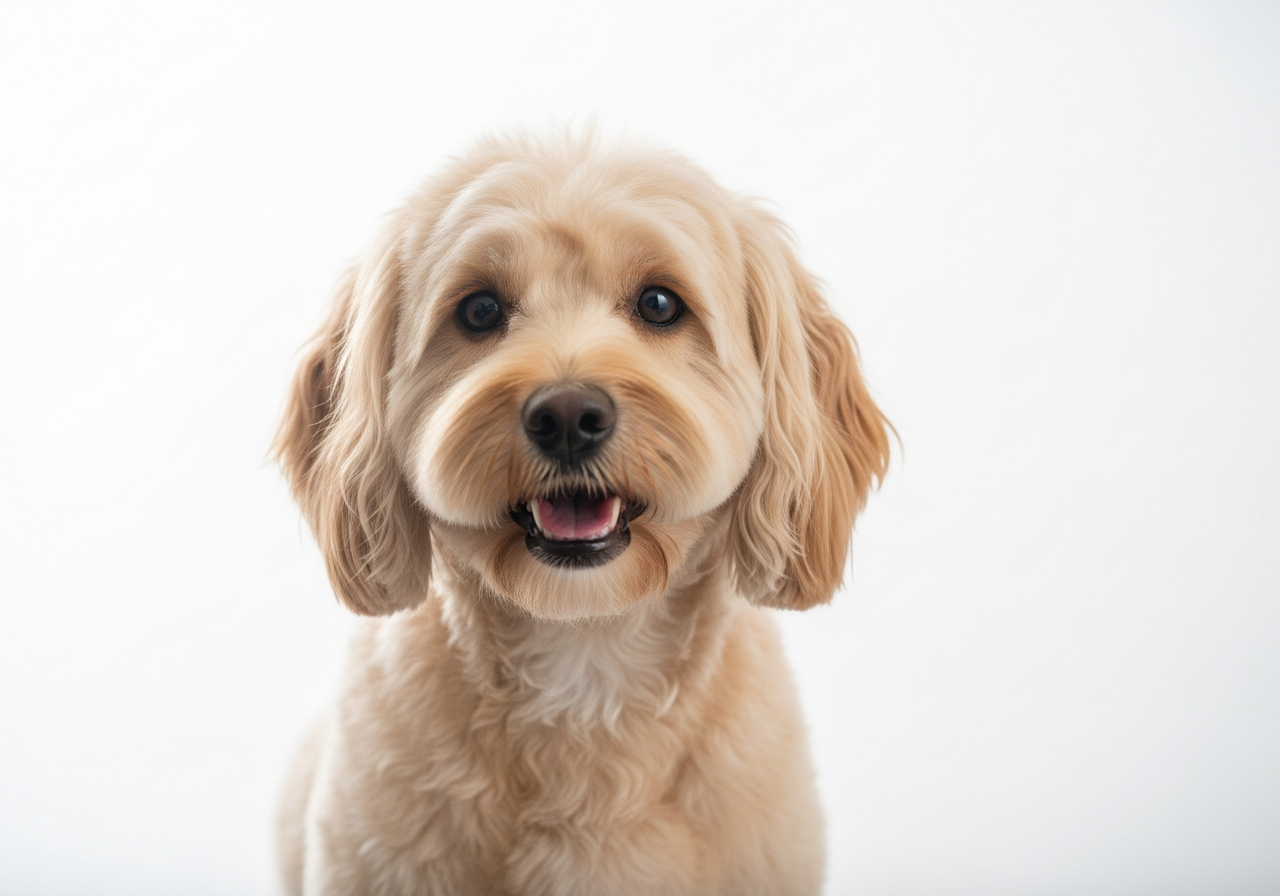
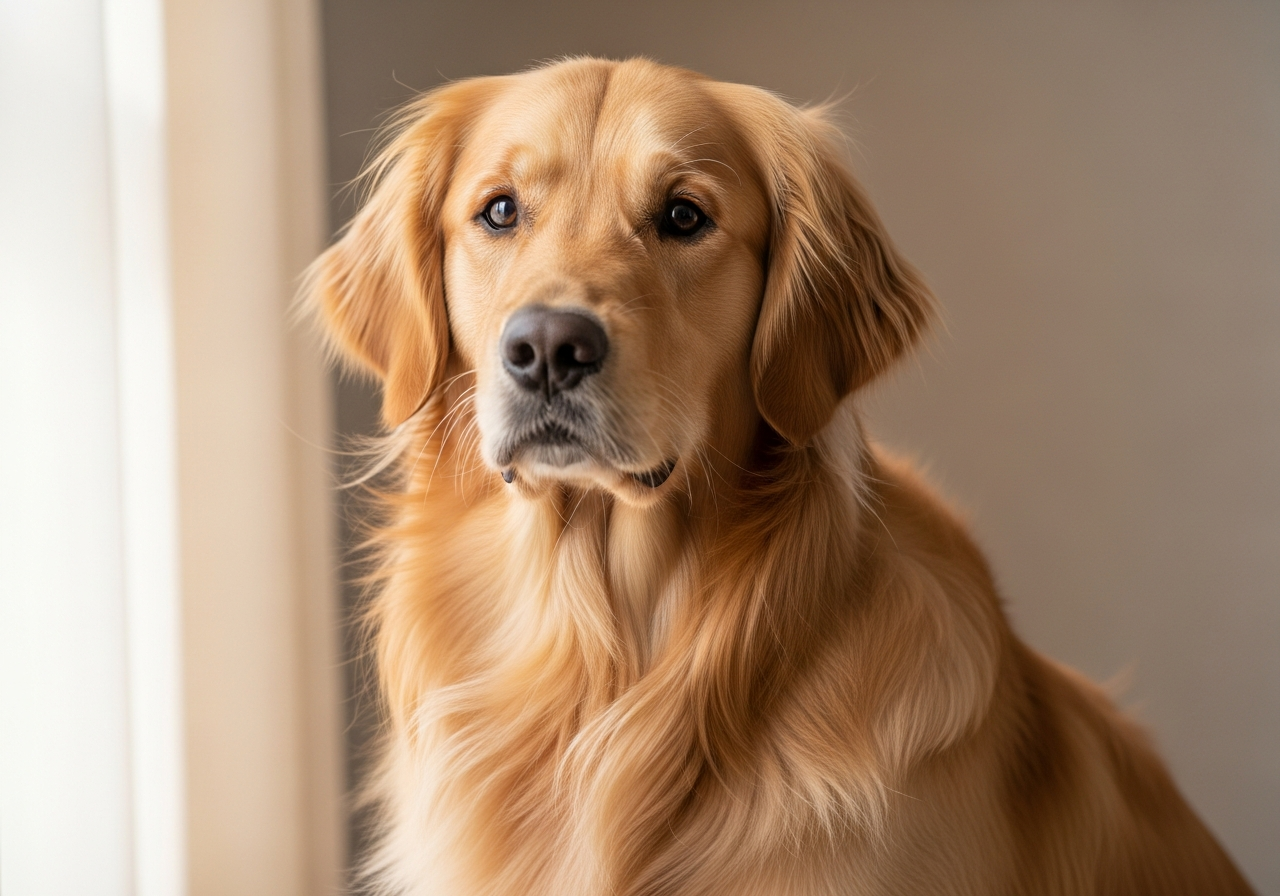
If Your Dog Has…
Curly or Wavy Coat (Poodles, Doodles, Bichons):
- Get a slicker brush
- Skip the deshedding tool entirely
- Use daily or every other day
Double Coat (Goldens, Shepherds, Huskies):
- Get both tools
- Use slicker brush for regular maintenance
- Use deshedding tool weekly or during shedding season
Short Coat (Beagles, Boxers, Labs):
- A rubber grooming mitt or bristle brush may be sufficient
- A slicker brush works for occasional tangles
- Deshedding tool helpful for Labs and other shedders
Long Silky Coat (Yorkies, Maltese, Shih Tzu):
- Get a soft slicker brush (look for “gentle” or “soft pin”)
- Use daily to prevent tangles
- Deshedding tools are too harsh for these fine coats
How to Use Each Tool Correctly
Slicker Brush Technique
- Work in sections — Part the coat and brush from skin outward, not just the surface.
- Use light pressure — Let the pins do the work. Pressing too hard scratches skin.
- Brush in direction of hair growth — Except when checking for mats (brush against first).
- Clean the brush frequently — Remove hair buildup after every few strokes.
Deshedding Tool Technique
- Start with a slicker brush — Remove tangles first. Deshedding tools can’t detangle.
- Work with the coat direction — Long, gentle strokes from head to tail.
- Don’t go over the same spot repeatedly — One or two passes per section is enough.
- Avoid bony areas — Hips, spine, legs. The edge can hurt on thin-skinned areas.
- Stop when no more hair comes out — Continuing damages the topcoat.
Our Top Recommendations
Best Slicker Brushes
- Chris Christensen Big G — The gold standard. Worth the investment.
- Hertzko Self-Cleaning Slicker — Great budget option with retractable pins.
- Safari Curved Slicker — Good mid-range choice.
Best Deshedding Tools
- FURminator — The original and still the best.
- SleekEZ — Gentler alternative, good for sensitive dogs.
- King Komb — Retractable edge, harder to over-use.
The Bottom Line
These tools aren’t interchangeable—they do different jobs for different coats.
- Curly/wavy coats: Slicker brush only
- Double coats: Both tools
- Single short coats: Slicker brush or grooming mitt
When in doubt, ask your groomer which tools they’d recommend for your specific dog. We’re always happy to demonstrate proper technique and make recommendations based on your dog’s unique coat.
Have questions about grooming tools? Reply to our newsletter or ask during your next groom.
Related Reading
Continue exploring our grooming guides:
- Slicker Brush vs Deshedding Tool: Expert Guide
- FURminator vs Slicker Brush: Which One Is Right for Your Dog?
- What a Professional Groom Does for Your Dog
Ready to book a professional grooming session? Book your appointment or view our services.
Stop Comparing. Start With What Works.
Marine picked the tools in the Cavoodle Puppy Kit because they work — not because they’re popular. The right slicker brush, a quality comb, salon-grade shampoo, and a first groom voucher. Three tiers from $69.
Pingback: Slicker vs Deshedding Tool: Guide
Pingback: Dog Deshedding: Cut Fur by 80%