
Breed Guides
The Complete Cavoodle Guide: Everything You Need to Know
Feb
Cavoodles are Australia’s most popular designer breed, and for good reason. They’re affectionate, intelligent, and have that irresistible teddy bear look that makes everyone stop and smile.
🎯 Quick Answer
Cavoodles are a cross between Cavalier King Charles Spaniels and Poodles, bred for their affectionate nature and low-shedding coats. They come in three coat types (fleece, wool, hair), require professional grooming every 4-8 weeks, and need daily mental stimulation. The breed is prone to separation anxiety — prevention training should start from day one.
But Cavoodles aren’t the low-maintenance dogs many people expect. Their beautiful coats need regular grooming. Their intelligent minds need stimulation. Their affectionate nature can tip into separation anxiety if not managed.
This guide covers everything you need to know about owning a Cavoodle—from choosing a puppy to senior care. It’s based on our experience grooming over 450 Cavoodles and countless conversations with their owners.
Table of Contents
- 1. What Is a Cavoodle?
- 2. Cavoodle Generations Explained
- 3. Size and Appearance
- 4. Cavoodle Temperament
- 5. Choosing a Cavoodle Puppy
- 6. Bringing Your Cavoodle Home
- 7. Cavoodle Health
- 8. Cavoodle Coat Types and Grooming
- 9. Do Cavoodles Shed?
- 10. Training Your Cavoodle
- 11. Exercise and Activity
- 12. Feeding and Nutrition
- 13. Common Behavioural Issues
- 14. Living with a Cavoodle
- 15. Cavoodle Costs
- 16. Frequently Asked Questions
💡 Marine’s Pro Tip
After grooming over 450 Cavoodles, I can spot coat type changes coming before owners notice. Around 6-8 months, that easy puppy coat transforms into the adult coat — often much curlier and more prone to matting. If your groomer mentions “coat change,” take it seriously and increase your brushing routine.
What Is a Cavoodle?
A Cavoodle (also called Cavapoo in some countries) is a cross between a Cavalier King Charles Spaniel and a Poodle. This combination was designed to create a dog with the Cavalier’s gentle, affectionate nature and the Poodle’s intelligence and low-shedding coat.
The Parent Breeds
Cavalier King Charles Spaniel
- Originally bred as companion dogs for royalty
- Gentle, affectionate, eager to please
- Prone to certain health conditions (heart issues, syringomyelia)
- Moderate shedding, silky coat
Poodle (Toy or Miniature)
- One of the most intelligent dog breeds
- Athletic and trainable
- Low-shedding, curly coat
- Generally healthy with long lifespan
Why the Cross Works
The Cavoodle combines:
- The Cavalier’s loving, calm temperament with the Poodle’s intelligence
- The Poodle’s low-shedding coat with the Cavalier’s softer features
- Moderate energy levels from both breeds
- Adaptability to different living situations
💡 Marine’s Pro Tip
The Cavoodles who handle grooming best aren’t the calmest dogs — they’re the ones whose owners did daily handling exercises as puppies. Touch their ears, paws, and face every day, even just for 30 seconds. This single habit prevents 90% of grooming anxiety.
Brief History
Cavoodles originated in Australia in the 1990s, making them one of the earliest “designer breeds.” They were bred specifically as companion dogs suitable for people with mild allergies. Today, they’re Australia’s most popular crossbreed and increasingly popular worldwide.
Cavoodle Generations Explained
Not all Cavoodles are the same. The “generation” affects coat type, appearance, and predictability of traits.
Generation Chart
| Generation | Cross | Genetic Mix | What to Expect |
|---|---|---|---|
| F1 | Cavalier × Poodle | 50% each | Most variation in appearance and coat |
| F1B | F1 Cavoodle × Poodle | 75% Poodle, 25% Cavalier | Curlier coat, more predictable |
| F1BB | F1B × Poodle | 87.5% Poodle | Very curly, most “hypoallergenic” |
| F2 | F1 × F1 | 50% each | Variable, can favour either parent |
| Multigen | Cavoodle × Cavoodle | Varies | Most consistent traits |
💡 Marine’s Pro Tip
In the salon, I see more Cavoodles with ear infections than any other breed. Their floppy ears trap moisture and debris. Weekly ear cleaning at home isn’t optional — it’s essential. Ask your vet or groomer to show you the proper technique.
Which Generation Should You Choose?
For allergy sufferers: F1B or F1BB generations have curlier, lower-shedding coats. But always spend time with the specific puppy before committing—individual reactions vary.
For the classic look: F1 or Multigen often have the soft, wavy fleece coat most people picture when they think “Cavoodle.”
For predictability: Multigen Cavoodles from established breeding programs offer the most consistent size, coat, and temperament.
Important: Generation affects grooming needs. The more Poodle in the mix, the curlier the coat and the more grooming required.
→ Read more: Cavoodle Coat Types Explained
Size and Appearance
Cavoodle Sizes
Size depends primarily on whether the Poodle parent was a Toy or Miniature.
| Size | Weight | Height | Poodle Parent |
|---|---|---|---|
| Toy Cavoodle | 5-7kg | Under 30cm | Toy Poodle |
| Mini Cavoodle | 7-10kg | 30-35cm | Miniature Poodle |
| Standard Cavoodle | 10-14kg | 35-40cm | Larger Miniature or small Standard |
Predicting adult size: At 16 weeks, your puppy is roughly half their adult weight. Ask your breeder for estimates based on the parents.
Common surprise: Many “Toy” Cavoodles end up larger than expected. Size predictions aren’t guarantees—genetics are complex.
Appearance
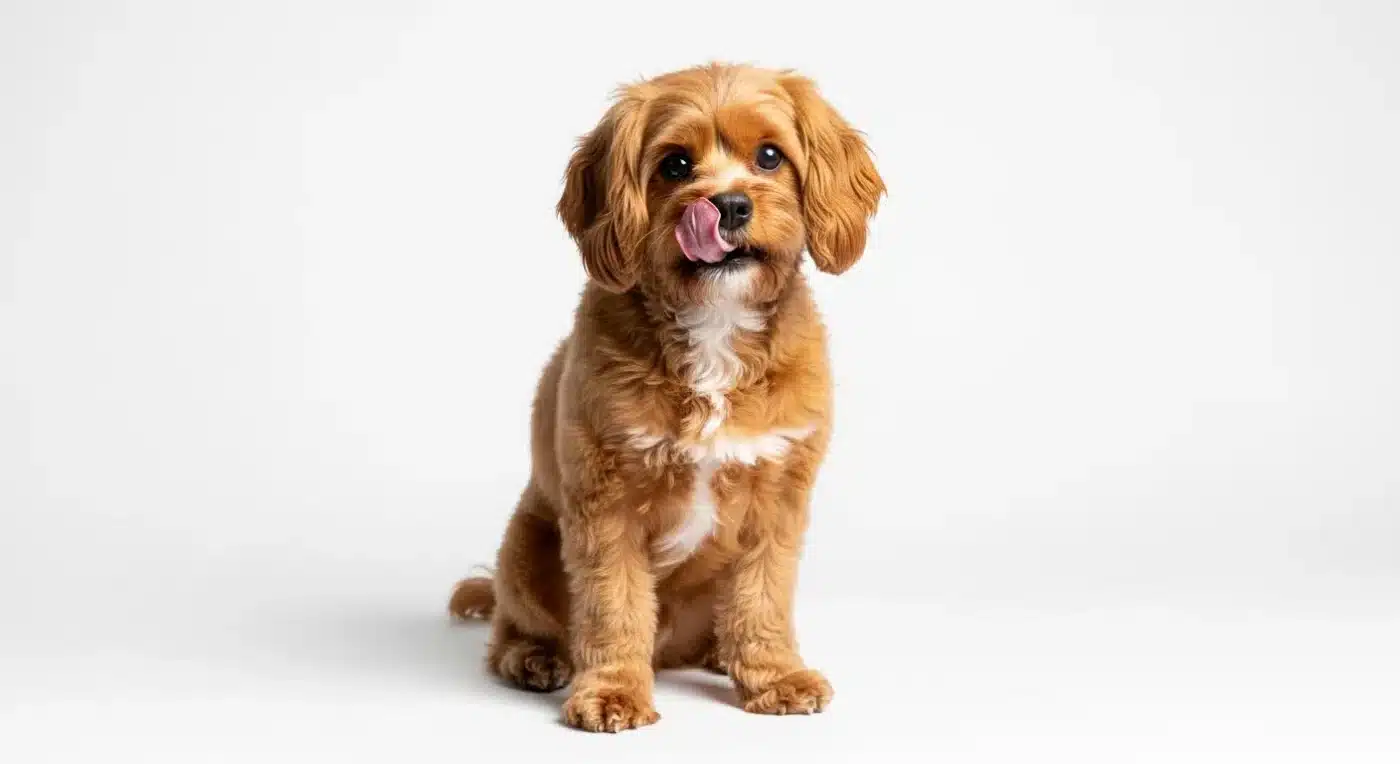
Body: Compact, well-proportioned, slightly longer than tall
Head: Round with a moderate muzzle, large expressive eyes
Ears: Long and floppy, set fairly low
Tail: Medium length, carried happily
Expression: Alert, friendly, often described as “teddy bear-like”
Coat Colours
Cavoodles come in many colours:
- Gold/Apricot — Most common
- Red — Deep rusty colour
- Cream/White — Lighter shades
- Black — Solid black
- Chocolate/Brown — Various brown shades
- Parti — Two or more colours
- Phantom — Specific pattern with tan markings
- Tricolour — Three colours (often black, white, and tan)
Colour can change as puppies mature. Some lighten, others deepen.
Cavoodle Temperament
The Good
Affectionate: Cavoodles bond deeply with their families. They want to be with you—on the couch, in bed, wherever you are.
Intelligent: They inherit the Poodle’s smarts, making them quick learners and responsive to training.
Friendly: Generally good with strangers, children, and other pets when properly socialised.
Adaptable: Happy in apartments or houses, with active families or quieter households.
Playful: Enjoy games and activities without being hyperactive.
Gentle: Usually patient and tolerant, good with children.
The Challenging
Prone to separation anxiety: The flip side of their affectionate nature. They can struggle when left alone.
Can be vocal: Some Cavoodles bark more than expected, especially when bored or anxious.
Stubborn moments: That Poodle intelligence sometimes means they know exactly what you want—and choose not to do it.
Sensitive: Harsh training methods don’t work. They respond to positive reinforcement.
Velcro dogs: They follow you everywhere. If you want an independent dog, a Cavoodle isn’t it.
Are Cavoodles Good Family Dogs?
Yes, with caveats:
Good for:
- Families who can provide companionship
- Homes where someone is present most of the day
- Families with children (with supervision)
- First-time dog owners willing to commit to grooming
Not ideal for:
- People away from home 10+ hours daily
- Those who want a truly independent dog
- Anyone unwilling to maintain grooming routine
- Families who can’t commit to training
Choosing a Cavoodle Puppy
Finding a Reputable Breeder
This is the most important decision you’ll make. A good breeder:
Health tests parents for:
- Heart conditions (MVD) — Cavalier issue
- Patella luxation — Both breeds
- Eye conditions — Both breeds
- Hip dysplasia — Less common but tested
Provides documentation:
- Vaccination records
- Worming history
- Microchip details
- Health testing certificates for parents
- Contract with health guarantee
Raises puppies well:
- Puppies stay with mum until 8 weeks minimum
- Early socialisation and handling
- Clean, healthy environment
- Allows you to visit and see conditions
Asks you questions: Good breeders want to ensure their puppies go to suitable homes. If they don’t ask about your lifestyle, that’s a red flag.
Is transparent: Willing to show you parents, answer questions, and stay in contact after purchase.
Red Flags
- No health testing or won’t show certificates
- Puppies available immediately, always
- Won’t let you visit
- Multiple litters available at once
- Significantly cheaper than other breeders
- Pressure to decide quickly
- Meet in a neutral location (not where puppies are raised)
- No questions about your home situation
Rescue Cavoodles
Cavoodles do end up in rescue, though less commonly than some breeds. If adopting:
- May have unknown history
- Could have behavioural issues to work through
- Often adults rather than puppies
- Can make wonderful pets with patience
Check breed-specific rescues and general rescue organisations.
Cost
In Australia (2026):
- Pet quality puppy: $3,500-$6,000
- Breeding rights/show quality: Higher
- Rescue adoption: $300-$800
Cheaper isn’t better with puppies. Low prices often indicate puppy mills, health testing shortcuts, or poor breeding practices.
→ Read more: Cavoodle Puppy Checklist
Bringing Your Cavoodle Home
Before Arrival
Supplies needed:
- Crate appropriately sized
- Bed and blankets
- Food and water bowls (stainless steel)
- Puppy food (same as breeder initially)
- Collar with ID tag
- Lead and harness
- Enzymatic cleaner
- Grooming supplies (slicker brush, comb, detangling spray)
- Toys—chew toys, puzzle toys, soft toys
Puppy-proofing:
- Secure electrical cords
- Remove toxic plants
- Block access to dangerous areas
- Install baby gates
- Move chemicals out of reach
First Day
- Keep things calm—no parties or crowds
- Show them toilet spot, food, water, bed
- Let them explore one room at a time
- Supervise constantly
- Start crate introduction positively
First Week
- Establish routine (feeding, toileting, sleep times)
- Continue crate training
- Begin handling exercises (touching paws, ears, mouth)
- Limit visitors
- Start separation practice (brief absences)
- First vet visit (day 2-3)
First Month
- Vaccination schedule continues
- Socialisation (within vaccination limits)
- House training in full swing
- Basic training beginning (sit, name recognition)
- Grooming handling practice
- Building positive associations with everything
→ Read more: New Puppy Schedule
Cavoodle Health
Lifespan
Average: 12-15 years
Well-bred Cavoodles from health-tested parents typically enjoy long, healthy lives.
Common Health Conditions
Cavoodles can inherit conditions from either parent breed:
From the Cavalier side:
Mitral Valve Disease (MVD)
- Progressive heart condition
- Affects many Cavaliers, can pass to Cavoodles
- Why heart testing in parents matters
- Symptoms: coughing, exercise intolerance, breathing changes
- Management: medication can help but not cure
Syringomyelia
- Skull too small for brain, affecting spinal cord
- Serious condition in Cavaliers
- Less common in Cavoodles but possible
- Symptoms: scratching at air near ears, neck pain
- Requires specialist diagnosis
Luxating Patella
- Kneecap slips out of place
- Common in small breeds including both parents
- Symptoms: skipping gait, holding leg up
- Treatment: surgery for severe cases
From both breeds:
Ear Infections
- Floppy ears trap moisture
- Very common in Cavoodles
- Prevention: weekly cleaning, keeping ears dry
- Treatment: veterinary medication
Eye Conditions
- Progressive Retinal Atrophy (PRA)
- Cataracts
- Why eye testing in parents matters
Allergies
- Skin allergies (atopy)
- Food allergies
- Can manifest as skin issues, ear problems, digestive upset
Dental Issues
- Small mouths, crowded teeth
- Prone to dental disease
- Regular dental care essential
Preventative Health Care
Vaccinations (Australian schedule):
- 6-8 weeks: C3
- 10-12 weeks: C5
- 14-16 weeks: C5 booster
- Annual: C5 booster (or as vet recommends)
Worming:
- Every 2 weeks until 12 weeks
- Monthly until 6 months
- Every 3 months lifelong
Flea and tick prevention:
- Monthly treatment from 8 weeks
- Paralysis tick coverage essential in tick areas
Desexing:
- Discuss timing with vet
- Usually recommended around 6 months
- Some vets recommend waiting longer for joint health
Regular vet checks:
- Annual minimum
- More frequent for seniors
→ Read more: Cavoodle Ear Infections | Cavoodle Allergies
Cavoodle Coat Types and Grooming
Grooming is the biggest ongoing commitment of Cavoodle ownership. Their low-shedding coats grow continuously and need regular maintenance.
The Three Coat Types
Fleece Coat (Most Common)
- Soft, wavy, silky texture
- Low shedding
- Brush every 2-3 days
- Professional groom every 6-8 weeks
- Most forgiving of the coat types
Wool Coat (Curliest)
- Tight curls, Poodle-like
- Almost no shedding
- Brush DAILY
- Professional groom every 4-6 weeks
- Mats very easily
Hair Coat (Rarest)
- Straighter, Cavalier-like
- Some shedding
- Brush 2-3 times weekly
- Professional groom every 8-10 weeks
- Lowest maintenance
→ Read more: Cavoodle Coat Types Explained
Home Grooming Routine
Daily (wool coats) or every 2-3 days (fleece):
- 1. Apply detangling spray
- 2. Line brush entire body (brush from skin, not surface)
- 3. Comb through to verify no hidden mats
- 4. Check trouble spots: behind ears, armpits, groin, collar area
Weekly:
- Ear check and clean
- Eye area wipe (especially light colours)
- Paw pad check
As needed:
- Bath (every 3-4 weeks typically)
- Always blow dry after bathing—never air dry
Professional Grooming
Frequency: Every 4-8 weeks depending on coat type and style
What’s included:
- Full brush out
- Bath and blow dry
- Haircut/styling
- Ear cleaning and plucking
- Nail trim
- Sanitary trim
Cost: $70-$120 per session in Australia
First groom: After final vaccination (around 16 weeks). Book a puppy introduction first.
Popular Haircut Styles
| Style | Description | Maintenance |
|---|---|---|
| Puppy/Teddy Bear | Even length all over, round face | Medium |
| Summer Cut | Short all over | Low |
| Lamb Cut | Short body, fluffy legs | Medium-High |
| Asian Fusion | Very round face, styled | High |
→ Read more: Cavoodle Haircut Styles | How Often to Groom a Cavoodle
Matting
The biggest grooming challenge. Mats form when loose hair tangles with growing coat.
Prevention:
- Regular brushing (can’t skip days)
- Proper technique (brush to skin, not surface)
- Never air dry after bathing
- Regular professional grooming
When mats happen:
- Small mats: work out with detangling spray and patience
- Large mats: professional grooming needed
- Severe matting: shave down may be only humane option
→ Read more: Preventing Cavoodle Matting
Other Grooming Needs
Tear stains: Common in light-coloured Cavoodles. Daily wiping helps.
→ Read more: Cavoodle Tear Stains
Ear care: Weekly cleaning prevents infections.
→ Read more: Cavoodle Ear Cleaning
Marine’s tip: If you’re getting your first Cavoodle, don’t buy grooming tools one by one. Our Cavoodle Puppy Kit bundles the exact brush, comb, and shampoo Marine uses in the salon — plus a Welcome Home guide and first groom timeline. Two tiers from $69.
Do Cavoodles Shed?
Cavoodle shedding is one of the most searched questions we hear from prospective owners. The short answer: Cavoodles are low-shedding dogs, but they are not non-shedding. No dog breed is truly non-shedding or completely hypoallergenic.
Quick Answer: Do Cavoodles Shed?
Yes, Cavoodles do shed — but far less than most breeds. Wool-coated Cavoodles shed the least, fleece coats shed lightly, and hair coats (the rarest type) shed the most. The key difference is that Cavoodle coats trap loose hair instead of dropping it, which is why regular brushing matters so much.
Many breeders market Cavoodles as “non-shedding” or “hypoallergenic,” which sets up unrealistic expectations. After grooming over 450 Cavoodles, we can tell you that every single one of them sheds to some degree. The amount varies significantly based on coat type, generation, and individual genetics.
Why Coat Type Determines Cavoodle Shedding
Your Cavoodle’s coat type is the biggest factor in how much they shed. This comes down to which parent breed’s genes are more dominant.
| Coat Type | Shedding Level | Allergy Friendly? | Expert Verdict |
|---|---|---|---|
| Wool (tight curls) | Very low | Best option | Lowest shedding but highest grooming needs. Mats easily. |
| Fleece (soft waves) | Low | Good option | Most common type. Some loose hair, trapped in coat. |
| Hair (straighter) | Moderate | Less suitable | More Cavalier-like. Sheds noticeably, especially seasonally. |
Wool coats come from strong Poodle genetics. These tight, curly coats shed the least because loose hair gets trapped in the curls rather than falling onto your furniture. The trade-off? They mat faster and need the most grooming.
Fleece coats are the most common Cavoodle coat type. They have a soft, wavy texture and shed lightly. You might find the occasional hair on your clothes, but nothing compared to a Labrador or Golden Retriever.
Hair coats are the rarest and take more after the Cavalier King Charles Spaniel parent. These coats are straighter and do shed noticeably, particularly during seasonal changes in spring and autumn.
Marine’s Pro Tip
The reason Cavoodle coats seem “non-shedding” is that loose hair gets trapped in the coat instead of falling out. That’s actually why brushing is so important — if you don’t remove that trapped hair, it tangles into mats within days. Think of it this way: the hair is still shedding, it’s just not landing on your couch. It’s landing in the coat.
How Generation Affects Cavoodle Shedding
The generation of your Cavoodle (F1, F1B, F2, etc.) directly affects shedding because it determines the percentage of Poodle genetics.
| Generation | Poodle % | Typical Shedding | Expert Verdict |
|---|---|---|---|
| F1 | 50% | Variable — low to moderate | Most unpredictable. Could go either way. |
| F1B | 75% | Low | Best for allergy sufferers. More Poodle coat. |
| F1BB | 87.5% | Very low | Lowest shedding. Very curly, high maintenance coat. |
| F2 | 50% | Variable | Can inherit hair coat. Less predictable. |
More Poodle genetics generally means less shedding. If minimal shedding is a priority for you — particularly if someone in your household has allergies — an F1B or F1BB Cavoodle is the safest choice.
What Else Affects Cavoodle Shedding?
Beyond coat type and generation, several other factors influence how much your Cavoodle sheds.
Seasonal changes: Even low-shedding Cavoodles may shed slightly more during spring and autumn as their coat adjusts to temperature changes. You might notice a bit more hair in the brush during these transition periods.
Health and nutrition: A poor diet, skin conditions, or underlying health issues can increase shedding. Omega-3 fatty acids (found in fish oil or quality dog foods) support coat health and can reduce excessive shedding.
Age: Puppies go through a coat change between 6-12 months when their puppy coat transitions to adult coat. During this period, shedding increases temporarily. This is normal and settles down once the adult coat grows in.
Stress or hormonal changes: Dogs can shed more when stressed, anxious, or going through hormonal changes (like after desexing). If your Cavoodle suddenly starts shedding more than usual, a vet check is worthwhile.
How to Manage Cavoodle Shedding
The good news is that Cavoodle shedding is very manageable with the right routine. Here is what works.
1. Brush regularly. This is the single most effective way to manage shedding. Line brushing (working through the coat in sections from skin to tip) removes loose hair before it falls onto your furniture or tangles into mats.
2. Keep up with professional grooming. Regular grooms every 4-8 weeks remove dead undercoat and keep the coat in good condition. Your groomer will also spot any skin issues that might be causing excess shedding.
3. Feed a quality diet. Omega fatty acids make a noticeable difference to coat quality and shedding. Look for foods with fish oil or consider an omega supplement — ask your vet for recommendations.
4. Never skip the blow dry. After bathing, always blow dry your Cavoodle’s coat rather than letting it air dry. Air drying causes the coat to curl tighter and trap more loose hair, leading to mats and the appearance of more shedding later.
Marine’s Pro Tip
If you’re choosing a Cavoodle specifically because you have allergies, spend time with the individual puppy before committing. Even within the same litter, shedding levels vary. And remember — it’s not just fur that triggers allergies. Dander, saliva, and urine proteins all play a role. No dog is truly hypoallergenic.
Cavoodle Shedding vs Other Popular Breeds
To put Cavoodle shedding in perspective, here is how they compare to other popular breeds in Australia.
| Breed | Shedding Level | Expert Verdict |
|---|---|---|
| Labrador Retriever | Heavy (year-round) | Constant shedding, heavy seasonal blows |
| Golden Retriever | Heavy | Long coat sheds significantly |
| Cavalier King Charles | Moderate | Noticeable shedding, especially seasonally |
| Cavoodle | Low | Minimal shedding with regular brushing |
| Poodle | Very low | Almost no shedding but high grooming needs |
Cavoodles fall between their two parent breeds — less shedding than a Cavalier, slightly more than a purebred Poodle. For most families, the amount of shedding is barely noticeable with a good brushing routine.
→ Read more: Cavoodle Coat Types Explained | Complete Cavoodle Grooming Guide
Training Your Cavoodle
Cavoodles are intelligent and eager to please, making them generally easy to train. But their sensitivity means approach matters.
Training Principles
Positive reinforcement only. Cavoodles don’t respond well to harsh corrections. Reward what you want, redirect what you don’t.
Keep it short. 5-10 minute sessions multiple times daily beat one long session.
Be consistent. Same words, same rules, everyone in the household.
Start early. Puppies are sponges. What they learn first sticks.
Essential Commands
- 1. Sit — Foundation for everything else
- 2. Come — Could save their life
- 3. Stay — Safety at doors and roads
- 4. Drop it/Leave it — They will pick up things they shouldn’t
- 5. Settle — A dog who can relax on cue goes anywhere
House Training
Cavoodles can be house trained successfully with consistency:
- Take outside frequently (every 1-2 hours for young puppies)
- Reward immediately when they go outside
- Never punish accidents—just clean and move on
- Enzymatic cleaner essential
- Expect it to take 4-8 weeks for reliability
→ Read more: House Training Puppy Australia
Crate Training
Highly recommended for Cavoodles:
- Provides security
- Helps with house training
- Creates safe space when you’re away
- Must be done positively (never punishment)
→ Read more: Crate Training Your Cavoodle
Socialisation
Critical during the first 16 weeks:
- Exposure to different people, places, sounds, surfaces
- Positive experiences with handling (essential for grooming)
- Meet friendly dogs (after vaccinations)
- Puppy classes highly recommended
Ongoing Training
Training doesn’t stop at puppyhood:
- Adolescence (6-18 months) brings testing of boundaries
- Maintain skills with regular practice
- Keep learning new things for mental stimulation
Exercise and Activity
Exercise Needs
Cavoodles are moderate-energy dogs. They need daily exercise but aren’t as demanding as high-energy breeds.
Puppies (under 6 months):
- Short play sessions
- No formal walks until vaccinated
- 5 minutes of walking per month of age (rough guide)
- Don’t over-exercise growing joints
Adults:
- 30-60 minutes of exercise daily
- One or two walks
- Playtime in yard or indoors
- Mental stimulation counts as exercise
Seniors:
- Adjust to their pace
- Shorter, gentler walks
- Swimming is easy on joints
Types of Exercise
Walks: Daily walks provide physical exercise and mental stimulation from sniffing.
Play: Fetch, tug, chase games. Cavoodles usually love playing.
Swimming: Many Cavoodles enjoy water. Good low-impact exercise.
Dog parks: Once properly socialised and trained on recall. Not all dogs enjoy them.
Mental exercise: Training, puzzle feeders, snuffle mats. Tires them out as much as physical exercise.
Signs of Under-Exercise
- Destructive behaviour
- Excessive barking
- Hyperactivity indoors
- Difficulty settling
- Weight gain
Signs of Over-Exercise
- Limping or reluctance to walk
- Excessive panting
- Lying down during walks
- Stiffness next day
Cavoodles will often keep going even when tired. It’s your job to enforce rest.
Turn Your Cavoodle Into Art
Proud cavoodle parent? Turn your favourite photo into custom art. Choose from 10 styles — watercolour, royal, cartoon, pop art and more. Over 590 Australian dog owners have already tried it.
100% free · No credit card · 590+ portraits created
Feeding and Nutrition
How Much to Feed
Varies by size, age, activity level, and food type. General guidelines:
Puppies: Follow food packaging, divided into 3-4 meals, reducing to 2 meals around 6 months
Adults:
- Toy Cavoodle: 1/2 – 3/4 cup per day
- Mini Cavoodle: 3/4 – 1 cup per day
- Standard Cavoodle: 1 – 1.5 cups per day
Adjust based on body condition—you should be able to feel ribs easily but not see them.
Food Types
Kibble (dry food):
- Convenient and affordable
- Good for dental health
- Quality varies widely—check ingredients
- Meat should be first ingredient
Wet food:
- More palatable
- Higher moisture content
- Can be mixed with kibble
- More expensive
Fresh/raw:
- Growing in popularity
- Requires research to balance properly
- Commercial fresh foods (Lyka, Big Dog) simplify this
- Discuss with your vet
What to Avoid
Toxic foods:
- Chocolate
- Grapes and raisins
- Onion and garlic
- Xylitol (artificial sweetener)
- Macadamia nuts
- Avocado
Other concerns:
- Cooked bones (splinter risk)
- Excessive fat
- Salt in large amounts
Weight Management
Cavoodles gain weight easily. Extra weight:
- Stresses joints (worsens patella issues)
- Increases health risks
- Shortens lifespan
Maintain healthy weight through portion control and regular exercise. Adjust food based on treats given during training.
Common Behavioural Issues
Separation Anxiety
The most common Cavoodle behaviour problem.
Signs:
- Excessive barking/howling when alone
- Destructive behaviour
- Toileting inside (when house trained)
- Following you everywhere
- Distress when you prepare to leave
Prevention:
- Practice separation from day one
- Don’t create over-attachment
- Make departures boring
- Build independence
Treatment:
- Gradual desensitisation
- Management (daycare, dog walker)
- Medication in severe cases
- Professional behaviourist help
→ Read more: Cavoodle Separation Anxiety
Barking
Some Cavoodles are vocal. Common triggers:
- Boredom
- Anxiety
- Alert barking (someone at door)
- Attention seeking
- Excitement
Solutions:
- Address the cause (more exercise, reduce anxiety)
- Teach “quiet” command
- Don’t reward barking with attention
- Provide mental stimulation
→ Read more: Puppy Barking Solutions
Biting/Mouthing
Normal in puppies, should reduce with age.
Management:
- Redirect to appropriate toys
- Yelp and withdraw when they bite too hard
- Time outs for persistent biting
- Never use physical punishment
→ Read more: Stop Puppy Biting
Resource Guarding
Some dogs guard food, toys, or sleeping spots.
Prevention:
- Trade games (give something better in exchange)
- Hand feed sometimes
- Teach “drop it”
- Don’t take things away without trading
Treatment: If serious, consult a professional. Punishment makes guarding worse.
Living with a Cavoodle
Apartment Living
Cavoodles can do well in apartments:
- Small enough for limited space
- Not excessive barkers (usually)
- Moderate exercise needs
Considerations:
- Need daily outdoor exercise
- May need puppy pads for toilet emergencies
- Neighbours affected by any barking
- No yard for free play
Houses with Yards
Ideal for Cavoodles:
- Space to play
- Easy toilet access
- Still need walked—yard isn’t enough exercise
Fencing: Must be secure. Cavoodles can squeeze through small gaps.
With Children
Generally excellent with kids:
- Patient and gentle
- Playful without being overwhelming
- Sturdy enough for family life
Rules:
- Always supervise young children and dogs
- Teach kids how to interact appropriately
- Dog needs space to retreat when tired
- No teasing, pulling ears/tail, disturbing sleep
With Other Pets
Usually good with other animals when properly introduced:
- Other dogs: Generally friendly, socialisation helps
- Cats: Can live peacefully, especially if raised together
- Small pets: Supervision needed, some have prey drive
Travel
Cavoodles can be good travel companions:
- Small enough for many carriers
- Adaptable to new environments
- Crate training helps
Car travel: Use secured crate or harness. Never leave in hot car.
Air travel: Check airline requirements. May need health certificate.
Accommodation: Many places accept small dogs. Book pet-friendly in advance.
Senior Cavoodles
As they age (8+ years):
- Exercise needs decrease
- May develop health issues
- Grooming may need to be gentler
- More rest needed
- Diet may need adjusting
- Regular vet checks more important
Most Cavoodles remain loving companions well into their senior years.
Cavoodle Costs
Initial Costs
| Item | Cost Range |
|---|---|
| Puppy purchase | $3,500-$6,000 |
| Initial vet visit | $100-$200 |
| Vaccinations | $150-$300 |
| Desexing | $300-$600 |
| Microchipping (if not done) | $50-$80 |
| Initial supplies | $300-$500 |
| Total first year setup | $4,500-$7,700 |
Ongoing Annual Costs
| Item | Cost Range |
|---|---|
| Food | $600-$1,200 |
| Professional grooming (6-8x) | $500-$900 |
| Vet check-ups | $100-$200 |
| Vaccinations | $100-$200 |
| Flea/tick/worm prevention | $200-$400 |
| Pet insurance (optional) | $400-$1,000 |
| Toys and supplies | $100-$300 |
| Total per year | $2,000-$4,200 |
Unexpected Costs
- Emergency vet visits: $500-$5,000+
- Illness treatment: Varies widely
- Behavioural training: $100-$300 per session
- Boarding/pet sitting: $40-$80 per night
Pet Insurance
Consider pet insurance:
- Covers unexpected illness and injury
- Compare policies carefully
- Pre-existing conditions excluded
- Worth it for peace of mind
Frequently Asked Questions
General
Are Cavoodles hypoallergenic?
No dog is truly hypoallergenic. Cavoodles are low-shedding (not non-shedding), with wool coats shedding least and hair coats shedding most. They produce less dander than many breeds, but individual reactions vary. Spend time with a Cavoodle before committing if allergies are a concern. F1B and F1BB generations are the best choice for allergy sufferers.
How long do Cavoodles live?
12-15 years with good care and healthy genetics.
Are Cavoodles good for first-time owners?
Yes, with commitment. They’re forgiving of beginner mistakes, eager to please, and adaptable. The grooming commitment is the main challenge.
Do Cavoodles bark a lot?
It varies. Some are quiet, some are vocal. Training and meeting exercise/stimulation needs helps manage barking.
Grooming
How often do Cavoodles need grooming?
Professional grooming every 4-8 weeks depending on coat type. Home brushing every 1-3 days.
Can I groom my Cavoodle myself?
Basic brushing should be done at home. Full grooming (bathing, haircuts) requires skill and equipment most owners don’t have.
Why does my Cavoodle get matted so easily?
Cavoodle coats don’t shed normally—loose hair stays trapped. Without regular brushing, it tangles into mats.
Health
What health problems do Cavoodles have?
Potential issues include heart conditions (from Cavalier), ear infections, allergies, luxating patella, and eye conditions. Choose a breeder who health tests.
When should I desex my Cavoodle?
Discuss with your vet. Traditional recommendation is around 6 months, but some vets suggest waiting longer for joint health.
Behaviour
Do Cavoodles have separation anxiety?
Many do. It’s the most common behaviour issue in the breed. Prevention through early training is key.
Are Cavoodles easy to train?
Generally yes. They’re intelligent and eager to please. Positive reinforcement works best.
Can Cavoodles be left alone?
Adult Cavoodles can typically manage 4-6 hours alone. Longer requires a dog walker or daycare. Puppies need more frequent attention.
Practical
How big will my Cavoodle get?
Depends on parents. Toy: 5-7kg. Mini: 7-10kg. Standard: 10-14kg. Ask your breeder for estimates.
What do Cavoodles eat?
Quality dog food appropriate for their size. Can be kibble, wet, fresh, or raw. Avoid toxic human foods.
Are Cavoodles good with kids?
Usually excellent. Gentle, patient, and playful. Always supervise young children with any dog.
Is a Cavoodle Right for You?
Cavoodles Are Great If You:
- Want an affectionate, loyal companion
- Can provide daily companionship (or arrange for it)
- Will commit to regular grooming
- Have time for moderate daily exercise
- Want a trainable, intelligent dog
- Have a lifestyle that includes your dog
Cavoodles May Not Be Right If You:
- Work long hours with no one home
- Don’t want ongoing grooming commitment
- Want a truly independent dog
- Can’t afford regular professional grooming
- Aren’t prepared for potential separation anxiety
- Want a guard dog (they’re too friendly)
Final Thoughts
Cavoodles have earned their popularity. They’re genuinely wonderful dogs—affectionate, intelligent, adaptable, and endlessly endearing with that teddy bear face.
But they’re not the low-maintenance dogs many people assume. Their coats need regular care. Their intelligent minds need stimulation. Their loving nature needs your presence.
If you can provide what they need, a Cavoodle will give you years of loyal companionship, endless entertainment, and the kind of bond that makes dog ownership so rewarding.
More Cavoodle Resources
This guide provides an overview. For detailed information on specific topics, explore our complete Cavoodle resource library:
Getting Started:
Grooming:
- Cavoodle Coat Types Explained
- How Often to Groom a Cavoodle
- Cavoodle Haircut Styles
- Preventing Cavoodle Matting
- Cavoodle Tear Stains
- Cavoodle Ear Cleaning
Health:
Training & Behaviour:
- House Training Puppy Australia
- Crate Training Your Cavoodle
- Cavoodle Separation Anxiety
- Stop Puppy Biting
- Puppy Barking Solutions
About WoofSpark
We’re professional dog groomers in Cessnock, NSW, and Cavoodles are our specialty.
Our Cavoodle experience:
- 450+ Cavoodles groomed
- Every coat type, every style
- Expert advice on coat care
- Gentle puppy introductions
This guide is based on what we’ve learned from working with Cavoodles daily and talking to their owners about what works.
If you’re in the Hunter Valley area and have a Cavoodle (or are getting one), we’d love to meet them.

Written by Marine Ponchaut
Marine is the founder of WoofSpark, a professional dog grooming salon in Cessnock, NSW. Since founding WoofSpark in 2019, she has groomed thousands of dogs and helped countless new puppy owners get started on the right foot.
Cavoodles Are Our Specialty
We’ve groomed over 450 Cavoodles at WoofSpark. We know the breed, we know the coats, and we know how to make grooming a positive experience. Book your Cavoodle’s appointment or ask us anything.
Getting a Cavoodle? Start Here.
Marine hand-picked every tool in the Cavoodle Puppy Kit based on 16,000+ grooms. The right brush, the right shampoo, a first groom voucher — everything you need from day one. Three tiers from $69.