

Puppy Guide
Cavoodle Puppy Sleep Training: Complete Guide to Peaceful Nights
Jan
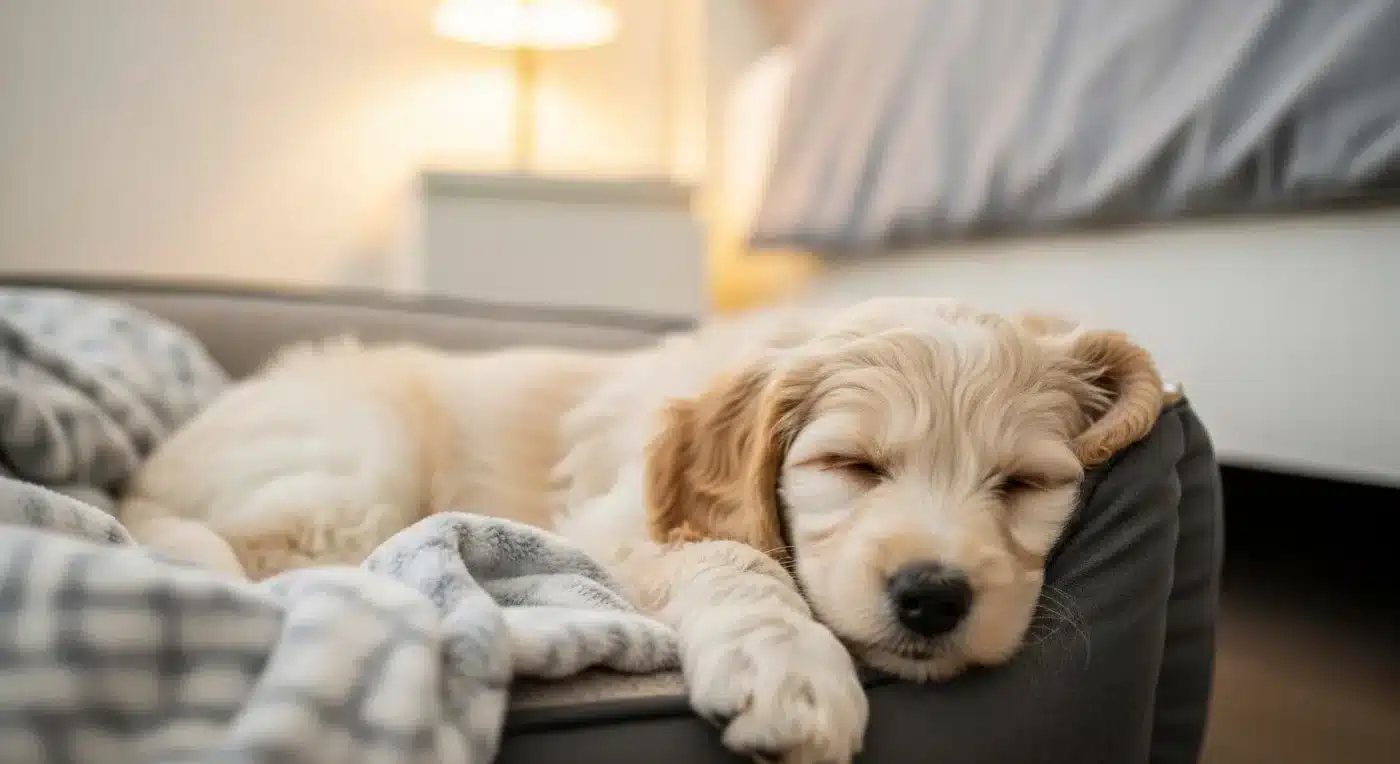
If you’ve just brought home a Cavoodle puppy, you’re probably wondering when you’ll sleep again. Those first few nights of whining, middle-of-the-night toilet breaks, and early morning wake-ups can be exhausting. The good news? Cavoodles are smart and adaptable — with the right approach, most puppies sleep through the night within 2-4 weeks.
They won’t be this small forever. Turn your Cavoodle’s best photo into custom art. 10 styles, free to create.
🎯 Quick Answer
Most Cavoodle puppies sleep through the night (6-7 hours) by 12 to 16 weeks of age. To achieve this, establish a strict routine: remove water at 9pm, take a final toilet break at 10pm, place the crate in your bedroom for the first few weeks, and keep nighttime interactions boring — no play, just toilet and back to bed.
This guide covers everything you need to know about Cavoodle sleep patterns, how to establish healthy sleep habits, and what to do when things don’t go to plan.
New to Cavoodle ownership? Start with our complete guide to preparing for a Cavoodle puppy — it covers everything from puppy-proofing to feeding schedules.
How Much Sleep Does a Cavoodle Puppy Need?
Puppies sleep far more than adult dogs — and that’s completely normal. Sleep is when their bodies grow, their brains develop, and they process everything they’ve learned.
Sleep Requirements by Age
| Age | Hours of Sleep Per Day | Notes |
|---|---|---|
| 8-10 weeks | 18-20 hours | Frequent naps, wakes for food/toilet |
| 10-12 weeks | 18-20 hours | Starting to consolidate nighttime sleep |
| 3-6 months | 16-18 hours | Longer awake periods, may sleep through night |
| 6-12 months | 14-16 hours | More adult-like schedule emerging |
| 12+ months (Adult) | 12-14 hours | Stable routine, sleeps when you sleep |
Key insight: An 8-week-old Cavoodle puppy is only awake for about 4-6 hours per day, spread across multiple short periods. If your puppy is awake for more than 1-2 hours at a time, they’re probably overtired.
The First Night: What to Expect
Your puppy’s first night in their new home is tough — for both of you. They’ve just left their mother, littermates, and everything familiar. It’s completely normal for them to cry, whine, or bark.
Preparing for Night One
- Tire them out gently — A bit of play before bed helps, but don’t overdo it. Overtired puppies are harder to settle.
- Last toilet break — Take them outside right before bed. Wait until they actually go.
- Comfort items — A blanket or toy that smells like their littermates helps enormously. Ask your breeder for one.
- Warm (not hot) water bottle — Wrapped in a towel, this mimics the warmth of sleeping with siblings.
- Heartbeat toy — Some owners swear by these. The rhythmic “heartbeat” can be soothing.
💡 Marine’s Pro Tip
In the salon, I see the difference good sleep training makes — well-rested Cavoodles are calmer on the grooming table and handle new experiences much better. Puppies that missed early sleep training often struggle with anxiety during their first professional groom.
Should You Let Them Cry?
This is where opinions differ. Here’s what we recommend:
The first few nights: Comfort your puppy when they cry. They’re genuinely scared and need reassurance. You won’t “spoil” them — you’re building trust.
After the first week: Once they’ve settled in, it’s okay to let them fuss briefly before going to them. Wait 30 seconds to a minute. Often they’ll settle themselves. But if crying escalates or continues, they probably need a toilet break.
Where Should Your Cavoodle Sleep?
This decision sets the tone for your dog’s entire life, so think it through. Here’s how each option compares:
| Location | Pros | Cons | Expert Verdict |
|---|---|---|---|
| Crate in Bedroom | Builds security, you hear toilet cues, reassuring for anxious puppies | Temporary sleep disruption for you, harder to transition out later | ✅ Best for weeks 8-12 |
| Crate in Separate Room | Establishes independence early, less disruption to your sleep | High stress for puppy initially, easy to miss toilet cues, more crying | Best for 6+ months |
| Your Bed | Maximum bonding and warmth, strong attachment | Hard to reverse, toilet accident risk, safety risk for tiny puppies | ❌ Not recommended for puppies |
Our recommendation: Start with a crate in or near your bedroom for the first few weeks. Once your puppy is sleeping through the night and toilet trained, you can move the crate or adjust the arrangement to suit your lifestyle.
Creating the Perfect Sleep Environment
Setting up the right sleep space makes training much easier.
The Crate Setup
- Size matters: Big enough to stand, turn, and lie down — but not so big they can toilet in one corner and sleep in another
- Comfortable bedding: A soft, washable bed or blankets. Avoid anything they might chew and swallow.
- Location: Away from drafts and direct heat. Quiet but not isolated.
- Cover it: Draping a blanket over the crate (leaving the front open) creates a cozy den feeling
Room Temperature
Cavoodles have moderate coats and do best at normal household temperatures (18-22°C). In summer, ensure good airflow. In winter, they may appreciate an extra blanket.
Marine’s tip: A good sleep setup starts with the right blanket and a consistent bedtime routine. Our Complete Kit ($169) includes everything for settling your Cavoodle in — plus a slicker brush and grooming guide so mornings go smoothly too.
Sleep Training Schedule: Week by Week
Week 1: Survival Mode
Goal: Get through it. Build trust.
- Expect 2-3 toilet breaks per night
- Keep nighttime interactions boring — toilet break, back to bed, no play
- Comfort crying puppy (they’re adjusting)
- Don’t stress about “training” — just survive
Week 2: Establishing Routine
Goal: Introduce consistent bedtime routine.
- Same bedtime every night (e.g., 10pm)
- Pre-bed routine: toilet → calm time → crate
- Toilet breaks should reduce to 1-2 per night
- Start waiting 30 seconds before responding to whining
Week 3-4: Consolidating
Goal: Sleeping longer stretches.
- Many puppies can make it 5-6 hours by now
- One toilet break per night (or none!)
- Bedtime routine should feel familiar to puppy
- Can start moving crate if desired
Week 5+: The New Normal
Goal: Sleeping through the night.
- Most Cavoodles sleep 7-8 hours straight by this stage
- Consistent wake time in the morning
- Reliable routine established
The Bedtime Routine That Works
Dogs thrive on predictability. A consistent bedtime routine signals “sleep time is coming” and helps your puppy wind down.
Sample Bedtime Routine
- 9:00 PM — Remove water bowl (reduces overnight toilet needs)
- 9:30 PM — Calm time (no play, just quiet hanging out)
- 9:45 PM — Final toilet break (wait until they go)
- 10:00 PM — Crate time (treat, calm “goodnight,” lights out)
Do the exact same thing, in the exact same order, every single night. Your puppy will learn that this sequence means sleep.
Common Sleep Problems (And How to Fix Them)
Use this troubleshooting guide to quickly identify and fix common Cavoodle puppy sleep issues:
| Problem | Likely Cause | The Fix |
|---|---|---|
| Crying all night | Fear, needing toilet, hunger, too much daytime sleep | Move crate closer, add comfort items, ensure enough daytime activity |
| Waking at 5am | Hunger, light exposure, or learned behaviour | Use blackout blinds, delay breakfast by 15 mins each day, don’t respond immediately |
| Won’t settle in crate | Negative crate association, wrong size, overtired | Feed meals in crate, practice daytime crate time, enforce daytime naps |
| Toilet accidents in crate | Crate too big, left too long, medical issue | Use divider to reduce space, more frequent breaks, vet check to rule out UTI |
| Sudden sleep regression | Teething, growth spurt, change in routine | Maintain consistency, this usually passes in 1-2 weeks |
💡 Marine’s Pro Tip
I often see Cavoodles with matted fur on their hindquarters because they weren’t crate trained and rub against furniture at night. A proper sleep routine actually helps your dog’s coat health — they move less and mat less!
Daytime Naps: The Secret to Good Night Sleep
Here’s something many new owners miss: a puppy who doesn’t nap enough during the day will sleep worse at night. Overtired puppies get hyperactive, nippy, and struggle to settle.
Enforced Naps
Yes, you sometimes need to make your puppy nap. They don’t always know when they’re tired.
Signs your puppy needs a nap:
- Getting nippy or bitey
- Hyperactive, can’t settle
- Ignoring commands they usually follow
- Excessive barking
- Been awake more than 1-2 hours
How to enforce naps:
- Pop them in their crate with a chew or Kong
- Cover the crate
- Walk away
- Let them fuss briefly — they’ll usually settle within 10 minutes
Aim for a 1-2 hours awake, 2-3 hours asleep pattern during the day for young puppies.
💡 Marine’s Pro Tip
The overtired “zoomies” before bedtime are the #1 complaint I hear from new Cavoodle parents. If your puppy goes crazy at 8pm every night, they probably missed their afternoon nap. An enforced 2-3pm nap can fix bedtime chaos.
When to Worry
Some sleep issues need professional help:
- No improvement after 4 weeks — Sleep training should show progress by now
- Extreme distress — Screaming, self-harm, toileting immediately in crate
- Sudden change in sleeping patterns — Could indicate pain or illness
- Excessive sleeping during the day — More than 20 hours could indicate health issues
If you’re struggling, talk to your vet or a qualified dog behaviourist.
Final Thoughts
Sleep training a Cavoodle puppy takes patience, consistency, and a few sleepless nights. But it’s worth it. Within a few weeks, you’ll have a puppy who settles happily at bedtime and sleeps through the night — giving both of you the rest you need.
Remember: every puppy is different. Some sleep through the night at 10 weeks; others take until 4 months. Both are normal. Trust the process, stick to your routine, and it will click.
For the complete picture of raising a Cavoodle puppy — from feeding schedules to vet visits — see our complete guide to preparing for a Cavoodle puppy. You can also explore our complete Cavoodle guide for breed-specific advice on health, grooming, and training.

Written by Marine Ponchaut
Marine is the founder of WoofSpark, a professional dog grooming salon in Cessnock, NSW. Since founding WoofSpark in 2019, she has groomed thousands of dogs — including countless Cavoodles, one of Australia’s most popular breeds.
Sleep Better, Together
A well-rested puppy is a happy puppy. And a well-rested owner is a better trainer. If you’re struggling with sleep training, remember — this phase doesn’t last forever. Hang in there.
Getting a Cavoodle? Start Here.
Marine hand-picked every item in the Cavoodle Puppy Kit based on 16,000+ grooms. The right brush, the right shampoo, grooming guides — everything you need from day one. Two tiers from $69.
Turn Your Cavoodle Into a Work of Art
Upload a photo, pick a style, and get a stunning AI portrait of your Cavoodle in minutes. Free preview — no payment needed.
The Cavoodle Puppy Kit
Groomer-selected tools, coat care guide, and a free first groom voucher — everything your Cavoodle needs from day one.
From $69 · Free shipping over $50