
Puppy Guide
How Big Do Cavoodles Get? Weight & Height by Age (Toy, Mini, Standard)
Jan
“How big will my Cavoodle get?” It’s one of the most common questions from new owners – and the answer isn’t always straightforward. Cavoodles come in different sizes, and predicting exactly how big an individual puppy will grow can be tricky.
This guide covers everything you need to know about Cavoodle sizes, including the different types, average weights at each age, factors that affect size, and how to estimate your puppy’s adult size.
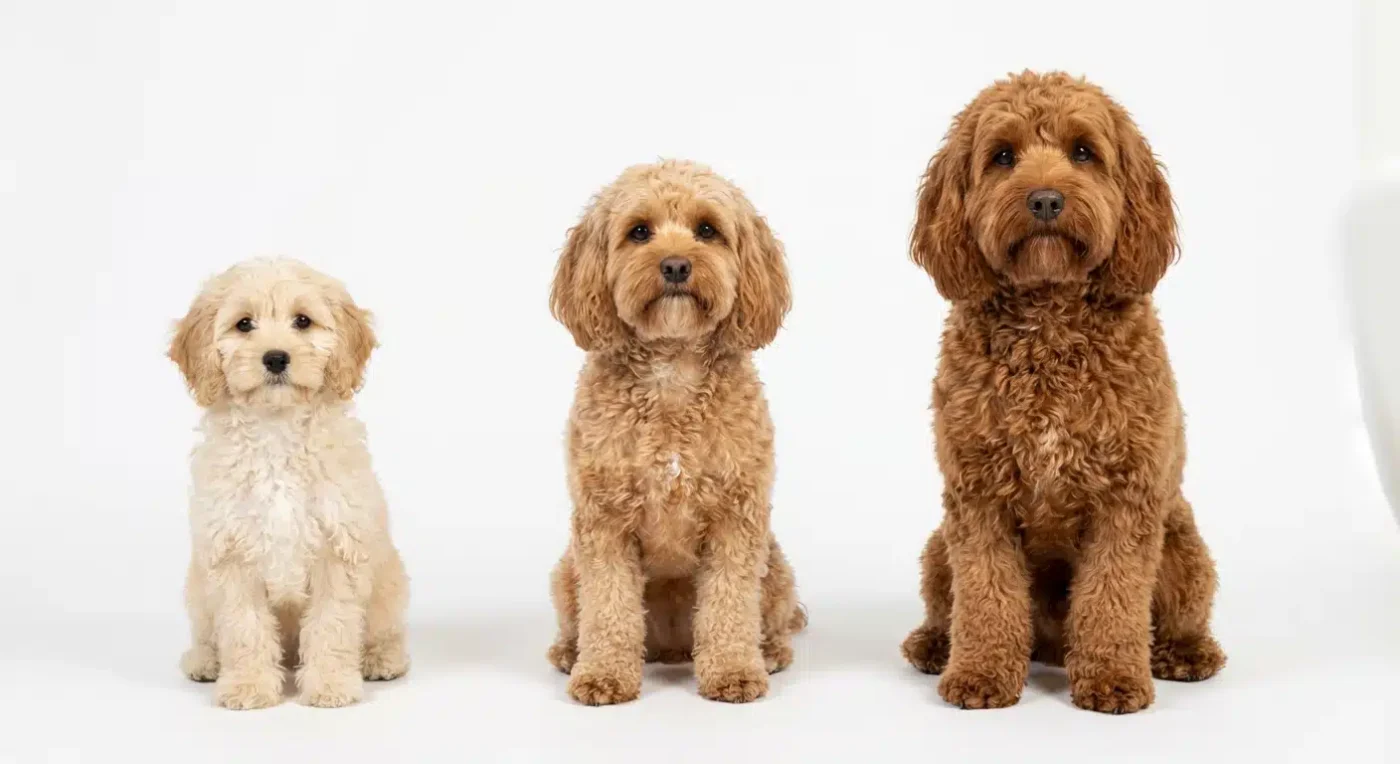
Cavoodle Size Categories
Cavoodles are typically categorised into three size groups based on the Poodle parent used in breeding:
| Type | Adult Weight | Adult Height | Poodle Parent |
|---|---|---|---|
| Toy Cavoodle | 5-7 kg | 25-30 cm | Toy Poodle |
| Mini Cavoodle | 7-10 kg | 30-35 cm | Miniature Poodle |
| Standard Cavoodle | 10-12 kg | 35-38 cm | Small Standard Poodle |
Note: Height is measured to the shoulder (withers), not the top of the head.
Toy Cavoodle
The smallest variety, created by crossing a Cavalier King Charles Spaniel with a Toy Poodle.
- Adult weight: 5-7 kg (11-15 lbs)
- Adult height: 25-30 cm (10-12 inches)
- Best for: Apartments, elderly owners, lap dog enthusiasts
- Considerations: More fragile, not ideal for homes with young children who might accidentally hurt them
Mini Cavoodle (Most Common)
The most popular size, created by crossing a Cavalier with a Miniature Poodle.
- Adult weight: 7-10 kg (15-22 lbs)
- Adult height: 30-35 cm (12-14 inches)
- Best for: Families, apartments or houses, most lifestyles
- Considerations: Good balance of portability and sturdiness
Standard Cavoodle
Less common in Australia, created by crossing a Cavalier with a smaller Standard Poodle or larger Miniature Poodle.
- Adult weight: 10-12 kg (22-26 lbs)
- Adult height: 35-38 cm (14-15 inches)
- Best for: Those wanting a slightly larger dog while maintaining Cavoodle traits
- Considerations: Less available from breeders, may look more like a small doodle than typical Cavoodle
Cavoodle Growth Chart by Age
Cavoodles reach their full adult height by around 9-12 months, though they may continue filling out (gaining muscle and mature body weight) until 12-18 months.
Toy Cavoodle Growth
| Age | Weight Range | % of Adult Weight |
|---|---|---|
| 8 weeks | 0.8-1.2 kg | ~15% |
| 3 months | 1.5-2.2 kg | ~30% |
| 4 months | 2.2-3.2 kg | ~45% |
| 6 months | 3.5-5 kg | ~70% |
| 9 months | 4.5-6 kg | ~90% |
| 12 months | 5-7 kg | 100% |
Mini Cavoodle Growth
| Age | Weight Range | % of Adult Weight |
|---|---|---|
| 8 weeks | 1.2-1.8 kg | ~15% |
| 3 months | 2.5-3.5 kg | ~30% |
| 4 months | 3.5-5 kg | ~45% |
| 6 months | 5-7 kg | ~70% |
| 9 months | 6-9 kg | ~90% |
| 12 months | 7-10 kg | 100% |
Standard Cavoodle Growth
| Age | Weight Range | % of Adult Weight |
|---|---|---|
| 8 weeks | 1.5-2.2 kg | ~15% |
| 3 months | 3-4.5 kg | ~30% |
| 4 months | 4.5-6 kg | ~45% |
| 6 months | 7-9 kg | ~70% |
| 9 months | 9-11 kg | ~90% |
| 12 months | 10-12 kg | 100% |
Important: These are general guidelines. Individual puppies can vary significantly. If you’re concerned about your puppy’s growth, consult your vet.
Factors That Affect Cavoodle Size
1. Parent Sizes
The most significant factor is the size of both parents. A puppy from a small Cavalier and Toy Poodle will be smaller than one from a large Cavalier and Miniature Poodle.
Ask your breeder:
- What do the parents weigh?
- How big are siblings from previous litters?
- Are grandparents available to see?
2. Generation
The generation affects size predictability:
- F1 (First generation): Cavalier x Poodle – most variation in size
- F1B: Cavoodle x Poodle – typically smaller if bred back to Toy Poodle, or similar if to Mini
- F2 and beyond: Cavoodle x Cavoodle – more consistent but can still vary
First generation (F1) puppies have the most variation because they’re inheriting genes from two different breeds. Some may favour the Cavalier size, others the Poodle.
3. Sex
Male Cavoodles tend to be slightly larger than females, though the difference is usually minimal (0.5-1 kg and 1-2 cm).
4. Nutrition
Proper nutrition during puppyhood supports healthy growth. Under-feeding can stunt growth; over-feeding can lead to obesity but won’t make them grow “bigger” – it makes them fat.
5. Desexing Timing
Some research suggests that desexing before skeletal maturity (around 12 months) may result in slightly taller dogs, as growth plates close later. The difference is usually minimal.
How to Estimate Your Puppy’s Adult Size
While no method is 100% accurate, here are some ways to estimate:
The 16-Week Formula
Multiply your puppy’s weight at 16 weeks by 2.5 for an estimate of adult weight.
Example: 3 kg at 16 weeks × 2.5 = ~7.5 kg adult weight
This is a rough estimate and works better for smaller breeds like Cavoodles.
The Double-at-4-Months Rule
For small breeds, doubling the weight at 4 months gives a rough adult weight estimate.
Example: 4 kg at 4 months = ~8 kg adult weight
Paw Size
Large paws relative to body size can indicate more growing to do. However, this isn’t reliable for Cavoodles since they’re already a small breed.
Ask the Breeder
Experienced breeders who know their lines can often give the most accurate predictions based on parent sizes and previous litters.
Toy vs Mini vs Standard: Which Should You Choose?
Choose Toy Cavoodle If:
- You live in a small apartment
- You want maximum portability (travel, carrying)
- Your household has only adults or older, gentle children
- You prefer a true lap dog
- Lower food and some care costs appeal to you
Considerations: More fragile, can be injured by rough handling, may be harder to toilet train (smaller bladder), may have more dental issues (crowded teeth)
Choose Mini Cavoodle If:
- You want the “classic” Cavoodle experience
- You have a family with children
- You want a balance of small dog and sturdiness
- You live in an apartment or house
- You want the widest choice of breeders
Considerations: Most common and popular size, giving you the most options
Choose Standard Cavoodle If:
- You prefer a slightly larger dog
- You have active, older children
- You want more robustness for outdoor activities
- You don’t mind a dog that’s harder to carry
Considerations: Less common, fewer breeders offer them, may look more “doodle” than “Cavoodle”
Marine’s tip: Whatever size your Cavoodle ends up, the grooming needs are the same — they all need daily brushing with the right tools. The Essential Kit ($69) works for toy, mini, and standard Cavoodles. One box to get you started.
Common Size Misconceptions
“Teacup” Cavoodles
Some breeders advertise “teacup” Cavoodles – supposedly even smaller than Toy. Be very cautious:
- There’s no official “teacup” category
- Extremely small dogs often have more health problems
- Dogs under 5 kg can be fragile and have short lifespans
- May indicate breeding for appearance over health
A healthy Toy Cavoodle of 5-7 kg is already small. Pushing for smaller often means health compromises.
“My Cavoodle is Bigger Than Expected”
We hear this often. Common reasons:
- Overweight: Many owners overfeed. Check body condition, not just weight
- Fluffy coat: A fluffy coat makes dogs look much larger than they are
- Genetics: Sometimes puppies just end up larger than expected
- Mis-marketed: Some breeders sell Mini as Toy to charge higher prices
If your adult Cavoodle is significantly larger than expected (e.g., 12+ kg when told Toy), they may have been mis-sold, or one parent wasn’t what was claimed.
“Coat Fluff = Size”
A Cavoodle with a full, fluffy coat can appear much larger than one that’s just been groomed short. The same dog can look like two different sizes depending on coat length.
Ideal Weight vs Overweight
Many Cavoodles we see are overweight. Here’s how to tell if yours is at a healthy weight:
Healthy Weight Signs
- Ribs: Easily felt with light pressure (you shouldn’t need to press hard)
- Waist: Visible narrowing when viewed from above
- Tummy: Tucks up when viewed from the side
- Spine: Not prominent but can be felt
Overweight Signs
- Can’t feel ribs without pressing firmly
- No visible waist – body is rectangular or barrel-shaped
- Belly hangs down or is rounded
- Fat deposits on neck or base of tail
A healthy-weight Cavoodle often looks “too thin” to owners used to seeing overweight dogs. When in doubt, ask your vet.
Frequently Asked Questions
How big do Cavoodles get?
Most Cavoodles in Australia are Mini Cavoodles, weighing 7-10 kg and standing 30-35 cm at the shoulder. Toy Cavoodles are 5-7 kg, and Standard Cavoodles (less common) are 10-12 kg. Adult height is typically reached by 9-12 months.
At what age is a Cavoodle fully grown?
Cavoodles reach their full height by 9-12 months. They may continue filling out and gaining muscle until 12-18 months. Smaller (Toy) Cavoodles mature faster than larger ones.
How can I tell if my Cavoodle will be small or large?
The best indicators are parent sizes and breeder experience with their lines. You can also use the 16-week formula (weight at 16 weeks × 2.5) for a rough estimate. However, all puppies vary – some end up larger or smaller than predicted.
Why is my Cavoodle bigger than the breeder said?
Common reasons include: genetics (puppies can vary even in the same litter), being overweight (check body condition, not just numbers), or the dog being mis-represented at sale. Sometimes breeders genuinely can’t predict – especially with first-generation crosses.
Are male or female Cavoodles bigger?
Males tend to be slightly larger than females, but the difference is usually minimal – around 0.5-1 kg and 1-2 cm. Sex should not be a major factor in choosing based on size preference.
Do Cavoodles stay small forever?
Cavoodles are small dogs for their entire lives. They don’t suddenly grow large after puppyhood. However, they will reach their adult size by 12-18 months and won’t stay “puppy-sized” forever. A Toy Cavoodle will always be small (5-7 kg); a Mini will be in the 7-10 kg range permanently.
The Bottom Line
Cavoodles are small to medium-small dogs regardless of type. Even a “large” Cavoodle (Standard at 12 kg) is still a manageable, portable dog.
Key takeaways:
- Most Australian Cavoodles are Mini (7-10 kg)
- Toy Cavoodles are 5-7 kg; Standards are 10-12 kg
- Parent size is the best predictor of puppy’s adult size
- Growth is complete by 12-18 months
- Focus on healthy weight, not hitting a specific number
- Be wary of “teacup” marketing
When choosing a breeder, ask about parent sizes and previous litter sizes. But remember – even with the best predictions, individual puppies vary. What matters most is that your Cavoodle is healthy, happy, and loved.
Related Resources
For more Cavoodle information, visit our Cavoodle Learning Centre, including:
- Cavoodle Feeding Guide – Portion sizes by weight
- Cavoodle vs Groodle Comparison – If you’re considering a larger oodle
- How to Prepare for a Cavoodle Puppy – Choosing your breeder

Written by Marine Ponchaut
Marine is the founder of WoofSpark in Cessnock, NSW. Over the past 5 years, her team has groomed 3,248 Cavoodles—she knows exactly how these dogs grow, what size they end up, and which “surprises” new owners encounter. This guide comes from real experience, not textbooks.
Getting a Cavoodle? Start Here.
Marine hand-picked every tool in the Cavoodle Puppy Kit based on 16,000+ grooms. The right brush, the right shampoo, a first groom voucher — everything you need from day one. Three tiers from $69.
See the Puppy Kit Or Capture Them in a Portrait🐾 Turn Your Cavoodle Into a Work of Art
Get a free watercolour portrait of your dog — created from your favourite photo. Loved by 2,500+ Aussie dog parents.
Create Your Free Portrait →