

Puppy Guide
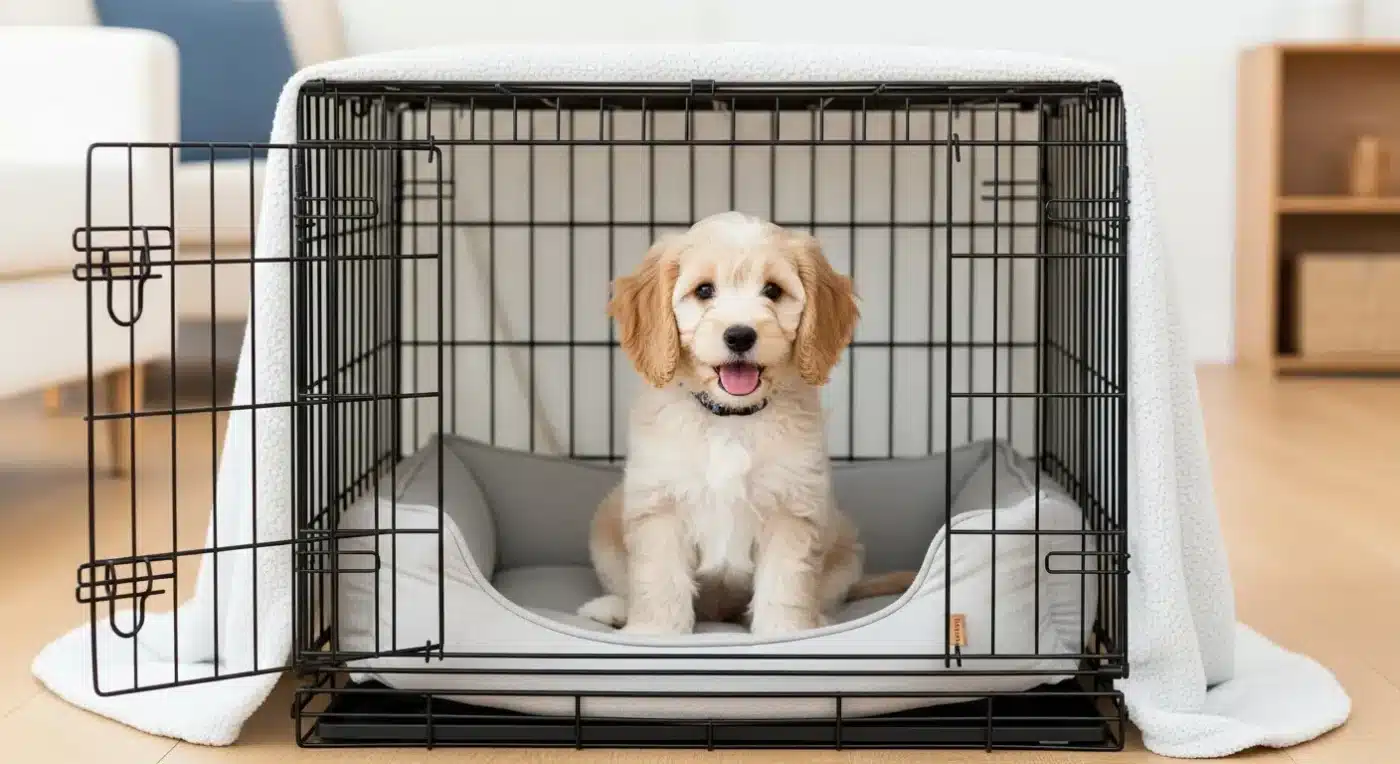
Crate Training Cavoodle: Step-by-Step Guide
Feb
The word “crate” makes some people uncomfortable. It sounds like imprisonment. But when done right, crate training gives your Cavoodle a safe space they’ll choose to use on their own.
🎯 Quick Answer
Crate training a Cavoodle takes 4-8 weeks. Start with treats and meals inside (door open), gradually close the door for short periods, then build duration. The crate should be big enough to stand, turn, and lie down—not bigger. Never use it as punishment. Success means your dog chooses the crate voluntarily.
A well-crate-trained Cavoodle is easier to house train, travels better, recovers from surgery safely, and often has less anxiety. It’s one of the most valuable things you can teach.
Why Crate Train Your Cavoodle?
| Benefit | How It Helps |
|---|---|
| Security | Dogs are den animals; a crate mimics a safe den |
| House training | Dogs don’t like to toilet where they sleep |
| Safe confinement | Prevents destructive behaviour when you can’t supervise |
| Travel | Safer in cars; required by airlines |
| Emergency readiness | Easier recovery if they need crate rest after surgery |
Choosing the Right Crate for Your Cavoodle
Size Guide
The rule: Big enough to stand up, turn around, and lie down. Not bigger.
| Cavoodle Size | Weight | Crate Size |
|---|---|---|
| Toy Cavoodle | 5-7kg | Small/24-inch |
| Mini Cavoodle | 7-10kg | Medium/30-inch |
| Standard Cavoodle | 10-14kg | Medium-Large/36-inch |
For puppies: Buy the adult size with a divider, or buy a small puppy crate and upgrade later.
💡 Marine’s Pro Tip
In the salon, we use crates as resting spaces—calm, comfortable, with fluffy beds inside. Dogs who are crate trained at home adapt immediately. They see the crate as “rest time” and settle right in. Dogs who haven’t been crate trained often pace and stress. The investment in training pays off.
Step-by-Step Cavoodle Crate Training
Phase 1: Introduction (Days 1-3)
Goal: Crate = good things happen here.
- Place crate in a common area (living room, kitchen)
- Door stays OPEN
- Toss treats inside, let them go in and out freely
- Feed meals near the crate, then inside the crate
- No closing the door yet
Phase 2: Door Closing (Days 4-7)
Goal: Door closed is okay.
- While they’re eating in the crate, close the door
- Open it BEFORE they finish eating
- Gradually extend time door is closed during meals
- Stay nearby—don’t leave yet
- If they whine, wait for quiet (even 2 seconds) before opening
Phase 3: Duration (Week 2)
Goal: Comfortable for longer periods.
- Ask them to enter crate with a cue (“crate” or “bed”)
- Close door, stay in the room
- Wait 5 minutes, then calmly open
- Build to 10 minutes, 20 minutes, 30 minutes
- Start leaving the room briefly
Phase 4: Leaving Home (Week 3+)
- Crate them, leave for 5 minutes, return
- Gradually extend: 10 minutes, 30 minutes, 1 hour, 2 hours
- Don’t make a big deal of leaving or returning
- Give a Kong or chew when you leave
💡 Marine’s Pro Tip
The most common mistake is going too fast. Crate training takes weeks, not days. If your dog is whining, reluctant to enter, or trying to escape, you’ve moved too quickly. Go back to the previous stage, more treats, shorter durations. Patience now prevents problems later.
Marine’s tip: Crate training and grooming go hand in hand — if your Cavoodle is comfortable being handled in their crate, brushing sessions become much easier. The Essential Kit ($69) has a gentle slicker brush and training treats to make those early grooming sessions positive.
Crate Training at Night
For puppies:
- Crate beside your bed for first few weeks (your presence comforts them)
- Last toilet break before bed
- Set alarm for 3-4 hours initially (young puppies can’t hold overnight)
- When they wake/cry, take straight to toilet—boring, no play—then back to crate
- Gradually extend time between night breaks
Common Crate Training Mistakes
| Mistake | Why It’s a Problem | The Fix |
|---|---|---|
| Going too fast | Creates negative associations | Go back to previous stage |
| Using as punishment | Teaches them crate is bad | Only positive associations |
| Too much time | Puppies: max 1hr per month of age | Adults: max 4-6 hours |
| Wrong size | Too big = toilet issues | Size to stand/turn/lie down only |
| Opening when whining | Teaches whining works | Wait for quiet before opening |
How Long Does Crate Training Take?
- Comfortable with door closed: 1-2 weeks
- Comfortable for 30+ minutes alone: 2-4 weeks
- Comfortable for several hours: 4-8 weeks
Every dog is different. The investment is worth it.

Written by Marine Ponchaut
Marine is the founder of WoofSpark, a professional dog grooming salon in Cessnock, NSW. Since founding WoofSpark in 2019, she has groomed thousands of dogs and uses crates as comfortable resting spaces in the salon.
Getting a Cavoodle? Start Here.
Marine hand-picked every item in the Cavoodle Puppy Kit based on 16,000+ grooms. The right brush, the right shampoo, grooming guides — everything you need from day one. Two tiers from $69.
Related Guides
- Cavoodle Separation Anxiety — Related training
- House Training Puppy Australia — Crate supports this
- Cavoodle Puppy Checklist — Complete guide
Crate-Trained Dogs Love Our Salon
Dogs who are crate trained at home adapt quickly to our calm resting spaces. Book an appointment or contact us.