

Dog Care
How Often Should I Groom My Dog? The Complete Australian Guide
Jan
The Real Guide: What Each Coat Type Actually Needs
Short-Haired Dogs (Labradors, Staffies, Beagles)
These breeds get marketed as “low maintenance.” That’s partially true—you won’t be detangling mats at midnight. But they still shed, and that loose fur has to go somewhere.
What they need:
- Weekly grooming brushes and toolsing with a rubber curry brush or bristle brush
- Bath every 8-12 weeks (or when they roll in something questionable)
- Nail trims every 4-6 weeks
- Regular ear checks, especially floppy-eared breeds
The mistake we see: Owners skip brushing entirely because the coat “looks fine.” Then wonder why there’s fur tumbleweeds under the couch and their dog’s skin looks flaky. Regular brushing distributes natural oils and removes dead skin cells. It matters.
Double-Coated Dogs (Huskies, Golden Retrievers, German Shepherds)
Double coats are engineering marvels—insulating in winter, cooling in summer. They’re also shedding machines, especially during seasonal coat changes.
What they need:
- Brushing 2-3 times weekly minimum
- Daily brushing during shedding season (spring and autumn in Australia)
- Professional deshedding treatments every 6-8 weeks
- Never shave a double coat (it doesn’t grow back properly)
What actually works: An undercoat rake followed by a slicker brush. The rake pulls out loose undercoat; the slicker smooths the topcoat. If you’re only using a slicker, you’re leaving half the dead fur behind.
During heavy shedding, we see dogs come in with enough loose fur to knit another dog. That fur, if left, creates hot spots and traps moisture against the skin. Not comfortable.
Long-Haired Dogs (Maltese, Shih Tzu, Yorkshire Terrier)
Long coats look spectacular when maintained. They look matted and sad when they’re not. There’s no middle ground here.
What they need:
- Daily brushing (yes, every single day)
- Professional grooming every 4-6 weeks
- Regular sanitary trims
- Detangling spray to prevent breakage
The honest truth: If you can’t commit to daily brushing, keep these coats short. A cute puppy cut every 4-6 weeks is far kinder than a once-monthly battle with mats. We’d rather see a well-maintained short coat than a neglected long one.
Wire-Coated Dogs (Schnauzers, Wire Fox Terriers, Border Terriers)
Wire coats are unique. They’re meant to be hand-stripped, not clipped—though many pet owners choose clipping for convenience.
What they need:
- Brushing 2-3 times weekly with a slicker and comb
- Hand-stripping every 8-12 weeks (maintains texture and colour)
- OR clipping every 6-8 weeks (easier, but coat softens over time)
- Regular beard and eyebrow maintenance
The trade-off: Hand-stripping takes longer and costs more, but it keeps the coat’s natural harsh texture and rich colour. Clipping is faster and cheaper, but the coat gradually becomes softer and lighter. Neither is wrong—it’s about what matters to you.
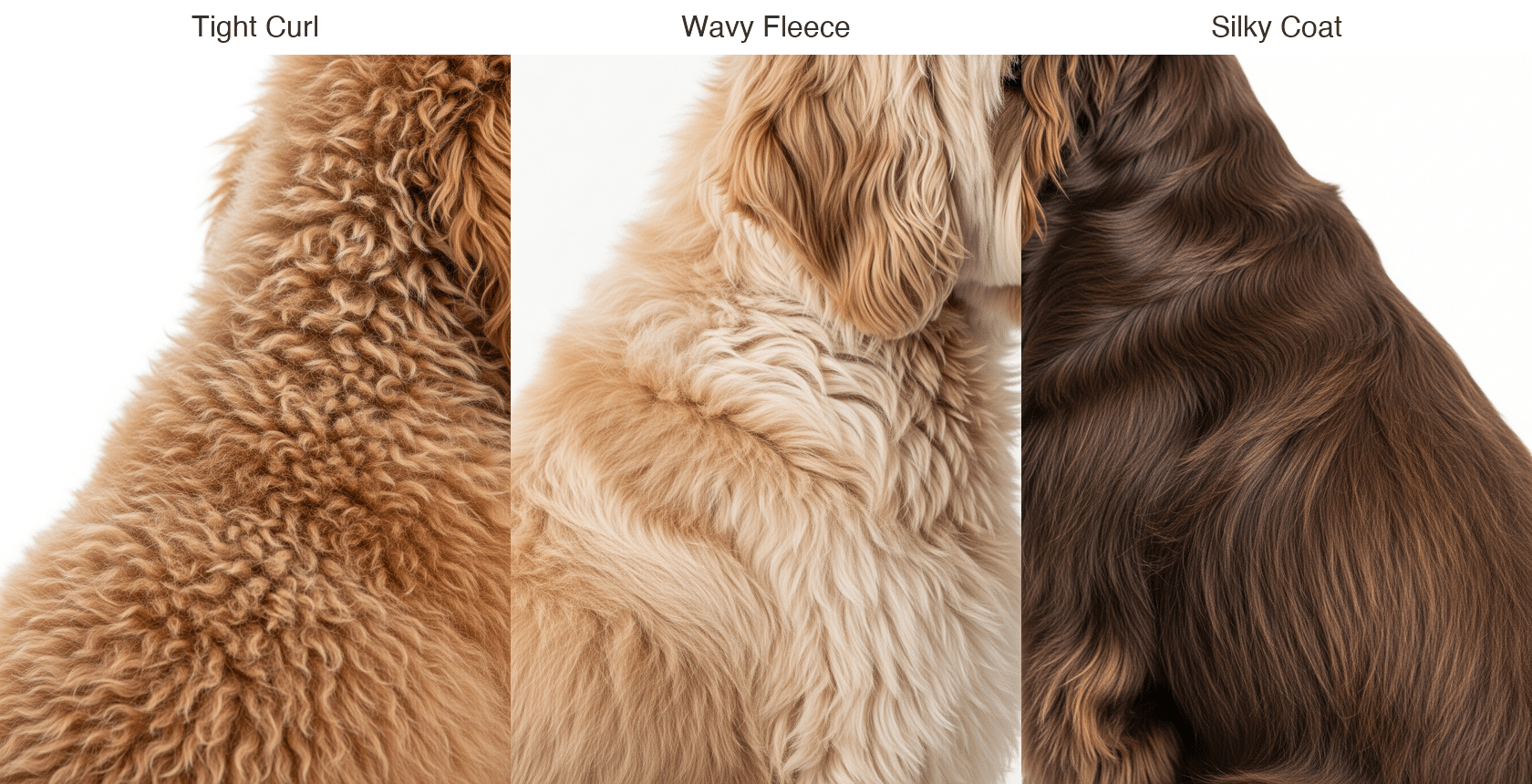
Curly-Coated Dogs (Poodles, Cavoodles, Labradoodles)
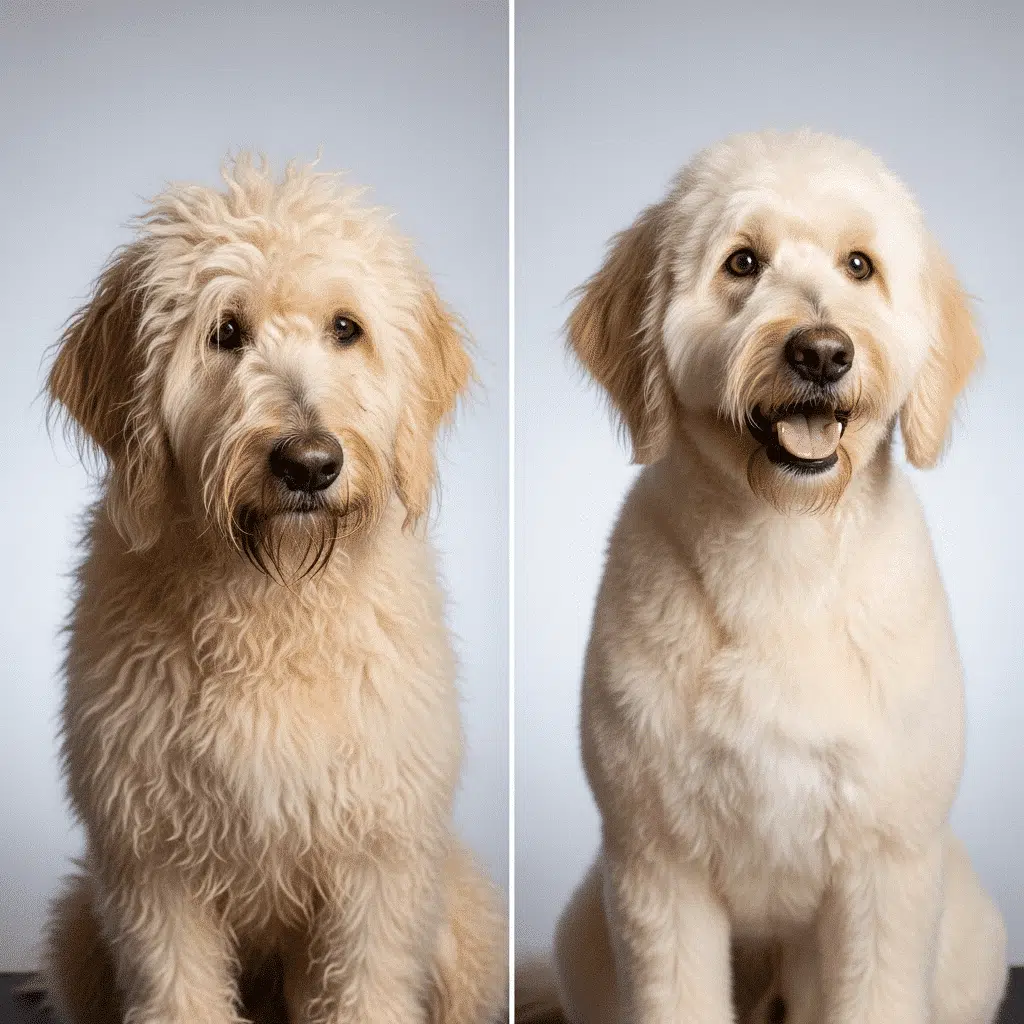
Here’s where most grooming problems start. Curly coats don’t shed visibly—the loose fur gets trapped in the curls and mats from the inside out. By the time you notice a mat, it’s usually too late for easy brushing.
What they need:
- Daily brushing, all the way to the skin
- Professional grooming every 4-6 weeks (non-negotiable)
- Regular ear cleaning (those floppy ears trap moisture)
- Sanitary trims between full grooms
The number one mistake: Brushing only the top layer. We call it “sweater brushing”—looks fluffy on the surface, matted solid underneath. When we have to shave a matted doodle, it’s usually because the owner was brushing regularly but not reaching the skin.
If you have a Cavoodle puppy, start grooming habits early. Puppy coat is forgiving; adult coat is not.
Signs Your Dog Needs Grooming Now
Don’t wait for the calendar. Here’s when to book immediately:
Coat signs:
- Mats you can’t brush out in 2-3 passes
- Coat separating into clumps
- Visible tangles behind ears, under legs, or around collar area
- Coat feels sticky or greasy
Skin signs:
- Flaky skin visible when brushing
- Redness or irritation
- Scratching more than usual
- Unusual smell (yeast infections have a distinctive musty odour)
Physical signs:
- Nails clicking on hard floors
- Fur covering eyes
- Dirty ears (brown discharge, head shaking)
- Discomfort when touched in certain areas
If your dog suddenly hates being brushed in a spot they tolerated before, there’s probably a mat or skin issue hiding there. Check it.
Australian Climate Considerations
Australia’s climate creates some unique grooming challenges most UK or US guides don’t mention.
Summer (December-February)
Our humid summers are hard on coats. Moisture gets trapped, creating perfect conditions for hot spots and fungal infections.
Adjust by:
- Increasing brushing frequency
- Keeping longer coats trimmed shorter
- Bathing more frequently (but using conditioning healthy dog treatsments to prevent dry skin)
- Checking for grass seeds daily—they burrow
The grass seed problem: Those innocent-looking barley grass seeds are surgical emergencies waiting to happen. They work their way into ears, between toes, and under skin. Daily checks after walks during seed season aren’t optional.
Winter (June-August)
Drier air means static and tangles. Coats also tend to grow longer and thicker as dogs prepare for cooler weather.
Adjust by:
- Using leave-in conditioner or detangling spray
- Being gentler with static-prone coats
- Not reducing grooming frequency just because it’s cold
Seasonal Shedding
Most double-coated breeds “blow coat” twice yearly—major undercoat shedding in spring and autumn. This is when weekly brushing becomes daily brushing, and professional deshedding treatments become invaluable.
You’ll know it’s happening when your dog looks like they’re molting. It’s normal. Just brush more.
Building a Home Grooming Routine
Professional grooming handles the heavy lifting. Home maintenance keeps things manageable between appointments.
The Minimum Viable Routine
Every day (5 minutes):
- Quick once-over with appropriate brush
- Check ears, eyes, paws for issues
- Look for ticks after outdoor time
Weekly (15-20 minutes):
- Thorough brushing session
- Wipe inside ear flaps
- Check nail length
- Quick teeth check
Monthly:
- Bath (unless coat type needs more/less)
- Nail trim (or more frequently if needed)
- Ear cleaning if waxy
Tools That Actually Matter
You don’t need a grooming salon worth of equipment. You need:
- The right brush for your coat type (slicker for most, undercoat rake for double coats, pin brush for long silky coats)
- A metal comb (finds hidden mats a brush misses)
- Nail clippers or grinder
- Ear cleaning solution
- Detangling spray (especially for curly/long coats)
We stock professional-grade grooming products that outlast cheaper alternatives. Worth the investment if you’re grooming regularly.
When to See a Professional
Home grooming is maintenance. Professional grooming is transformation plus things you can’t (or shouldn’t) do at home.
Always see a professional for:
- Full haircuts and styling
- Dematting (attempting at home is painful and often makes things worse)
- Hand-stripping wire coats
- Expressing anal glands
- Treating skin conditions that need assessment
- Nail trims if your dog is anxious or has black nails
Book sooner rather than later if:
- You’ve fallen behind on home brushing
- Your dog has behavioural issues with grooming
- You notice skin problems or parasites
- You’re not sure what your dog’s coat needs
We’d rather see your dog for a quick maintenance appointment than a complicated rescue job later. It’s easier on everyone, including your wallet.
The Bottom Line
Grooming frequency isn’t about following a rigid schedule. It’s about understanding what your dog’s coat needs and staying ahead of problems.
The best time to groom is before you need to. A few minutes daily beats hours of damage control. And when those professional appointments come due, keeping them prevents small maintenance tasks from becoming major interventions.
Not sure what your dog’s coat needs? Contact us and we’ll help you figure out the right routine. Or book an appointment and we’ll assess your dog’s coat and set you up with a maintenance plan that actually works.
Frequently Asked Questions
How often should I bathe my dog?
Most dogs need bathing every 4-8 weeks, but it varies significantly. Short-coated breeds can go 8-12 weeks. Oily or smelly dogs might need monthly baths. Dogs with skin conditions may need medicated baths weekly. The key is using appropriate products—human dog shampoos strips natural oils and causes dry, itchy skin.
Can I over-groom my dog?
Bathing too frequently (weekly without medical reason) can dry out skin and strip protective oils. But you can’t really over-brush, as long as you’re being gentle. Daily brushing keeps coats healthy. The exception: if skin is irritated or coat is damaged, ease off and see a groomer or vet.
Why does my groomer sometimes have to shave my dog?
Usually because mats have formed too close to the skin to brush out safely. Dematting badly matted coats is painful—the skin gets pulled and can tear. Shaving is kinder, even if the result isn’t what you hoped for. Prevention through regular brushing and timely appointments avoids this.
Should I groom my puppy?
Absolutely—start early, even before the coat “needs” it. Puppy grooming is about building positive associations with brushing, handling paws, touching ears, and visiting the grooming salon. A puppy who learns grooming is normal becomes an adult who tolerates it well.
Does my short-haired dog really need grooming?
Yes, just less intensively. Short coats still shed, still collect dirt and debris, and still need nail trims and ear cleaning. Regular brushing distributes skin oils and removes dead skin cells. Plus, grooming time is hands-on health-check time—you’ll notice lumps, bumps, and skin changes early.
Internal links included:
Target keyword: how often should I groom my dog
Secondary keywords: dog grooming frequency, grooming by coat type, how often to brush dog, professional dog grooming schedule
Recommended Grooming Tools
Professional-quality tools to keep your dog’s coat looking great at home.



Pingback: Groom Doodle: How Often? Full Schedule