

Puppy Guide
Doodle Anxiety: How to Help Anxious Dogs
Jan
Doodle anxiety is something we see regularly in our grooming salon. Indeed, many doodles are sensitive souls who can struggle with stress. Consequently, understanding and managing anxiety helps your dog live a happier, more comfortable life.
In this guide, we’ll explore common causes of anxiety in Labradoodles, Cavoodles and Groodles. Specifically, you’ll learn practical strategies to help your anxious doodle feel calmer and more confident.
Why Doodle Anxiety Is Common
First, let’s understand why doodles often experience anxiety. Generally, the breeds that make up doodles – poodles, retrievers, spaniels – are all highly intelligent and sensitive.
Additionally, this sensitivity makes them wonderfully responsive companions. However, it also means they can be more prone to stress. Indeed, according to the RSPCA, anxiety is one of the most common behavioural issues in dogs.
Signs of Doodle Anxiety
Typically, anxious doodles show these behaviours:
- Panting when not hot – Indeed, stress panting is a key indicator
- Pacing or restlessness – Specifically, inability to settle signals worry
- Excessive licking or chewing – Consequently, this self-soothing can become obsessive
- Whining or barking – Generally, vocalisation increases with stress
- Trembling or shaking – Obviously, visible shaking indicates fear
- Hiding or cowering – Furthermore, withdrawal shows distress
- Loss of appetite – Importantly, stressed dogs often refuse food
- Destructive behaviour – Additionally, chewing or digging may be anxiety-driven
Accordingly, if you notice these signs regularly, your doodle may need support.
Common Causes of Doodle Anxiety
Certainly, anxiety has many triggers. Specifically, common causes include:
Separation Anxiety
Undoubtedly, separation anxiety is the most common form. Indeed, doodles bond deeply with their families. Consequently, being left alone can cause significant distress.
Noise Phobias
Additionally, many doodles fear loud noises. Specifically, thunderstorms, fireworks, and construction sounds often trigger anxiety. Furthermore, this can develop at any age.
New Experiences
Moreover, unfamiliar situations can overwhelm anxious dogs. Consequently, new places, people, or other animals may cause stress. Indeed, this is especially common in poorly socialised puppies.
Grooming Anxiety
Honestly, some doodles find grooming stressful. Specifically, the sounds, restraint, and unfamiliar environment can trigger anxiety. Therefore, we take extra care with nervous dogs during grooming appointments.
Helping Your Doodle With Anxiety: Daily Strategies
Fortunately, many strategies can reduce anxiety. Specifically, consistency is key.
Exercise and Mental Stimulation
First, ensure adequate exercise. Generally, tired dogs are calmer dogs. Additionally, mental stimulation through puzzle toys and training burns nervous energy.
Routine and Predictability
Furthermore, anxious dogs thrive on routine. Specifically, feed, walk, and sleep at consistent times. Consequently, predictability reduces uncertainty and stress.
Safe Spaces
Moreover, create a calm retreat for your doodle. Specifically, a crate or quiet room where they can escape when overwhelmed. Indeed, never force interaction when your dog retreats.
Calm Energy
Importantly, dogs pick up on our emotions. Therefore, stay calm and confident around your anxious doodle. Specifically, avoid excessive fussing during anxious episodes, which can reinforce the behaviour.
Doodle Anxiety Tools and Products
Certainly, several products can help anxious dogs.
Calming Supplements
Typically, supplements containing ingredients like chamomile, L-theanine, or tryptophan can help. Specifically, products like ZamiPet Relax & Calm are popular options. However, always check with your vet first.
Pheromone Products
Additionally, ADAPTIL diffusers and sprays release calming pheromones. Indeed, many owners report good results. Furthermore, these are particularly useful during storms or fireworks.
Pressure Wraps
Moreover, products like ThunderShirts apply gentle pressure. Consequently, this calms many dogs similarly to swaddling a baby. Specifically, they work well for noise phobias.
Calming Treats
Furthermore, calming treats can be useful for predictable stressors. Specifically, give 30-60 minutes before grooming appointments, car trips, or other triggers.
Doodle Anxiety During Grooming
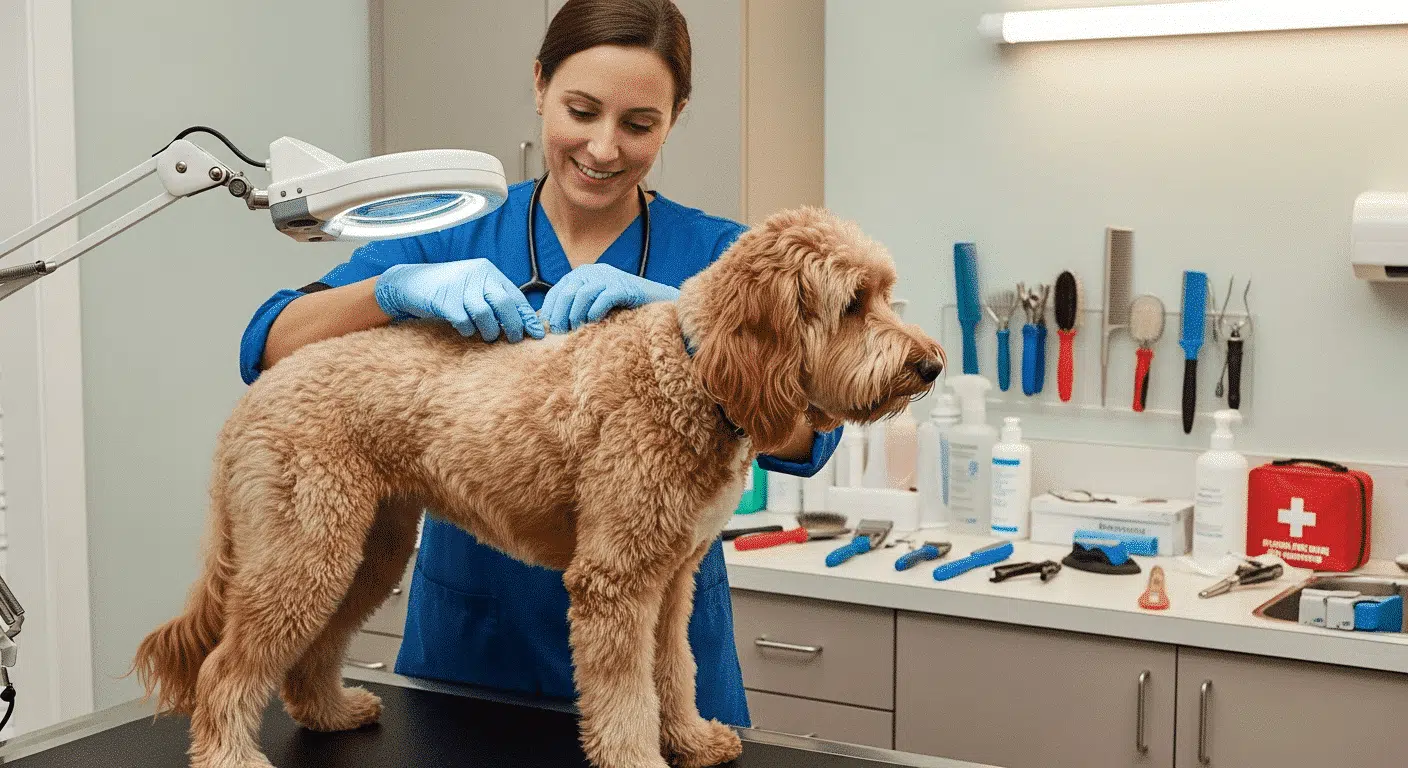
Naturally, we see anxious doodles frequently. Consequently, we’ve developed strategies to help nervous dogs:
- Slow introductions – Initially, we let nervous dogs explore the salon at their pace
- Positive associations – Specifically, treats and praise throughout the session
- Breaks when needed – Furthermore, we pause if stress levels rise
- Calming techniques – Indeed, gentle handling and soothing voices help
- Communication – Importantly, we always discuss any concerns with owners
Ultimately, let us know if your doodle struggles with grooming. Consequently, we can plan extra time and adjust our approach.
When to Seek Professional Help for Doodle Anxiety
Certainly, some anxiety requires professional intervention. According to the Australian Veterinary Association, seek help if:
- Anxiety is severe or worsening
- Your dog is injuring themselves
- Daily life is significantly affected
- Basic strategies aren’t helping
Specifically, your vet may recommend medication or refer to a veterinary behaviourist. Indeed, medication combined with training often produces the best results.
Common Doodle Anxiety Mistakes
Typically, avoid these well-meaning errors:
- Punishing anxious behaviour – Indeed, this increases fear and worsens anxiety
- Excessive comforting – Specifically, too much fuss can reinforce anxious behaviour
- Forcing exposure – Consequently, flooding rarely works and often backfires
- Ignoring the problem – Generally, anxiety worsens without intervention
Final Tips for Managing Doodle Anxiety
In conclusion, anxiety is manageable with patience and consistency. Essentially, combine daily strategies with appropriate products and professional help when needed.
Remember, your doodle isn’t being “naughty” – anxiety is a genuine emotional response. Therefore, approach the issue with compassion. Ultimately, with support, most anxious doodles can live happy, relaxed lives.
Have questions about your anxious doodle? Contact us – we’re always happy to discuss how we can make grooming more comfortable for nervous pups.
Related Reading
Continue exploring our grooming guides:
- Mobile Grooming vs Salon for Anxious Dogs
- Anxious Doodle Grooming: Calm Session Tips
- Common Doodle Skin Problems: What Groomers See and How to Help
Ready to book a professional grooming session? Book your appointment or view our services.