
Grooming Tools
FURminator vs Slicker Brush: Which One Is Right for Your Dog?
Jan

The FURminator is probably the most famous grooming tool in the pet industry. It’s been featured on TV, endorsed by celebrities, and promises to reduce shedding by up to 90%. But here’s what the marketing doesn’t tell you: it’s not right for every dog, and using it incorrectly can seriously damage your dog’s coat.
Let’s compare the FURminator to the trusty slicker brush and help you figure out which one (or both) you actually need.
They Do Completely Different Things
This is the most important point: the FURminator and slicker brush are NOT interchangeable. They’re designed for different purposes.
| Feature | FURminator | Slicker Brush |
|---|---|---|
| Primary purpose | Remove loose undercoat | Detangle and remove debris |
| How it works | Metal edge rakes through coat | Fine wire pins catch tangles |
| Use frequency | Weekly max (or seasonally) | Daily or every other day |
| Best for | Double-coated shedding breeds | Curly, wavy, or long coats |
| Can damage coat? | Yes, if overused | No (with proper technique) |
What Is the FURminator?
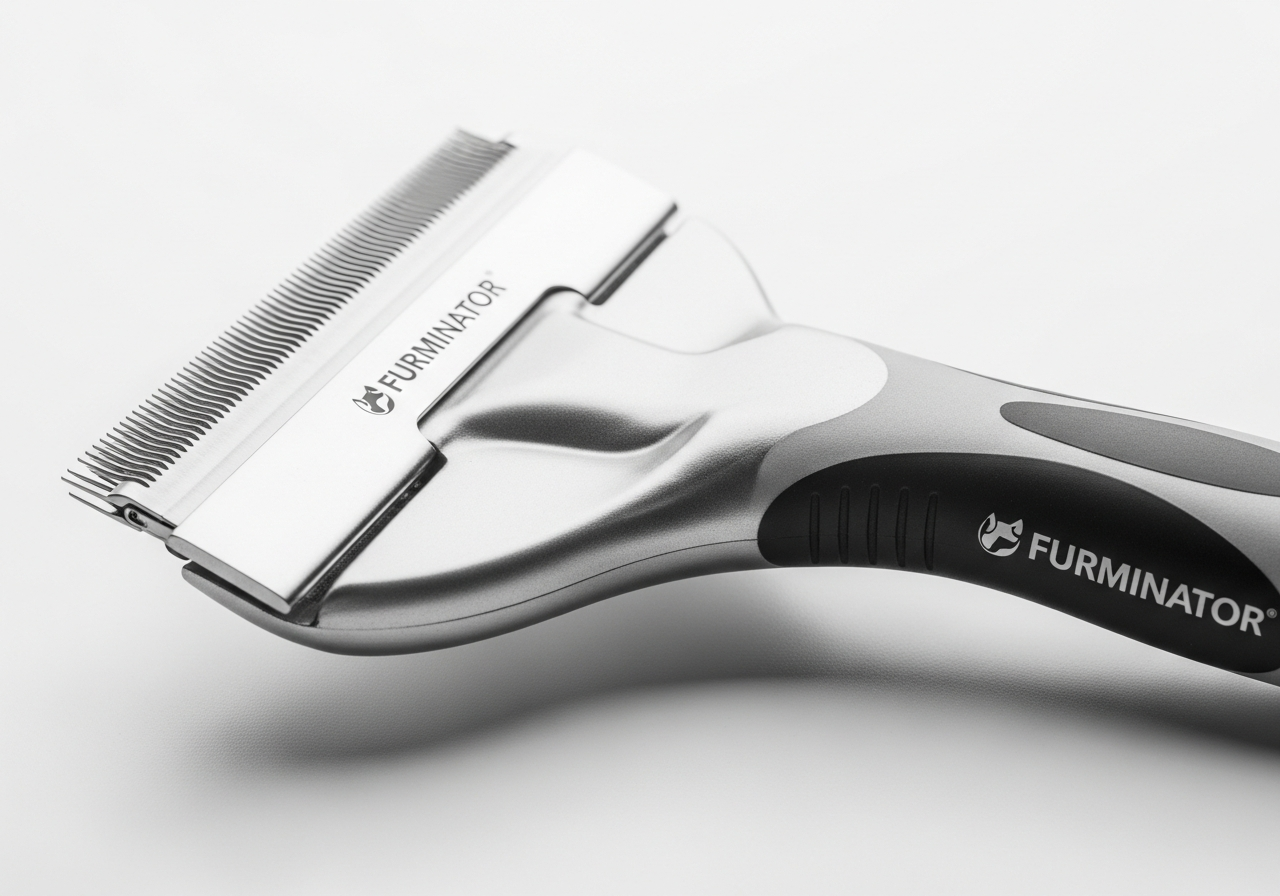
The FURminator is a deshedding tool with a metal blade/edge designed to reach through the topcoat and remove loose undercoat. It’s essentially a specialized rake that pulls out dead hair that would otherwise shed around your house.
What It Does
- Removes loose undercoat — The fluffy layer under the topcoat that sheds seasonally.
- Reduces household shedding — Less hair on your furniture and clothes.
- Prevents undercoat matting — Dead undercoat can mat if not removed.
What It Doesn’t Do
- Detangle or remove mats
- Work on single-coated breeds (nothing to remove)
- Replace daily brushing
Dogs the FURminator IS For
- Golden Retrievers, Labrador Retrievers
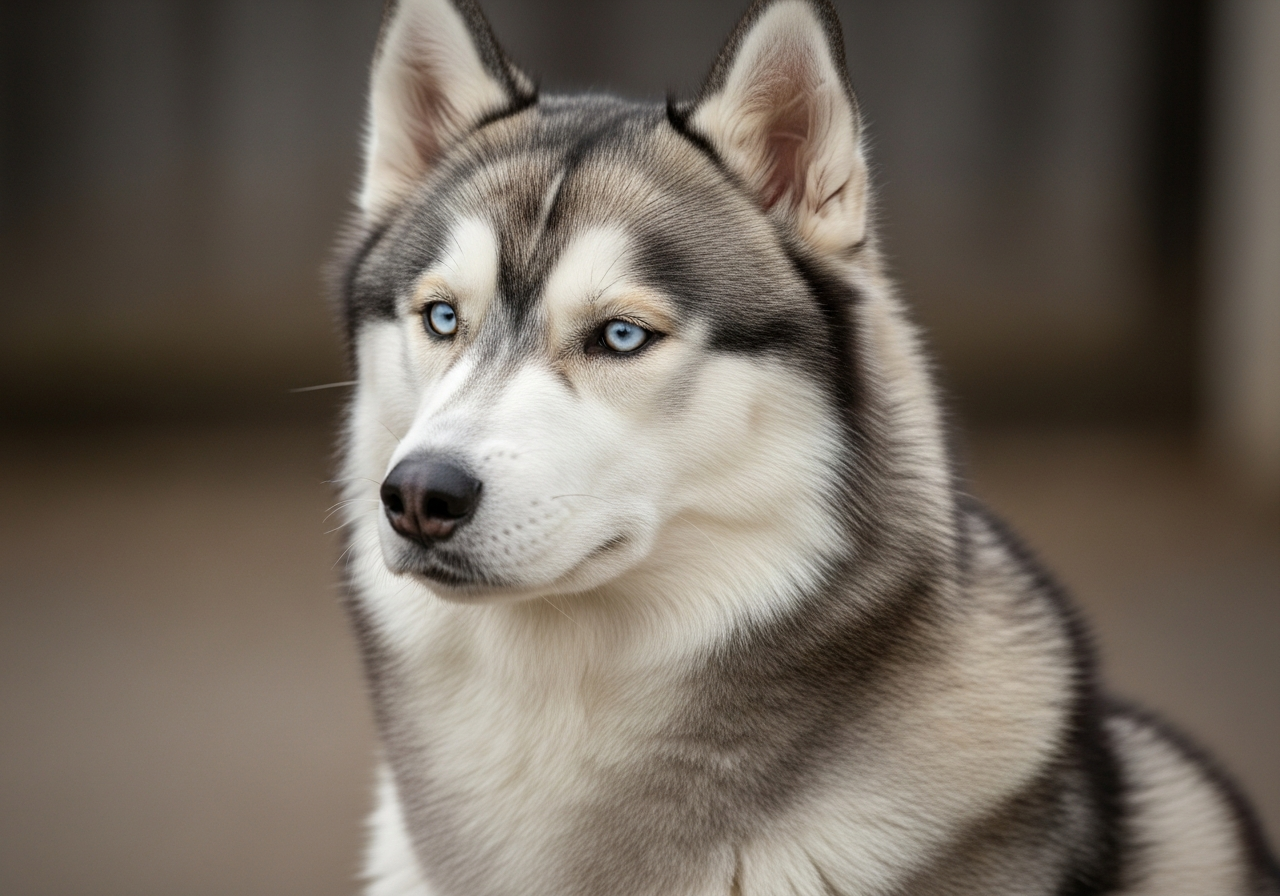
- German Shepherds, Huskies, Malamutes
- Corgis, Australian Shepherds
- Samoyeds, Chow Chows
- Any breed with a thick double coat
Dogs the FURminator is NOT For
- Poodles and Poodle mixes — No undercoat to remove
- Bichon Frise, Maltese — Single-coated, will damage hair
- Yorkshire Terriers — Silky single coat
- Greyhounds, Boxers — Short single coat
- Any dog without a distinct undercoat
What Is a Slicker Brush?
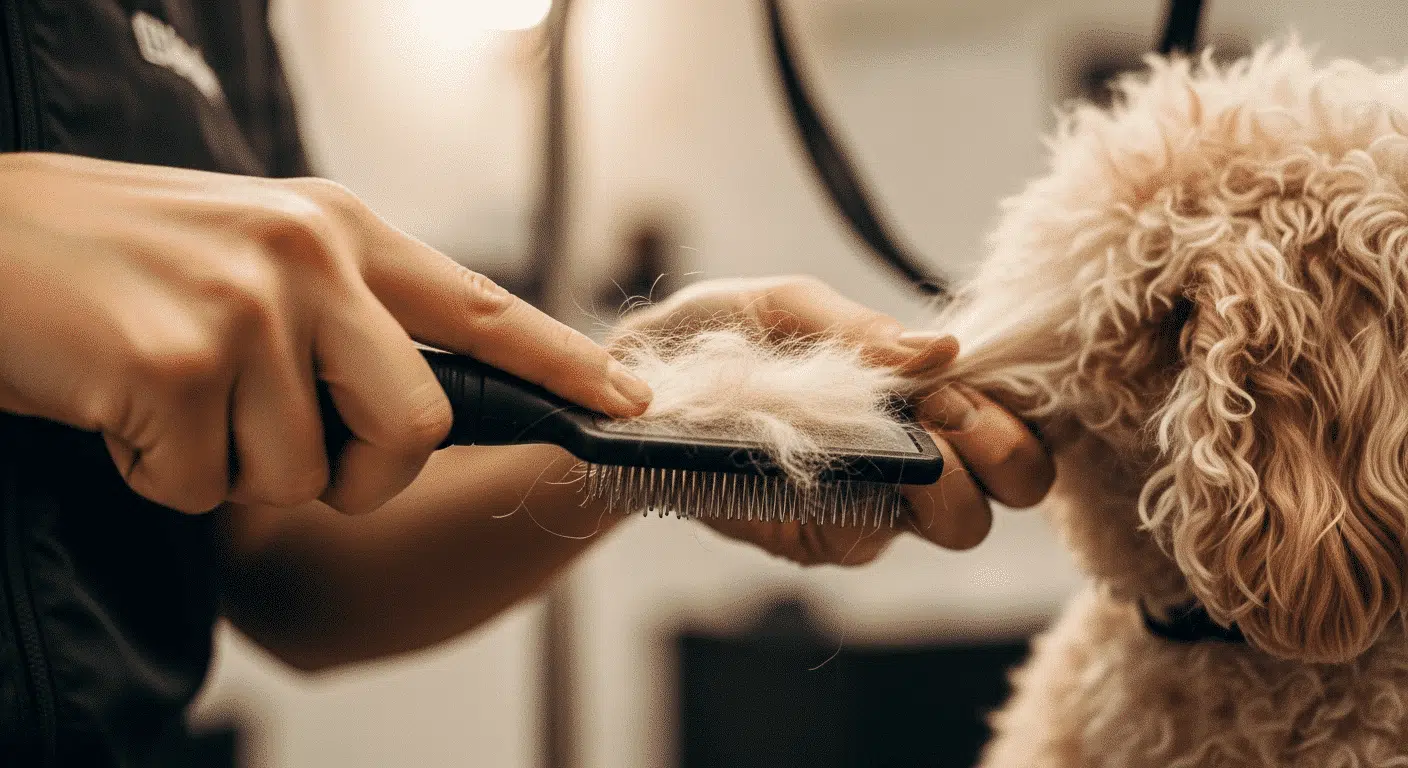
A slicker brush has a flat or curved head with fine, tightly-packed wire pins. These pins are angled to glide through the coat and catch tangles, debris, and loose hair.
What It Does
- Removes tangles and small mats — Essential for curly coats.
- Removes debris — Leaves, grass, dirt, dried mud.
- Removes loose surface hair — But not deep undercoat.
- Fluffs and shapes the coat — Creates that groomed appearance.
What It Doesn’t Do
- Remove dense undercoat effectively
- Dramatically reduce shedding in double-coated breeds
Dogs the Slicker Brush IS For
- Poodles and all Poodle mixes (essential)
- Bichon Frise, Maltese, Shih Tzu
- Long-coated breeds prone to tangles
- Wire-coated terriers
- Actually, almost every dog benefits from a slicker
The Big Mistake: FURminator on a Doodle
This is the most common mistake we see, and it can cause real damage.
Doodles (Cavoodles, Labradoodles, Goldendoodles, Groodles) have a curly or wavy single coat. They don’t have the traditional undercoat that the FURminator is designed to remove. Using a FURminator on a Doodle:
- Cuts the curly coat — The blade cuts through curls, leaving them short and uneven.
- Creates thin patches — Repeated use removes too much coat.
- Damages coat texture — The coat becomes rough and scraggly.
- Doesn’t address the real issue — Doodles need detangling, not deshedding.
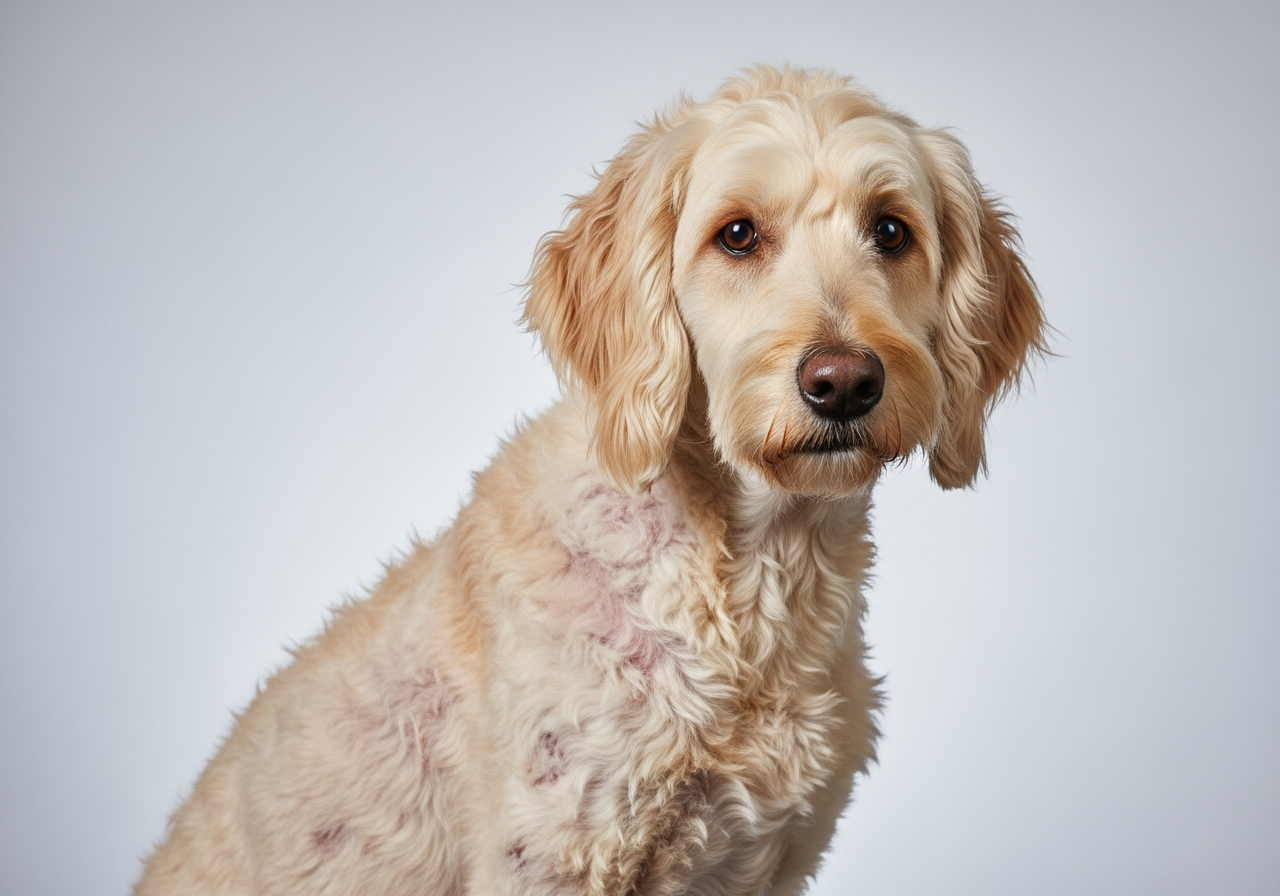
What Doodles actually need: A slicker brush for daily/regular brushing. That’s it. No FURminator required.
When You Need Both
If your dog has a double coat (thick undercoat + topcoat), you actually need both tools:
- Slicker brush FIRST — Remove any tangles. The FURminator can’t detangle and will pull painfully on knots.
- FURminator SECOND — Once tangle-free, use the FURminator to remove loose undercoat.
- Back to slicker to finish — Smooth and fluff the coat.
This sequence is especially important during heavy shedding seasons (spring and autumn for most breeds).
How to Use the FURminator Safely
If your dog IS a good candidate for the FURminator, here’s how to use it without causing damage:
Do:
- Use on a completely dry coat
- Remove tangles with a slicker first
- Use light pressure (let the tool do the work)
- Work in direction of hair growth
- Stop when hair stops coming out easily
- Limit to once per week maximum
Don’t:
- Use on wet or damp coats
- Press hard (damages topcoat)
- Go over the same spot repeatedly
- Use on bony areas (spine, hips)
- Use every day (even if hair comes out)
- Use on dogs without undercoats
Signs You’ve Overused the FURminator
- Thin patches — Coat looks sparse in areas
- Dull topcoat — Lost its healthy shine
- Rough texture — Feels coarse instead of smooth
- Skin irritation — Redness or sensitivity
- Dog avoiding grooming — Learned to associate it with discomfort
If you see these signs, stop using the FURminator immediately and switch to slicker brush only for several weeks to let the coat recover.
Complete Comparison Chart
| Scenario | Use FURminator? | Use Slicker? |
|---|---|---|
| Doodle with curly coat | NO | YES (daily) |
| Golden Retriever shedding | YES (weekly) | YES (for tangles first) |
| Husky blowing coat | YES (1-2x/week) | YES (before FURminator) |
| Maltese with silky coat | NO | YES (soft slicker) |
| Cavoodle with mats | NO | YES |
| Corgi in spring | YES | YES |
| Poodle needing fluff | NO | YES |
| German Shepherd undercoat | YES | YES |
Alternatives to the FURminator
If you want the deshedding benefits but are concerned about the FURminator’s blade:
- Undercoat rake — Gentler, uses rotating teeth instead of blade
- SleekEZ — Similar function, some find it gentler
- Coat King — Used by many professional groomers
- Mars Coat King — Stripping tool, very effective but needs experience
Our Recommendations
For Double-Coated Breeds (Golden, Husky, etc.)
Get both. Use the slicker daily and the FURminator weekly during shedding season.
For Curly Coats (Doodles, Poodles, Bichons)
Skip the FURminator entirely. Invest in a quality slicker brush and use it regularly.
For Short Coats (Labs, Beagles)
The FURminator can help with shedding. A slicker is optional but useful for occasional tangles.
The Bottom Line
The FURminator is an excellent tool — for the right dogs. It’s not a universal grooming solution, and using it on the wrong coat type causes damage.
Rule of thumb: If your dog has a fluffy undercoat that sheds, the FURminator can help. If your dog has a curly, wavy, or silky single coat, stick with the slicker brush.
When in doubt, ask your groomer. We can assess your dog’s coat and recommend the right tools for at-home maintenance between professional grooms.
Have more questions? Book a groom and we’ll show you exactly which tools work best for your pup.
Related Reading
Continue exploring our grooming guides:
- Mobile Grooming vs Salon Grooming: Which is Right for Your Dog?
- Dog Daycare vs Dog Walker vs Pet Sitter: Which is Right for Your Dog?
- FURminator vs Slicker Brush: Doodle Expert Guide
Ready to book a professional grooming session? Book your appointment or view our services.
Stop Comparing. Start With What Works.
Marine picked the tools in the Cavoodle Puppy Kit because they work — not because they’re popular. The right slicker brush, a quality comb, salon-grade shampoo, and a first groom voucher. Three tiers from $69.
See Marine’s Picks
Pingback: FURminator vs Slicker: Doodle Guide
Pingback: Slicker vs Deshedding Tool: Choices
Pingback: Pin Brush vs Slicker: Which to Use