

Health & Wellness
How to Honour Your Dog After They Pass: 12 Meaningful Ways to Remember Them
Mar
If you’re reading this, you’ve probably lost someone who meant the world to you. Someone who didn’t speak a single word but understood everything. Someone whose absence has left the house quieter, the mornings harder, and the routine emptier than you ever expected.
There are 12 ways to honour your dog after they pass in this guide. Some cost nothing. Some take time. All of them are real, and none of them have a deadline. Take what feels right and leave the rest for later — or forever. This isn’t a checklist you need to complete. It’s a set of options for whenever you’re ready.
Quick Answer: The most meaningful ways to honour your dog after they pass include planting a memorial garden, creating a memory box, commissioning a custom portrait, donating to a rescue, writing a letter, preserving their collar, and holding a small farewell ceremony. There’s no timeline for grief — do what feels right, when it feels right.
Why Honouring Your Dog Matters
Our society sometimes treats pet loss as a smaller kind of grief. “It was just a dog,” people say. But you know the truth. They weren’t “just” anything. They were the one who greeted you at the door. The warm body beside you on the couch. The reason you went outside on days you didn’t feel like moving.
Grief for a dog is real grief. It deserves to be treated that way. And finding ways to honour their memory isn’t about “moving on” — it’s about carrying them forward with you.
Here are 12 ways to do that.
1. Plant a Memorial Garden
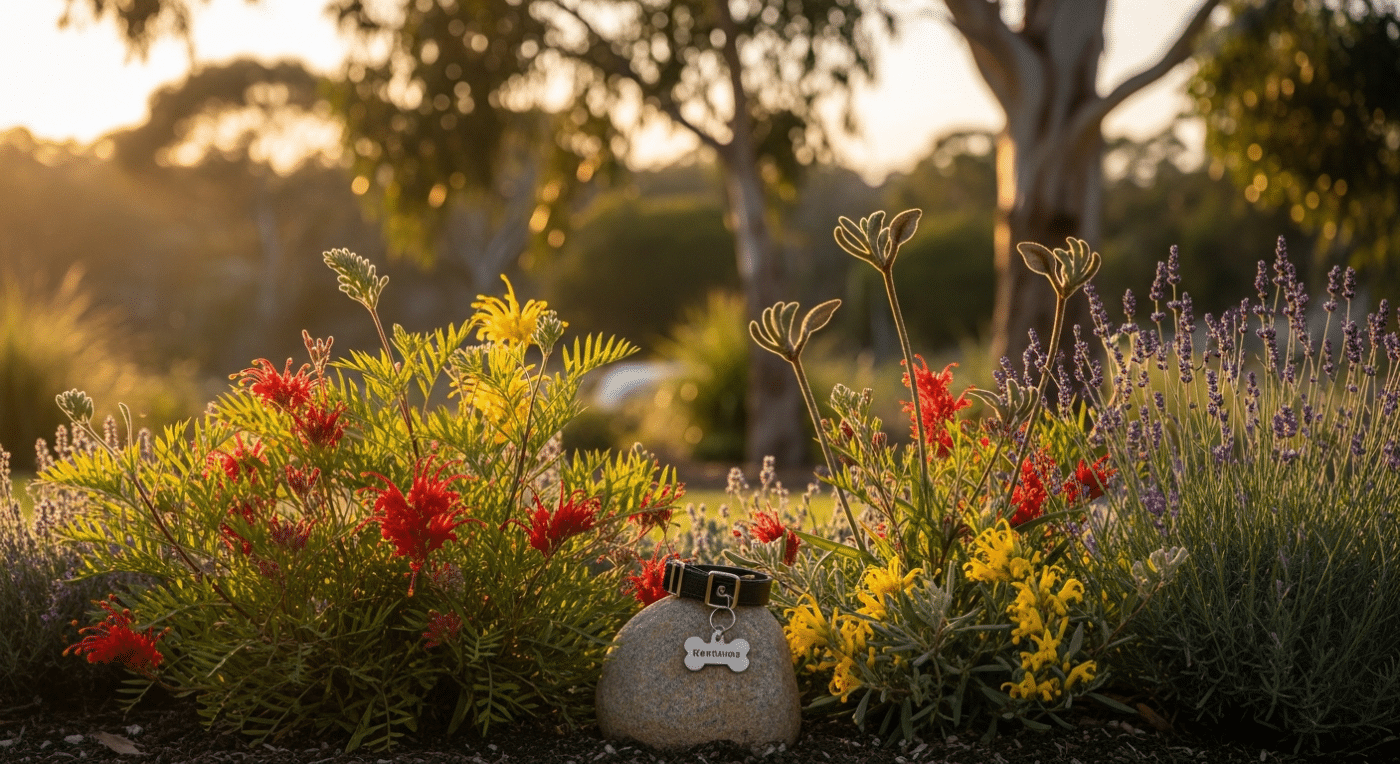
There’s something healing about putting your hands in the dirt and growing something living in honour of someone you’ve lost. A memorial garden doesn’t need to be elaborate. It can be a single plant in a pot on your balcony, a small patch of flowers in the backyard, or a whole corner of your garden dedicated to them.
Choose plants that bloom in the season they passed, or flowers that remind you of them. Many Australian natives are low-maintenance and return year after year — grevilleas, kangaroo paws, and waratahs all do well and give you something to tend when you need somewhere to put your hands.
Some people add a small garden stone with their dog’s name. Others just know that particular corner is theirs. Both work.
Marine’s Pro Tip: “I’ve had clients who bring in a photo of the flowers they planted for their dog. It always gets me. One family planted a lemon tree because their Cavoodle used to sit under the old one in the yard every afternoon. Now when the tree fruits, they think of him. That’s a beautiful thing.”
2. Create a Photo Album or Memory Box
Going through photos of your dog might feel impossible right now. That’s okay. This one can wait weeks, months, or years.
When you’re ready, gathering photos into a physical album or creating a memory box can be a gentle way to honour them. A memory box might hold their favourite toy, a tuft of fur from their last groom, their vaccination booklet, or the receipt from the day you brought them home.
These small objects hold more weight than you’d expect. They’re proof that your dog existed, that they were loved, and that the life you shared together was real.
If a physical box feels too heavy right now, a digital photo folder works too. You can organise it later. The point is gathering, not perfecting.
3. Honour Your Dog After They Pass with a Custom Portrait
A portrait transforms a photograph into lasting art. It takes the image on your phone — the one you’ve looked at a hundred times since they passed — and gives it a permanent home on your wall.
What makes a memorial portrait meaningful is that it captures your dog as you remember them. Not a generic image of their breed, but them. Their markings, their expression, the way they tilted their head or carried their ears.
There are many portrait styles to choose from — watercolour for something soft and gentle, realistic for detail, or something with personality like a renaissance portrait for a dog who was clearly running the household. Choose whatever feels right for who they were.
There’s no rush on this. Your photos aren’t going anywhere. A portrait can be ordered a day after loss or ten years later. If you’d like to explore options, you can read our guide to memorial portraits in Australia.
4. Donate to an Animal Rescue in Their Name
One of the most generous ways to honour your dog is to help another dog who needs it. A donation to an animal rescue or shelter in your dog’s name takes the love you have nowhere to put and gives it somewhere to go.
In Australia, you have plenty of options. The RSPCA operates in every state and territory. There are also breed-specific rescues if your dog was a particular breed — Groodle rescues, Greyhound rescues, and dozens of others that rely on public donations to keep operating.
Some people set up recurring donations. Others make a one-off gift on their dog’s birthday each year. However you do it, there’s something quietly powerful about your dog’s memory helping another dog find a home.
5. Write Them a Letter to Honour Your Dog After They Pass
This one might sound strange if you haven’t tried it. But writing a letter to your dog — saying what you wish you’d said, thanking them for what they gave you, telling them about the hole they’ve left — can be deeply healing.
Nobody needs to read it. You don’t need to share it. It can be messy and full of tears and make no grammatical sense at all. That’s fine. The value isn’t in the writing. It’s in the saying.
Write it by hand if you can. There’s something about the slow, physical act of pen on paper that helps grief move through you in a way that typing doesn’t quite match.
Some people write one letter. Others write to their dog on hard days, anniversaries, or whenever they need to. There are no rules here.
Ways to Honour Your Dog: At a Glance
| Memorial Idea | Cost | Time Needed | Expert Verdict |
|---|---|---|---|
| Plant a memorial garden | $20–$200 | An afternoon | A living tribute that grows with you |
| Photo album or memory box | $0–$50 | A few hours | Best done when you’re ready to look through photos |
| Custom portrait | $19–$149 | Upload and wait | Lasting art that captures who they were |
| Donate to rescue | Any amount | 5 minutes | Helps another dog in their name |
| Write a letter | Free | As long as you need | Deeply personal — helps grief move through you |
| Collar or tag in shadow box | $30–$100 | 1–2 hours | Preserves something they wore every day |
| Custom jewellery | $50–$500+ | Varies by maker | Carry a piece of them with you daily |
| Photo book | $40–$120 | A few evenings | A story of their whole life in one book |
| Plant a memorial tree | $50–$150 | An hour | Something that outlives us all |
| Small goodbye ceremony | Free | Whatever feels right | Shared grief is lighter grief |
| Support a grieving friend | Free | A phone call or visit | Turning your pain into compassion for others |
| Take your time | Free | As long as you need | The most important one on this list |
6. Keep Their Collar or Tag in a Shadow Box
Their collar might be the most personal object they owned. It sat against their skin every day. It clinked when they shook. It’s the thing you reached for when you called them in from the yard.
A shadow box frame turns that collar — and maybe their tag, a small photo, and a lock of fur — into a display piece. You can buy shadow box frames from most craft stores or online for $30–$80, and assembling it can be a quiet, meditative process.
If a display frame feels like too much right now, even just placing their collar somewhere safe and intentional — a shelf, a drawer you open regularly — is enough. You’ll know it’s there.
7. Get a Custom Piece of Jewellery
Memorial pet jewellery has grown in Australia in recent years, and for good reason. A small pendant with your dog’s paw print, a bracelet engraved with their name, or a ring containing a tiny amount of their ashes — these are pieces you can carry with you every day.
Several Australian jewellers now offer pet memorial pieces. Prices range from around $50 for a simple engraved pendant to $500 or more for something with precious metals or stones. If your vet took a clay paw print, many jewellers can work from that impression.
This isn’t for everyone. Some people find comfort in wearing something physical. Others prefer their memories to stay internal. Both are valid.
Marine’s Pro Tip: “After six years in the salon, I’ve lost regular clients’ dogs more times than I can count. Dogs I’d groomed since they were puppies. It never gets easier. One thing I’ve learned is that everyone grieves differently, and no way is wrong. I’ve had clients who are back booking for a new puppy within weeks, and clients who can’t walk past the salon for months. Both are okay.”
8. Create a Photo Book
A photo album preserves individual moments. A photo book tells a whole story.
Services like Snapfish, Photobook Australia, and Shutterfly let you design hardcover books with your own photos and captions. You can organise it by year, by chapter (“The Puppy Days,” “The Beach Phase,” “The Senior Snooze Era”), or just throw in every good photo you have.
The process of building the book — choosing photos, writing captions, remembering each moment — is often more therapeutic than the finished product itself. It gives you a reason to look at the photos one by one and sit with each memory.
If you’re having trouble choosing which photos best capture your dog’s personality, our guide on taking better dog photos might help you think about which images tell their story best.
9. Plant a Tree Through a Memorial Program
If a garden isn’t practical — maybe you rent, or you don’t have outdoor space — planting a tree through a memorial program is a lasting option. Several Australian organisations will plant a native tree in your dog’s name and send you a certificate with the location.
Trees for Life, Greenfleet, and various state-based tree planting programs all accept memorial dedications. Some let you visit the planting site. Others plant in conservation areas where your tree joins a regenerating forest.
There’s something grounding about knowing that a tree is growing somewhere because your dog lived. It’ll still be standing long after the grief has softened.
10. Honour Your Dog with a Small Goodbye Ceremony
You don’t need a priest or a formal service. A goodbye ceremony can be as simple as gathering the people who loved your dog, sharing a few stories, and saying out loud what they meant to you.
It might feel strange at first. We don’t have strong cultural rituals for pet loss in Australia. But creating your own can be powerful. Light a candle. Read the letter you wrote them. Let the kids draw pictures. Take the family to their favourite walking spot and talk about them.
Shared grief is lighter than grief you carry alone. And giving other people in your household permission to be sad — especially children — matters more than you might think.
How to Honour Your Dog: Supporting Children Through Pet Loss
If you have children, your dog’s death might be their first experience of losing someone they love. How you handle it shapes how they understand grief for the rest of their lives.
A few things that help:
- Be honest. Use the real words. “Died” and “death” are kinder than vague phrases that confuse young children.
- Let them grieve visibly. If you cry, let them see it. It teaches them that sadness is normal and safe.
- Include them in the memorial. Let them choose a plant for the garden, draw a picture for the memory box, or pick a photo for the portrait.
- Don’t rush to replace. “We’ll get a new dog” doesn’t help. The one they lost was not replaceable, and they need to know you understand that.
11. Support a Friend Going Through Pet Loss
If you’ve been through this, you know what not to say. “They’re in a better place.” “At least they lived a good life.” “Are you going to get another one?” These are well-meaning but hollow when you’re the one staring at an empty bed on the floor.
Here’s what actually helps when someone you know loses their dog:
- Say the dog’s name. “I’m so sorry about Biscuit” means more than “sorry about your loss.”
- Share a memory. “Remember when Biscuit stole the sausage off the barbecue?” gives them permission to smile.
- Don’t compare. Don’t compare their dog to yours, or their grief to anyone else’s.
- Check in later. Everyone rallies on day one. The hard days come at two weeks, a month, three months — when everyone else has moved on and you haven’t.
Turning your own experience of pet loss into compassion for someone else can be one of the most meaningful ways to honour what your dog taught you about love.
Marine’s Pro Tip: “When we lose a long-time client’s dog at the salon, we always reach out. Not to sell anything. Just to say we’re sorry and that we loved grooming their dog. Some of these dogs I’ve known for five or six years. I remember them as puppies, scared of the dryer, and I watched them grow into confident, happy dogs who’d walk in wagging their tail. That loss is real for us too.”
12. Take Your Time — Grief Doesn’t Have a Deadline
This is the most important thing on this list. There is no correct timeline for grieving your dog.
You might cry in the supermarket two months later because you walked past the pet food aisle. You might feel fine for weeks and then fall apart on a Tuesday for no obvious reason. You might feel guilty for laughing. You might feel guilty for crying. You might feel guilty for considering a new dog, and then guilty for not considering one.
All of this is normal. All of it.
If you need support, Pet Loss Australia offers counselling and support groups specifically for people grieving a pet. There’s no shame in seeking help. The bond between a person and their dog is one of the most genuine relationships most of us will ever have. Losing it deserves proper care.
Don’t let anyone — including yourself — tell you it’s “just a dog.” You know better. And honouring that bond, in whatever way and on whatever timeline feels right, is one of the most loving things you can do.
Where to Start When You Want to Honour Your Dog
You don’t need to do all twelve things on this list. You don’t need to do any of them right now. But if you’re looking for a place to start, here are some gentle first steps:
- If you need to do something with your hands: Plant something. Even a single flower in a pot.
- If you need to talk: Write them a letter or call someone who knew your dog.
- If you need to feel close to them: Keep their collar somewhere you can see it or touch it.
- If you need to help someone else: Donate to a rescue. Another dog gets a chance because yours was loved.
- If you need to see their face: Look through your photos. When you’re ready, consider turning your favourite one into something lasting.
And if none of this feels right yet, that’s okay too. You’ll know when you’re ready. There’s no rush.
Frequently Asked Questions About Honouring Your Dog After They Pass
How long does pet grief last?
There’s no set timeline. Some people feel the sharpest grief for a few weeks. For others, it takes months or longer. Grief doesn’t follow a straight line — you’ll have good days and hard days. Both are normal, and there’s no deadline on when you “should” feel better.
Is it normal to grieve a dog as much as a person?
Yes. Research consistently shows that pet loss can trigger grief responses as strong as losing a human family member. Your dog was part of your daily life, your routine, and your emotional world. That kind of loss is significant, and your feelings are valid.
What should I say to someone who just lost their dog?
Use the dog’s name. Say something specific: “I’m sorry about Max. I’ll always remember how he used to greet me at the door.” Avoid comparisons, don’t suggest getting a new dog, and check in again a few weeks later when the initial support fades.
When is the right time to get a new dog?
Only when it feels right to you — not when others suggest it. Some people need months or years. Others find that caring for a new dog helps with the grief. Neither choice is wrong. A new dog isn’t a replacement. They’re a new chapter. Make sure you’re ready to give them their own identity.
Are pet memorial ideas expensive?
Many aren’t. Writing a letter, holding a ceremony, and supporting a grieving friend cost nothing. A memorial garden can start at $20. Portraits, jewellery, and photo books range from $19 to several hundred dollars depending on what you choose. The most meaningful memorials aren’t always the most expensive ones.
Where can I get grief support for pet loss in Australia?
Pet Loss Australia offers counselling and support groups. Many local vets have grief resources. Lifeline (13 11 14) can also help if you’re struggling, as grief is grief regardless of the source. You don’t need to go through this alone.

Written by Marine Ponchaut
Marine is the co-founder and head groomer at Woof Spark in Cessnock, NSW. With over 16,472 appointments across 3,808 pets and 219 breeds since 2020, she’s stood alongside hundreds of families through the joy of new puppies and the heartbreak of losing longtime companions. She writes from real experience — not theory.
Last updated: March 2026
This guide was written with input from Marine’s experience supporting clients through pet loss over six years of salon ownership. It includes a Quick Answer summary for quick reference, a comparison table of all 12 memorial ideas with costs and time needed, Marine’s professional insights, and Australian-specific resources for grief support.
Whenever You’re Ready
If a portrait feels right for you, we’d love to create something beautiful to honour them. See our memorial styles at woofspark.com.au/memorial-portraits/ — whenever you’re ready, no rush.
Or reach out to us if you’d like to talk about what might be right for your dog.