
Puppy Guide
New Puppy Checklist Australia: Everything You Need Before (and After) They Arrive
Feb
Bringing home a new puppy is one of the most exciting things you’ll do. It’s also one of the most overwhelming.
🎯 Quick Answer
Before your puppy arrives, you need about 12 essential items: stainless steel bowls, puppy food (same brand as breeder), training treats, a crate or playpen, baby gates, collar with ID tag, washable bed, lead and harness, and enzymatic cleaner. Start daily handling exercises from day one to prepare them for grooming.
Every website has a “puppy checklist”—most of them are just marketing funnels disguised as helpful content. They tell you to buy 47 things you don’t need, skip the stuff that actually matters, and then try to sell you a course.
We’re professional groomers. We’ve done over 16,000 grooms and talked to thousands of new puppy parents. We know what questions you’re actually asking, what surprises catch people off guard, and what genuinely helps in those first chaotic weeks.
So we created the checklist we wish existed when we got our first puppies. No fluff. No upsells. Just practical advice that works.
What You Actually Need to Buy (And What Can Wait)
Here’s the truth: you need about 12 essential items before your puppy arrives. Everything else can wait until you know your puppy’s personality, size, and preferences.
The Essentials (Get These Before Pickup)
Food and Water
- Stainless steel bowls — Ceramic works too, but stainless lasts forever and doesn’t harbour bacteria. Skip the cute ceramic ones with paint that chips.
- Puppy food — Get the same brand and type the breeder has been using. Stick with it for at least the first two weeks. Sudden food changes equal upset tummies and a lot of cleaning.
- Training treats — Small, soft treats work best. We like Ziwi Peak or simple boiled chicken cut into tiny pieces. You’ll go through more than you think.
Safety and Containment
- Crate or playpen — This isn’t a prison. It’s a safe space. Size matters: big enough to stand and turn around, not big enough to toilet in one corner and sleep in another.
- Baby gates — Block off stairs and rooms you don’t want your puppy exploring unsupervised.
- Collar with ID tag — Even before the microchip details are transferred, have your phone number on them. Puppies are escape artists.
Sleep and Comfort
- Bed or blanket — Get something washable. Puppies have accidents. Many, many accidents.
- A worn t-shirt from you — Sounds odd, works brilliantly. Your scent equals comfort for a puppy who just left everything familiar.
Walking Gear
- Lead (1.5-2 metres) — Standard length, not retractable. You want control while they’re learning.
- Harness — Better than collar-only for puppies. Less pressure on developing necks.
Cleaning Supplies
- Enzymatic cleaner — This is non-negotiable. Regular cleaners don’t remove the smell puppies can still detect, which means they’ll toilet in the same spot again. BioPet or Rufus & Coco are good Australian options.
- Puppy pads — Optional, but helpful for apartments or rainy-day emergencies.
What Can Wait
- Fancy dog bed (they’ll outgrow the first one anyway)
- Expensive grooming tools (until you know their coat type)
- Car seat cover (see how they travel first)
- Raincoat (really, this can wait)
💡 Marine’s Pro Tip
In the salon, I see the puppies who were handled daily from 8 weeks old — they’re calm, relaxed, and actually enjoy being groomed. The puppies whose owners skipped this step? They’re anxious, wiggly, and grooming becomes stressful for everyone. Sixty seconds of daily handling now saves you years of grooming battles.
Our tip: Take a photo of the essentials list. Walk into the pet store, get what’s on it, walk out. You don’t need the $200 orthopedic bed for an 8-week-old puppy who’s going to chew the corner off it.
Puppy-Proofing Your Home
Puppies are curious, fast, and have zero concept of danger. Think of them as furry toddlers who can jump higher and fit into smaller spaces.
Living Areas
- Secure or hide electrical cords (bitter apple spray helps deter chewing)
- Move houseplants out of reach (many are toxic—we’ve included a list in our PDF)
- Pick up small objects that could be swallowed: hair ties, Lego, earbuds, kids’ toys
- Block access behind furniture where puppies can get stuck
- Secure wobbly furniture that could topple
Kitchen
- Install child locks on lower cupboards, especially where cleaning products live
- Move bins behind closed doors or get a lidded bin (puppies love bin treasure hunts)
- Keep food off counter edges—puppies grow fast and learn to counter-surf faster
- Secure the dishwasher (yes, some puppies find dirty dishes irresistible)
Bathroom
- Keep toilet lid down (puppies drink from anything)
- Store medications and toiletries in closed cabinets
- Keep hair ties, cotton buds, and dental floss out of reach—these cause serious intestinal blockages
Garage and Garden
- Lock away antifreeze, pesticides, and fertilisers (antifreeze tastes sweet and is deadly)
- Check fencing for gaps—even small ones
- Identify and fence off toxic plants (see our toxic plants list in the PDF)
💡 Marine’s Pro Tip
The first professional groom should happen around 16 weeks, but book it at 12 weeks — good groomers fill up fast. Ask for a “puppy introduction” appointment, not a full groom. We want their first experience to be positive and short.
Questions to Ask Your Breeder
Before pickup day, get answers to these:
- What food are they currently eating? (Brand and amount)
- What’s their current feeding schedule?
- What vaccinations have they had? (Get written documentation)
- Are they microchipped? What’s the number?
- What’s their worming history?
- Have they started crate training?
- Any health issues in the parents I should know about?
- Can I have something that smells like mum or the littermates?
💡 Marine’s Pro Tip
I can always tell which puppies had their nails touched daily as babies. They let us trim their nails without fuss. The ones who never had their paws handled? They pull, cry, and sometimes need two people to hold them. Start touching those paws today.
That last one sounds odd, but it genuinely helps puppies settle in their first few nights.
Your First Week Together
The first week isn’t about training. It’s about trust.
Your puppy just left their mum, siblings, and everything they’ve ever known. They’re confused and probably scared. Go slow. Be patient. The bond you build now lasts their lifetime.
Day 1: Arrival Day
Goal: Let them decompress. Less is more.
Keep the car ride calm—have someone in the back with them if possible. The moment you get home, take them straight to wherever you want them to toilet and wait. Praise like crazy when they go.
Then let them explore one room first. Not the whole house. Just one calm space.
No visitors today. No welcome parties. Keep things quiet.
That first night can be rough. We’ve been there. A ticking clock wrapped in a blanket mimics mum’s heartbeat. A hot water bottle (warm, not hot) helps too. Expect whining—it usually improves by night three.
Day 2: Establishing Routine
Puppies thrive on predictability. Start this routine and stick to it:
- 1. Wake up → straight outside to toilet
- 2. Breakfast
- 3. Outside to toilet again (15-20 minutes after eating)
- 4. Play/interaction time
- 5. Nap in crate or pen
- 6. Repeat
For toilet training, take them outside:
- First thing in the morning
- After every meal
- After every nap
- After play sessions
- Before bed
- Every 1-2 hours in between (yes, really)
Praise like crazy when they go outside. Ignore accidents inside—just clean with enzymatic cleaner and move on.
Day 3: First Vet Visit
Book this in advance. Bring:
- Vaccination records from the breeder
- Microchip number
- A list of questions
- Treats (for positive associations)
Good questions to ask your vet:
- When can they meet other dogs and go to public areas?
- What should I feed them and how much?
- What’s the desexing recommendation for this breed?
- Any breed-specific health concerns to watch for?
Days 4-7: Gentle Expansion
Gradually introduce more rooms, more experiences, and more handling. Start short training sessions (five minutes maximum) on day 6 or 7.
Australian Vaccination Schedule
This is Australia-specific, which most checklists ignore.
| Age | Vaccination | Notes |
|---|---|---|
| 6-8 weeks | C3 (Distemper, Hepatitis, Parvovirus) | Usually done by breeder |
| 10-12 weeks | C5 (adds Bordetella + Parainfluenza) | Kennel cough protection |
| 14-16 weeks | C5 booster | Final puppy vaccination |
| 12-16 months | Annual booster | Then every 1-3 years |
Important: Keep your puppy away from public dog areas until two weeks after their final vaccination. Parvovirus is real and serious in Australia.
Worming Schedule
| Age | Frequency |
|---|---|
| 2-12 weeks | Every 2 weeks |
| 12 weeks – 6 months | Monthly |
| 6 months+ | Every 3 months for life |
Flea and Tick Prevention
Start from 8 weeks old. If you’re in a tick-prone area (coastal NSW, QLD especially), use a preventative that covers paralysis ticks. Check your dog daily during tick season.
Popular Australian options:
- Monthly chewables: NexGard, Simparica
- Monthly spot-ons: Frontline, Advantix
- Long-lasting collars: Seresto
The 5 Commands That Matter Most
Forget the Instagram tricks. These five commands will keep your dog safe, make vet visits easier, and build a foundation for everything else.
1. Sit
The gateway command. A sitting dog isn’t jumping, running off, or getting into trouble.
Hold a treat near their nose, slowly move it up and back over their head. Their bum will naturally go down. The moment it touches the floor, say “sit” and give the treat.
2. Come (Recall)
This could save their life. Start early and make it the best thing ever.
Get low, open your arms, use an excited voice: “Puppy, COME!” When they come, massive praise and treat. Never call them for something negative.
3. Stay
Safety at doors, roads, and vet tables.
Ask for a sit, palm out, say “stay.” Wait one second, then treat. Gradually increase the time and distance.
4. Drop It / Leave It
They will pick up things they shouldn’t. Socks. Chicken bones. Your wallet.
Trade game: offer a better treat in exchange for whatever’s in their mouth. Say “drop it” as they release.
5. Settle
A dog who can relax on cue is a dog you can take anywhere.
Have a designated mat or bed. Lure them onto it, say “settle,” reward for staying. Build duration gradually.
Grooming Foundations (Start Early)
This is where we really know our stuff. After 16,000+ grooms, we can tell you: the puppies who are easy to groom at two years old are the ones whose owners started handling them at eight weeks.
You’re not grooming for results yet. You’re grooming for trust.
Daily Handling Exercises (Start Week 1)
Do these for one to two minutes daily:
Paws: Hold each paw gently, touch between the toes, tap the nails.
Ears: Lift ear flaps, look inside, touch around the ear.
Mouth: Lift lips to see teeth, touch gums gently.
Body: Run hands along sides, back, and belly. Touch the tail base.
Sixty seconds a day now saves you years of grooming battles later.
First Brushing Sessions
When to start: Week 2-3 at home.
Let them sniff the brush first. Gentle strokes on their back only. Thirty seconds maximum initially. Treat after every few strokes. Stop before they get wiggly.
First Professional Groom
Book after final vaccination (around 16 weeks). Good groomers fill up fast.
The first appointment should be an introduction—shorter than a full groom. Basic brush, bath, nail trim, ear clean. Building positive associations.
Look for a groomer who:
- Offers puppy introductions
- Will let you see their space
- Uses gentle handling techniques
- Doesn’t sedate without discussing first
When to Call the Vet
Call immediately if your puppy:
- Won’t eat for more than 24 hours
- Has repeated vomiting or diarrhoea
- Is lethargic and won’t play
- Has pale gums
- Shows signs of pain (whimpering, hunched posture)
- Has difficulty breathing
- Ate something toxic
- Has a swollen belly
- Is wobbly or having seizures
Animal Poisons Helpline (Australia): 1300 869 738
Download the Complete Checklist
We’ve put everything from this guide into a printable PDF—including toxic foods and plants lists, vaccination tracker, and space for your puppy’s details.
[Download: The Ultimate New Puppy Checklist (PDF)]
No email required. Just click and download.
If you want more guides like this, you can join our email list below—but the PDF is yours either way.
What We Got Wrong (And Fixed)
This guide exists because we saw what was out there. Most puppy checklists are thin on detail, heavy on product links, and written by people who’ve never actually raised a puppy.
We’ve had puppies vomit in our salon because no one told their owner about food transition. We’ve seen puppies terrified of grooming because they were never handled at home. We’ve comforted owners who lost a puppy to parvo because they didn’t know about the vaccination gap.
So we wrote the checklist that actually helps.
About WoofSpark
We’re professional dog groomers in Cessnock, NSW—Hunter Valley locals who’ve built our business on genuine care for dogs and their owners.
16,000+ grooms. 2,500+ families. 186 five-star reviews.
If your puppy ever needs professional grooming, we’d love to meet them. We specialise in gentle puppy introductions and we never rush. But this guide is free whether you visit us or not.
We just want your puppy’s first year to go well.
Book a puppy introduction appointment →
Related Guides
- How to Toilet Train a Puppy in Australia — Coming soon
- Your Puppy’s First Groom: What to Expect
- Cavoodle Puppy Checklist: Breed-Specific Guide
Final Notes
Word count: ~2,800 words
Internal links to add:
- /book (booking page)
- /puppy-first-groom/ (if exists)
- /cavoodle-puppy-checklist/ (F7 blog post)
- /toilet-training-puppy-australia/ (T1 when published)
PDF embed location: After “When to Call the Vet” section
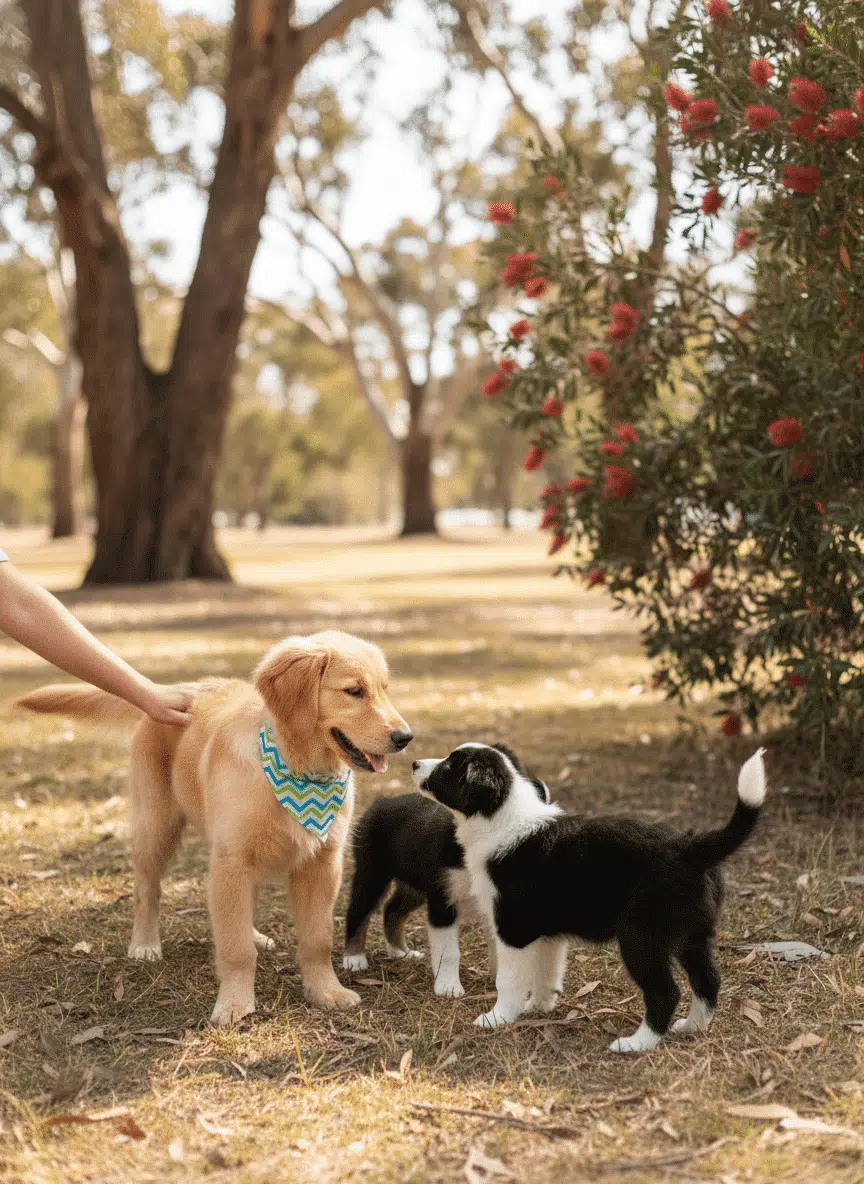
Featured image: Happy puppy with new owner, bright and welcoming. Not stock-photo generic.
Schema markup: Article + FAQ (can extract FAQ from content)
Publishing notes:
- 1. Upload to WordPress (not Vercel)
- 2. Set featured_media
- 3. Update AIOSEO via MySQL
- 4. Add PDF download button/embed

Written by Marine Ponchaut
Marine is the founder of WoofSpark, a professional dog grooming salon in Cessnock, NSW. Since founding WoofSpark in 2019, she has groomed thousands of dogs and helped countless new puppy owners get started on the right foot.
Your Puppy’s First Year Matters
The habits you build in the first few weeks last a lifetime. Need help getting your puppy used to grooming? We offer gentle puppy introduction sessions at our Cessnock salon. Book now or contact us with questions.