
Grooming Tools
Pin Brush vs Slicker Brush: A Groomer’s Guide to Choosing the Right Brush
Jan

Two of the most commonly confused grooming tools are the pin brush and the slicker brush. They look somewhat similar at first glance, but they serve different purposes and work best on different coat types. Choosing the wrong one means less effective grooming sessions and potential discomfort for your dog.
Let’s break down exactly what each brush does and which one (or both) you should have in your grooming kit.
Quick Comparison
| Feature | Pin Brush | Slicker Brush |
|---|---|---|
| Pin type | Wide-spaced, straight pins (often with tips) | Fine, tightly-packed angled wire pins |
| Best for | Long, silky coats | Curly, wavy, medium coats |
| Detangling power | Light tangles only | Light to moderate mats |
| Fluffing ability | Excellent | Good |
| Gentle on coat | Very gentle | Gentle with proper technique |
What Is a Pin Brush?
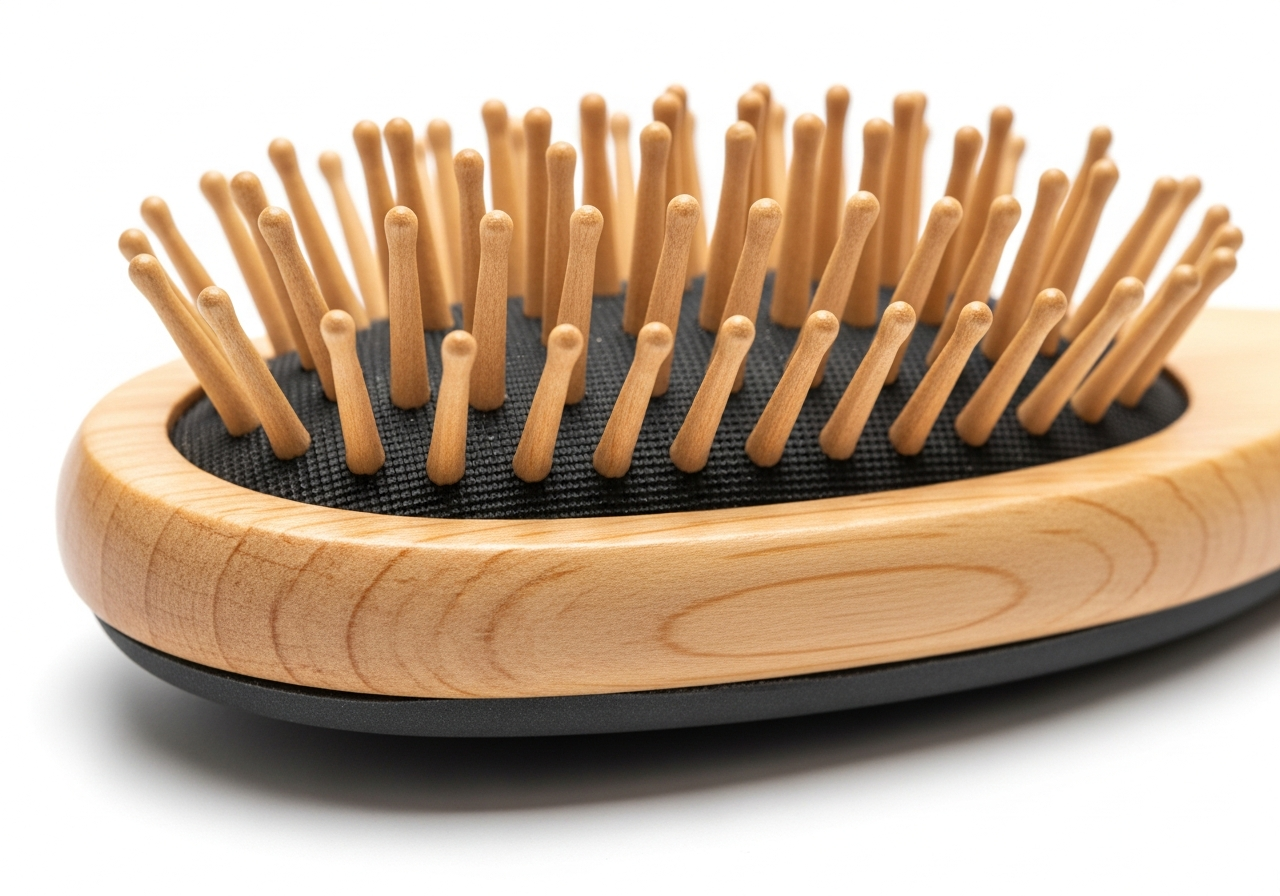
A pin brush has widely-spaced pins set in a rubber or cushioned base. The pins are typically straight (not angled like a slicker) and often have rounded tips to protect the skin. It looks similar to a human hair brush.
What It Does Best
- Fluffs and finishes — Creates that flowing, shiny look on long coats.
- Removes loose hair — Without pulling or tugging.
- Distributes oils — Spreads natural oils for a healthy shine.
- Gentle daily maintenance — Perfect for sensitive dogs.
What It Doesn’t Do Well
- Remove mats or tangles (pins are too far apart)
- Penetrate thick, curly coats
- Work through undercoat
Best Breeds for Pin Brush
- Afghan Hounds, Collies, Setters
- Yorkshire Terriers (for finishing)
- Shih Tzus kept in long coat
- Spaniels with silky coats
- Any long, flowing coat you want to preserve length
What Is a Slicker Brush?
A slicker brush has a flat or curved head packed with fine wire pins set at an angle. The pins are designed to penetrate the coat and catch tangles without scratching the skin (when used correctly).
What It Does Best
- Removes tangles and small mats — The primary job of a slicker.
- Removes debris — Leaves, grass, dried mud.
- Preps coat for clipping — Essential pre-grooming tool.
- Works through curly coats — Fine pins penetrate curls effectively.
What It Doesn’t Do Well
- Finish long, silky coats (can cause static and frizz)
- Remove dense undercoat (need a deshedding tool for that)
Best Breeds for Slicker Brush
- Poodles and all Poodle mixes
- Bichon Frise, Maltese (especially in puppy cuts)
- Spaniels with wavy coats
- Terriers with wire coats
- Most dogs kept in shorter, maintained trims
The Real Difference: Coat Type Matters
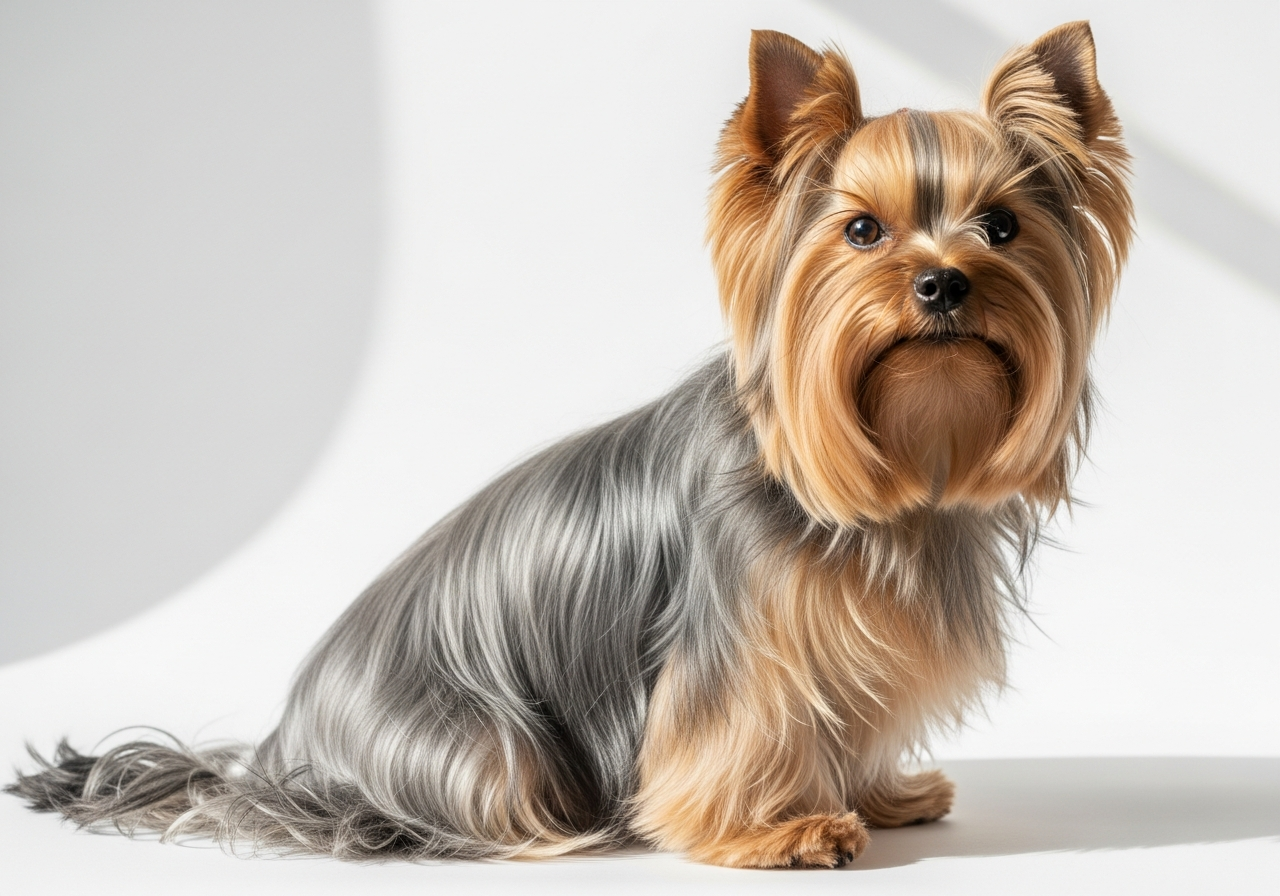

Long, Silky Coats — Use Pin Brush
If you’re growing out your dog’s coat and want that long, flowing look, the pin brush is your friend. It glides through without catching or breaking the hair. Think show dogs with their gorgeous floor-length coats.
Examples: Afghan Hound, Maltese in full coat, Yorkshire Terrier, Shih Tzu in long coat
Curly or Wavy Coats — Use Slicker Brush
Curly coats need the fine pins of a slicker to penetrate the curls and catch tangles before they become mats. A pin brush would just glide over the surface without doing any real work.
Examples: Poodles, Cavoodles, Labradoodles, Bichon Frise
Double Coats — Use Both (Plus More)
Double-coated breeds like Golden Retrievers can benefit from both: a slicker for the topcoat and tangles, and a pin brush for finishing. But they also need an undercoat rake or deshedding tool for the dense undercoat.
Examples: Golden Retriever, Australian Shepherd, Border Collie
Can You Use Both?
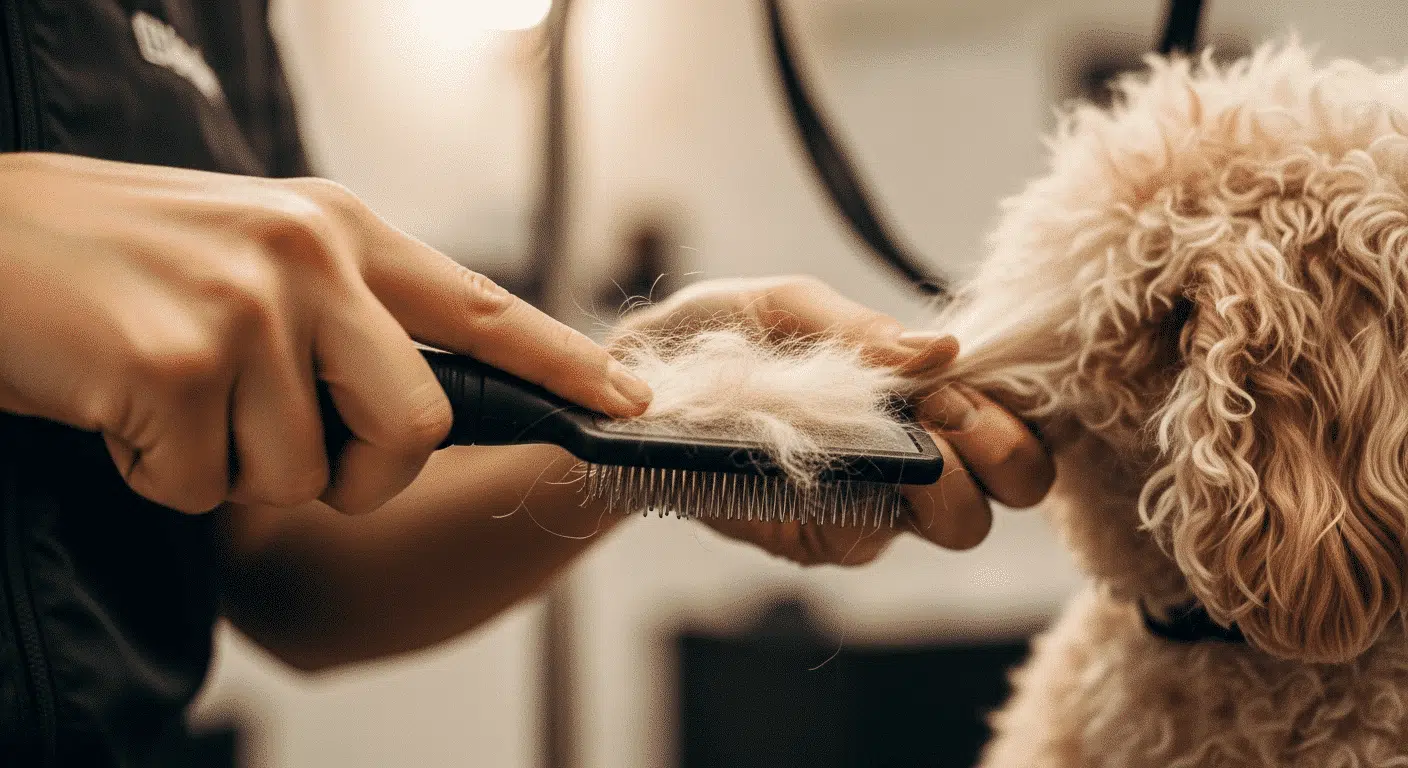
Absolutely. Many groomers use both brushes in a single session:
- Start with the slicker — Remove any tangles and debris.
- Finish with the pin brush — Fluff and add shine.
This combination works particularly well for:
- Dogs transitioning between coat lengths
- Long-coated breeds prone to occasional tangles
- Show dogs needing a polished look
Common Mistakes
Mistake 1: Using a Pin Brush on a Matted Coat
Pin brushes can’t detangle. If your dog has mats, the pin brush will just glide over them while you think you’re brushing. Use a slicker (or dematting tool for severe mats) first.
Mistake 2: Using a Slicker on Long Show Coat
Slicker brushes can break and damage long, delicate coats. If you’re growing out your dog’s coat, use the slicker only on problem areas and a pin brush for general maintenance.
Mistake 3: Pressing Too Hard with Either
Both brushes work best with light pressure. Let the pins do the work. Pressing hard causes discomfort and can scratch the skin.
Mistake 4: Buying Low-Quality Pin Brushes
Cheap pin brushes often have plastic tips that fall off, leaving sharp pins that scratch. Invest in quality — a good pin brush lasts years.
How to Choose: Decision Tree
Is your dog’s coat curly or wavy?
- Yes → Get a slicker brush (primary tool)
- No → Continue…
Is the coat long and flowing (show-style)?
- Yes → Get a pin brush (primary tool)
- No → Continue…
Is it a double coat that sheds?
- Yes → Get a slicker + deshedding tool (pin brush optional for finishing)
- No → Continue…
Is it a short, smooth coat?
- Yes → Neither — get a rubber grooming mitt or bristle brush
Our Recommendations
Best Pin Brushes
- Chris Christensen Oval Pin Brush — Professional quality, gentle on coat
- #1 All Systems Pin Brush — Popular with show handlers
- Safari Pin Brush — Good budget option
Best Slicker Brushes
- Chris Christensen Big G — Industry standard for curly coats
- Hertzko Self-Cleaning Slicker — Great value, easy to clean
- ActiVet Coat Controller — Premium German engineering
The Bottom Line
The choice between pin brush and slicker brush comes down to your dog’s coat type:
- Curly/wavy coats: Slicker brush is essential
- Long, silky coats: Pin brush is essential
- Many dogs: Both have their place
When in doubt, ask your groomer what they use during your dog’s professional grooms. We’re happy to demonstrate proper technique and help you choose the right tools for your specific pup.
Questions about brushes? Drop by the salon or reply to our newsletter — we love talking grooming gear.
Related Reading
Continue exploring our grooming guides:
- Pin Brush vs Slicker Brush: Doodle Grooming
- FURminator vs Slicker Brush: Which One Is Right for Your Dog?
- Steel Comb vs Slicker Brush: Doodle Grooming
Ready to book a professional grooming session? Book your appointment or view our services.
Stop Comparing. Start With What Works.
Marine picked the tools in the Cavoodle Puppy Kit because they work — not because they’re popular. The right slicker brush, a quality comb, salon-grade shampoo, and a first groom voucher. Three tiers from $69.
See Marine’s Picks
Pingback: Pin Brush vs Slicker: Doodle Guide
Pingback: How Often to Brush Your Dog: Guide