

Seasonal
Spring Shedding Prep: What to Do NOW Before the Blowout
Jan
Meta description: Spring shedding season hits Australian dogs hard in September. Start your prep routine in July to minimise the hair avalanche. Here’s the complete timeline and toolkit.
Your black pants will thank you for reading this.
Every September, Australian dog owners face the same reality: their dog transforms into a fur-dispensing machine. Clumps on the couch. Tumbleweeds down the hallway. That distinctive “just pet the dog” look on your work clothes.
This is the spring coat blowout, and if you’re reading this in winter, you’re in the perfect position to make it far less painful. The difference between an overwhelming eight weeks of endless hair and a manageable shedding season comes down to what you do in the 6-8 weeks beforehand.
Here’s the complete preparation timeline—exactly what to do, when to do it, and which tools actually work.
What Actually Happens During Spring Shedding
Your dog isn’t just losing random hair. They’re undergoing a full coat transition.
Dogs with double coats (the fluffy undercoat plus the longer guard hairs on top) grow a denser undercoat during autumn to insulate against winter cold. When spring arrives and daylight hours increase, their body gets the signal: time to dump that winter coat.
This is called “blowing coat” and it’s not gentle. The undercoat loosens and detaches in clumps, pushing through the outer coat. If you don’t actively remove it, that dead undercoat stays trapped against the skin—creating mats, trapping heat, and making your dog uncomfortable.
The result looks like your dog is moulting a whole second dog. Because, in a sense, they are.
What triggers the shed:
– Increasing daylight hours (the primary trigger)
– Rising temperatures
– Hormonal shifts responding to the season change
Dogs living mostly indoors with artificial lighting often shed more consistently year-round, but they’ll still have a noticeable increase in spring. The biological programming is strong.
The Australian Timeline: July to November
Forget northern hemisphere shedding guides that talk about March preparation. Our seasons are reversed. Here’s when things actually happen in Australia:
July: The Early Prep Window
This is when smart dog owners start. The heavy shed is still two months away, but groundwork now prevents problems later.
What to do in July:
– Book your professional grooming appointment for late August or early September (good groomers fill up fast during shedding season)
– Check your deshedding tools—replace brushes with worn bristles or bent tines
– Start a consistent brushing routine if you don’t have one (even 5 minutes, 3x weekly builds the habit)
– Assess your dog’s coat condition—is it healthy enough to handle increased brushing?
If your dog’s coat is dry, dull, or already showing signs of matting, address that first. A healthy coat sheds more cleanly than a damaged one.
August: Ramp Up Phase
You’ll start noticing more hair in the brush. This is the early shedding, not the main event.
What to do in August:
– Increase brushing frequency to every second day
– Pay attention to friction areas: behind ears, under the collar, where harness sits, armpits, and around the back end
– Give your dog a thorough bath with a quality deshedding shampoo (this loosens undercoat before the real blowout begins)
– Book a second grooming appointment for mid-October if you haven’t already
The August bath is strategic. Warm water opens the hair follicles, and the right shampoo helps release coat that’s ready to shed. You’ll be amazed how much comes out in the dryer.
September: Peak Blowout
This is the main event for most Australian dogs. The shed hits hard and fast.
What to do in September:
– Brush daily, or twice daily for heavy-coated breeds
– After brushing, run your hands over the coat to find any spots you missed (if clumps pull out easily, you need to go over that area again)
– Keep the professional grooming appointment you booked in July
– Consider a second bath mid-month if the volume is overwhelming
During peak blowout, you’re not being too aggressive if you’re pulling out clumps. That hair is dead and ready to go. You’re doing your dog a favour by removing it before it mats.
October: Transition Month
The intense shedding starts to slow, but doesn’t stop entirely.
What to do in October:
– Continue daily brushing through the first two weeks
– Scale back to every second day in the second half of the month
– Get that second professional groom to clear out any remaining undercoat and shape the coat for summer
– Check for any mats that formed in hard-to-reach areas during the heavy shed
November: The New Normal
Your dog’s summer coat is in. Shedding returns to normal levels.
Maintenance mode:
– Regular brushing 2-3 times per week
– Monthly baths or as needed
– Watch for any residual undercoat that didn’t release (especially around the rump and haunches)
Why Starting Early Actually Matters
You might wonder if all this prep is really necessary. Can’t you just brush more when the shedding starts?
Here’s what happens when you skip the preparation:
Without prep:
– Dead undercoat builds up before you start removing it
– Built-up undercoat tangles with live coat, creating mats
– Mats trap moisture and heat against the skin
– Hot spots, skin irritation, and bacterial infections become more likely
– Brushing sessions become longer and more uncomfortable for your dog
– Your dog learns to hate grooming
– Groomers are fully booked, leaving you to manage alone
With prep:
– Coat is already loose and free-moving when heavy shedding hits
– Each brushing session removes coat efficiently
– No mat formation because there’s no buildup
– Sessions stay short and positive
– You’ve got professional support scheduled when you need it
I’ve seen dogs come in after owners ignored the shedding for three weeks. The undercoat was so packed and matted that a full clip-down was the only option. That’s not a style choice—it’s a welfare necessity. Starting in July prevents that entirely.
Tools That Actually Work for Spring Shedding Dog Season
The pet store deshedding aisle is overwhelming. Half those tools are garbage. Here’s what you actually need:
Essential: The Undercoat Rake
This is your primary weapon. An undercoat rake has long, rounded-tip tines spaced to penetrate through the outer coat and grab the loose undercoat underneath.
What to look for:
– Rotating tines (they move with the coat instead of pulling)
– Appropriate tine length for your dog’s coat depth
– Comfortable grip you can use for 15-minute sessions
What to avoid:
– Rakes with sharp or scratchy tines
– Fixed-tine rakes that snag on every tangle
Use this tool first in every session. Work in sections, always brushing in the direction of hair growth.
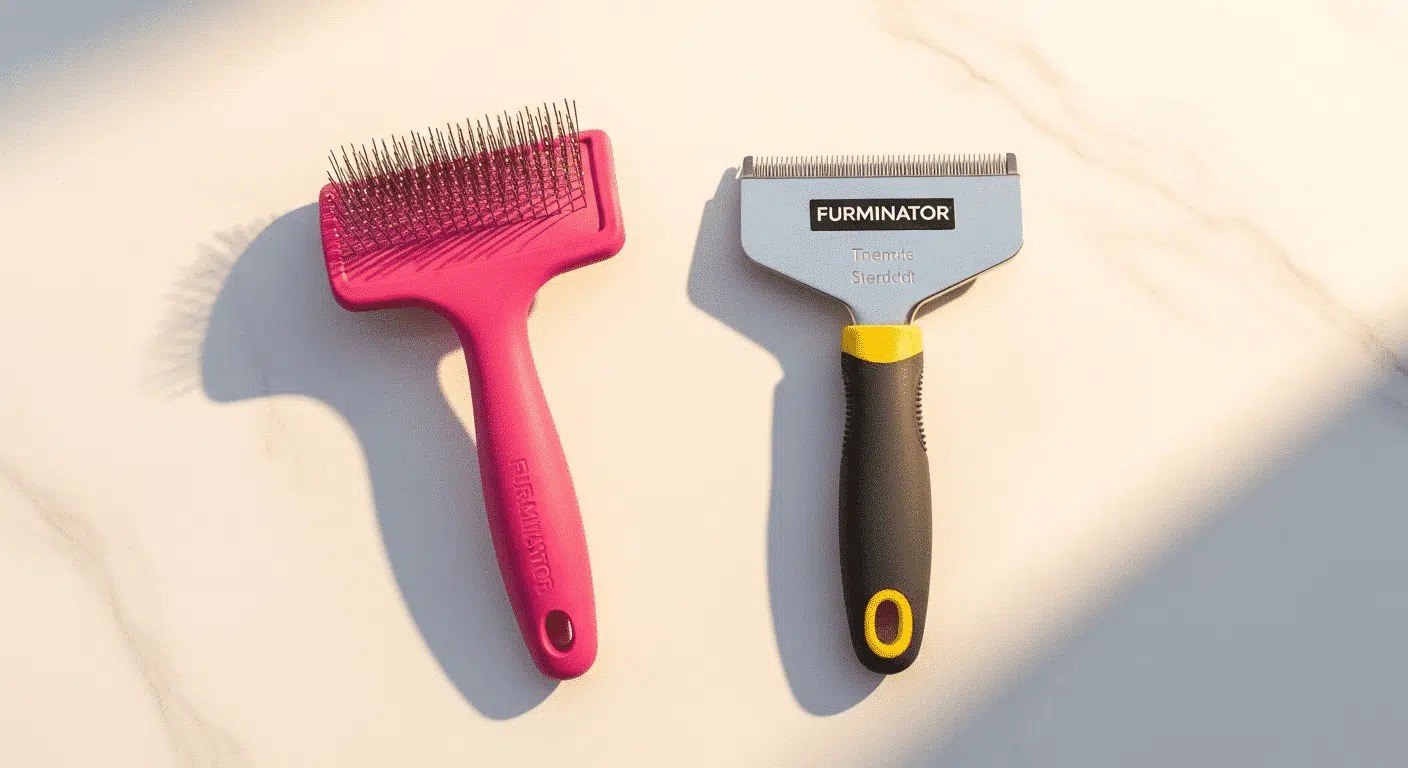
Essential: Slicker Brush
A slicker brush has fine, short wires on a flat or curved base. It catches the undercoat that the rake brings to the surface and smooths the outer coat.
What to look for:
– Flexible base that contours to your dog’s body
– Fine enough wires to catch loose coat without scratching skin
– Self-cleaning feature is nice but not essential
Use this second, after the undercoat rake. It polishes off the session and catches the fine hairs the rake missed.
Nice to Have: Deshedding Tool (Furminator-style)
These tools have a blade edge that cuts through and removes undercoat. They work, but with some caveats.
The good:
– Highly effective at removing massive amounts of undercoat quickly
– Satisfying to use (you’ll be shocked how much comes out)
The caution:
– Can cut or damage the outer guard coat if overused
– Easy to overdo it—set a timer and stop at 10-15 minutes max
– Not for use on dogs with single coats or sensitive skin
If you use one of these, limit it to once per week during heavy shedding. Daily use will thin the coat excessively.
Essential: Comb
A simple metal comb with both wide and fine teeth. Use it to check your work—if the comb moves smoothly through the coat, you’ve done a thorough job.
This also catches small tangles before they become mats. Run it through the friction zones after every brushing session.
Optional But Helpful
High-velocity dryer: If you have one, using it after a bath blasts out undercoat like nothing else. Professional groomers rely on these for a reason.
Grooming spray or detangler: Makes brushing easier on the coat and more comfortable for your dog. Look for one without heavy silicones that can build up.
Rubber curry brush: Great for short-coated dogs or for massaging shampoo through the coat during baths. Less useful for the fluffy breeds.
The Daily Routine During Peak Shedding
When your spring shedding dog hits peak blowout, here’s an efficient daily routine that takes 15-20 minutes:
Quick Daily Session
1. Setup (2 minutes)
– Take your dog somewhere easy to clean up—outside, garage, bathroom, or on a dedicated grooming mat
– Have treats ready for positive associations
– Lay out undercoat rake, slicker brush, and comb
2. Undercoat Rake (8-10 minutes)
– Start at the shoulders and work back toward the tail
– Use short strokes, lifting the coat with your other hand to get to the undercoat
– Don’t skip the legs, chest, or belly
– The “pants” area (back legs) and rump hold the most undercoat
3. Slicker Brush (4-5 minutes)
– Quick pass over the whole coat
– Focus on the areas where the rake removed the most
– Watch for any areas that snag—these need attention with the comb
4. Comb Check (2-3 minutes)
– Run the comb through friction zones: behind ears, under collar, armpits, between back legs
– Any snags? Work them out gently with the comb, or use a bit of detangler spray
5. Reward (1 minute)
– End every session with treats and praise
– You want your dog to associate grooming with good things
Twice-Weekly Deep Sessions
Every few days during peak shedding, add 10-15 extra minutes:
- Use the deshedding tool (if you have one) on the heaviest areas
- Check the base of the tail—this area mats easily and is often missed
- Run your hands over the entire body, feeling for any clumps or mats you can’t see
- Part the coat in several areas and look at the skin—healthy skin is pink-grey, not red or flaky
When to See a Professional Groomer
Home maintenance is essential, but professional grooming during shedding season provides something you can’t replicate at home: high-velocity drying.
After a bath, professional dryers blast loosened undercoat out of the coat faster and more completely than any brush. This single service can remove 50-70% of the loose undercoat in one appointment.
Book professional grooming when:
– Two weeks before you expect the heavy shed to start (late August for most Australian dogs)
– At the tail end of shedding season to clear out anything that’s still trapped (mid-October)
– Any time you find mats you can’t safely remove at home
– If your dog has been unwell, stressed, or if the coat is in unusual condition
Signs you need professional help immediately:
– Mats tight against the skin (these can cut off circulation)
– Hot spots or red, irritated skin under matted areas
– Unusual smell coming from the coat
– Your dog is distressed during home brushing
Some mats can only be removed by cutting them out. Attempting to brush through a tight mat causes pain and can injure the skin. Let a professional assess and handle it.
What to Ask Your Groomer
When booking during shedding season, mention specifically that you’re coming for deshedding, not a haircut. The service is different.
Request:
– Thorough blow-out with high-velocity dryer
– Undercoat removal focus
– Minimal trimming unless needed for hygiene
– Feedback on your dog’s coat condition and any areas to watch
A good groomer will also spot skin issues, parasites, or coat problems you might have missed at home.
Common Mistakes Dog Owners Make
Mistake 1: Shaving the Coat
I understand the temptation. The fur is everywhere. Just shave it off, right?
For double-coated dogs, shaving damages the coat permanently. The undercoat grows back faster than the guard hairs, changing the coat’s texture and appearance. More importantly, that double coat provides insulation in both directions—it keeps your dog cool in summer by regulating body temperature.
Shaving removes this protection and can lead to sunburn, overheating, and a coat that never looks quite right again.
For doodles and single-coated breeds, clips are fine and normal. But for huskies, samoyeds, golden retrievers, German shepherds, border collies, and other double-coated breeds—put the clippers away.
Mistake 2: Bathing Without Brushing First
Wet mats tighten like concrete. If you bathe your dog before brushing out tangles and loose coat, you’ll make everything worse.
The correct order:
1. Brush thoroughly
2. Bathe
3. Dry (high-velocity drying is ideal)
4. Brush again
Always brush before any water touches the coat during shedding season.
Mistake 3: Stopping When You Get Tired
This one sneaks up on you. You’re brushing, tons of fur is coming out, and after 15 minutes your arm hurts so you stop. But you only did half the dog.
The result? Pristine shoulders, matted pants.
Better approach:
– Divide your dog into zones: front half, back half, left side, right side
– Finish one zone completely before moving on
– If you need to cut a session short, note where you stopped and start there next time
Mistake 4: Using the Wrong Tool for Your Coat Type
A Furminator-style tool on a poodle will damage the coat. A slicker brush alone won’t penetrate a malamute’s dense undercoat.
Match the tool to the coat:
| Coat Type | Primary Tool | Secondary Tool |
|---|---|---|
| Double coat (husky, GSD, goldie) | Undercoat rake | Slicker brush |
| Long double coat (collie, sheltie) | Long-tine undercoat rake | Pin brush |
| Curly single coat (poodle) | Slicker brush | Metal comb |
| Wavy fleece (doodle) | Slicker brush | Metal comb |
| Wire coat (terrier, schnauzer) | Stripping knife or slicker | Metal comb |
| Smooth short coat (lab, beagle) | Rubber curry | Bristle brush |
Mistake 5: Ignoring the Hidden Areas
Behind the ears. Under the armpits. Between the back legs. Around the collar line. Between toe pads.
These friction zones mat first and shed last. Most owners focus on the obvious fluffy areas and miss these completely.
During every session, deliberately check these spots. Run your comb through them. Feel for hidden tangles forming against the skin.
Breed-Specific Notes
Doodles and Designer Dogs
Here’s the thing about doodles: their coats are unpredictable.
Some doodles inherit the poodle’s non-shedding curly coat. Some inherit the retriever’s shedding double coat. Many get something in between—a wavy, shedding coat that mats more easily than either parent breed.
If your doodle sheds, they need the same preparation as any shedding dog. The wavy texture actually makes things harder because loose undercoat tangles in the waves instead of falling out.
Doodle-specific tips:
– Don’t assume your doodle “doesn’t shed”—many do
– Line-brush properly: part the coat and brush from the skin outward
– Pay extra attention to behind the ears and in the armpits (doodles mat here constantly)
– Keep a regular grooming schedule year-round, not just during shedding season
– If mats are forming faster than you can manage, a shorter maintenance clip makes life easier for everyone
Double-Coated Breeds
Huskies, malamutes, samoyeds, German shepherds, golden retrievers, border collies, corgis, shelties—these dogs blow coat spectacularly.
You’ll pull out enough fur to build a whole second dog. This is normal. Keep going.
Double-coat specific tips:
– Invest in a good undercoat rake—this is your most important tool
– During peak shed, daily brushing isn’t optional
– The rear “pants” area will shed the longest—don’t declare victory early
– Never shave unless there’s a medical reason
– A high-velocity dryer session after bathing removes more coat than an hour of brushing
Single-Coated Breeds
Poodles, bichons, Maltese, and Yorkshire terriers don’t blow coat like double-coated dogs. But they still shed individual hairs, and without removal, those hairs create mats.
Single-coat specific tips:
– Daily brushing prevents mats more than it removes shedding
– Mats form faster than they do on double-coated dogs
– Regular professional grooming is more important, not less
– The right clipper length for your lifestyle prevents daily battles
Short-Coated Breeds
Labs, beagles, pugs, and bulldogs shed too—they just look less dramatic about it because the hairs are short.
Short-coat specific tips:
– Rubber curry brushes work well for massage and coat removal
– A shedding blade can help during peak seasons
– These dogs benefit from regular baths during shedding—the water releases a lot
– You’ll find short hairs embedded in furniture and clothing; they’re harder to remove than long hairs
Making It Easier on Yourself
Set Up a Grooming Station
Don’t brush your dog on the couch where you then have to clean up. Create a dedicated spot:
- Outside on the grass (fur blows away—bonus for birds building nests)
- Bathroom with easy-clean floors
- Laundry room
- Garage or covered outdoor area
Having a consistent location creates routine for your dog and contains the mess for you.
Make It Positive
Your dog will either learn to tolerate grooming or dread it. This depends entirely on how you handle it.
Build positive associations:
– Start with short sessions and gradually extend
– Give treats throughout, not just at the end
– Stop before your dog gets frustrated
– Never force your dog through pain—if something hurts, stop and reassess
– End on a win, even if that means stopping early
Dogs that enjoy grooming are easier to maintain. Dogs that hate it become matted, stressed, and difficult.
Know Your Limits
If your dog has significant matting, if grooming sessions cause distress, or if your dog’s coat needs are beyond your tools and skills—get professional help.
There’s no shame in bringing your dog to a groomer regularly. That’s what we’re here for. The dogs benefit. You benefit. And you won’t spend your spring fighting a losing battle against biology.
The Bottom Line
Spring shedding hits hard in Australia starting September, but the real work happens before the first clump appears.
Start in July:
– Book professional grooming for late August
– Check your tools
– Build the brushing habit
August through September:
– Increase frequency as shedding increases
– Daily brushing at peak
– Use the right tools for your coat type
Avoid the big mistakes:
– No shaving double coats
– Always brush before bathing
– Don’t skip the hidden areas
Your dog’s shedding is unavoidable. The fur avalanche in your house is not. Get ahead of it now, and both you and your dog will have a more comfortable spring.
FAQ
When does spring shedding season start in Australia?
Spring shedding typically begins in late August and peaks through September for most Australian dogs. Unlike the northern hemisphere where spring shedding happens in March-April, our reversed seasons mean September is the heaviest month. Light shedding continues into October before settling to normal levels in November.
How long does spring coat blowout last?
For most double-coated dogs, the intense shedding period lasts 4-6 weeks, usually peaking in September. The entire transition from winter coat to summer coat takes 8-10 weeks when you include the build-up and wind-down phases. Dogs that spend most time indoors with climate control may have a less dramatic but more prolonged shedding period.
Do doodles shed in spring?
Many doodles do shed, despite their reputation as “non-shedding” dogs. The coat type depends on which parent’s genetics dominate—some doodles inherit the poodle’s non-shedding curls, while others inherit the retriever’s shedding double coat. Most doodles fall somewhere in between with a wavy coat that sheds moderately. If your doodle sheds, they need the same spring preparation routine as any shedding breed.
Can I shave my dog to stop the shedding?
For double-coated breeds, shaving is not recommended and can permanently damage the coat. The double coat provides insulation against both cold and heat—shaving removes this protection and can lead to sunburn and overheating. For single-coated breeds like poodles and doodles, shorter clips are perfectly appropriate and can make maintenance easier.
How often should I brush my dog during shedding season?
During peak shedding (September for most Australian dogs), daily brushing is ideal for double-coated breeds. This typically means 15-20 minute sessions. Before and after the peak, every-other-day brushing is usually sufficient. Even 5 minutes of daily brushing is better than one long session once a week—consistency prevents mat formation.
What’s the best tool for removing dog undercoat?
An undercoat rake is the most effective tool for removing loose undercoat on double-coated dogs. Look for one with rotating, rounded-tip tines that penetrate the outer coat to grab the undercoat underneath. Follow up with a slicker brush to catch remaining loose hair. For doodles and curly-coated dogs, a slicker brush and metal comb are your primary tools.
Related articles:
– [Internal link: Summer coat care guide]
– [Internal link: Best deshedding products we recommend]
– [Internal link: When to book professional grooming]
WoofSpark is a premium dog grooming salon in Australia. We specialise in coat care for all breeds, from doodles to double-coated fluffballs. Book your spring deshedding appointment before the rush—our September spots fill fast.
Professional De-Shedding System
For serious shedding control, we use the FurEx De-Shedding System in our salon. The 3-step process (Cleanse, Release, Close) loosens undercoat and reduces shedding by up to 80%. Available for home use.

Related Reading
Continue exploring our grooming guides:
- Spring Pet Care: Managing Allergies, Grass Seeds, and Shedding Season
- 7 Signs Your Dog’s Coat Is Unhealthy (And What to Do About It)
- Steel Comb vs Slicker Brush: Do You Need Both? (Yes, Here’s Why)
Ready to book a professional grooming session? Book your appointment or view our services.