

Grooming
Grass Seeds and Dogs: The Hidden Danger Every Australian Dog Owner Must Know
Jan
Grass seeds and dogs are a dangerous combination during Australian summers—and most owners don’t realise it until it’s too late. These tiny seeds cause thousands of vet visits each summer, leading to painful injuries, expensive surgeries, and heartbreak. In this guide, you’ll learn how to spot grass seed dangers, prevent injuries, and protect your dog from this common but serious hazard.
Every Australian summer, veterinary clinics see a surge in one particular injury: grass seed penetration. In fact, these tiny, innocent-looking seeds cause more pain, surgery, and expense than most dog owners realise—until it happens to their dog.
After seeing the aftermath at our grooming salon, we’re on a mission to help every dog owner understand this danger before it becomes an emergency.
What Makes Grass Seeds and Dogs a Dangerous Combination?
Grass seeds aren’t just annoying bits of plant matter. They’re perfectly designed to cause problems for dogs.
The Barbed Arrow Design
Most problematic grass seeds have:
– A pointed tip for penetration
– Backward-facing barbs that prevent reverse movement
– A shape that works deeper with every movement
Consequently, once a grass seed enters your dog’s body, it can only move forward. Every time your dog walks, scratches, or moves, the seed travels deeper.
Common Grass Seed Types That Affect Dogs in Australia
The worst offenders in Australian conditions include several species. According to the Australian Veterinary Association, these grass seeds pose the greatest threat:
Barley Grass (Hordeum species)
– Most common grass seed problem for dogs
– Long awns with sharp barbs
– Peak season: late spring through summer
Spear Grass (Austrostipa species)
– Native Australian grass
– Extremely sharp penetrating tip
– Found throughout Australia
Wild Oats (Avena fatua)
– Long twisted awn
– Corkscrew motion drives it deeper
– Common in disturbed areas
Foxtail Grass (Various species)
– Distinctive foxtail shape
– Seeds separate and embed individually
– Particularly dangerous for ears
Where Grass Seeds Attack Dogs
Grass seeds don’t just get stuck in fur. They penetrate. Understanding where grass seeds and dogs commonly clash helps you know what to check.
Paw Pads and Between Toes
The most common entry point for grass seeds in dogs. Seeds lodge between toes and work their way through the skin, creating abscesses. Signs include:
– Sudden limping
– Obsessive licking of one paw
– Swelling between toes
– Small hole or wound visible
– Reluctance to walk
Left untreated, seeds can travel up the leg. As a result, this requires extensive surgery to locate and remove.
Ears
Second most common location for grass seeds and dogs. Seeds fall into the ear canal and travel towards the eardrum. Signs include:
– Sudden violent head shaking
– Pawing at one ear
– Head tilt to one side
– Crying when ear is touched
– Brown discharge
Ear seeds can perforate the eardrum. Therefore, if not removed quickly, they can cause permanent damage.
Eyes
Emergency situation. Seeds lodge under the eyelid or in the corner of the eye. Signs include:
– Sudden squinting or closed eye
– Excessive tearing
– Pawing at face
– Visible redness
– Swelling around eye
Eye injuries require immediate veterinary attention. Otherwise, corneal damage or vision loss may occur.
Nose
More common than you’d think. Seeds are inhaled while sniffing in grass. Signs include:
– Sudden violent sneezing fits
– Pawing at nose
– Bleeding from nostril
– Snorting or difficulty breathing
– Visible distress
Nasal seeds often require sedation and scoping to remove.
Armpits and Groin
Hidden danger zones for grass seeds and dogs. Seeds collect in these warm, moist areas and work their way under the skin. Signs include:
– Small lump that appears suddenly
– Draining wound that won’t heal
– Sensitivity when touched
– Red, irritated skin
These seeds can travel internally. In severe cases, they sometimes end up in the chest or abdomen.
Chest (Inhaled)
The nightmare scenario. Seeds inhaled deeply can enter the lungs. Signs include:
– Sudden coughing
– Difficulty breathing
– Fever
– Lethargy
– Loss of appetite
Lung-embedded seeds require surgery and can be life-threatening.
Why Doodles Are at Higher Risk From Grass Seeds
Doodles face extra grass seed dangers because of their coat type. Understanding why grass seeds and dogs like doodles are such a problem helps with prevention.
The Fluff Factor
Doodle coats:
– Trap seeds in the outer fluff
– Hide seeds from visual inspection
– Allow seeds to migrate towards skin
– Provide warmth that encourages seed burrowing
A grass seed that might fall off a short-coated dog will get caught in doodle fur. Consequently, it has time to work its way to the skin.
The Ear Situation
Those adorable floppy, furry doodle ears:
– Create perfect seed traps
– Block airflow that might dislodge seeds
– Hide early warning signs
– Allow seeds to travel unnoticed
Paw Fluff
The fur between doodle toes:
– Catches seeds during walks
– Holds seeds against the skin
– Hides the entry point
– Makes removal harder
Prevention: Protecting Dogs From Grass Seeds
Grass seed injuries are almost entirely preventable with the right approach. Here’s how to keep grass seeds and dogs safely separated.
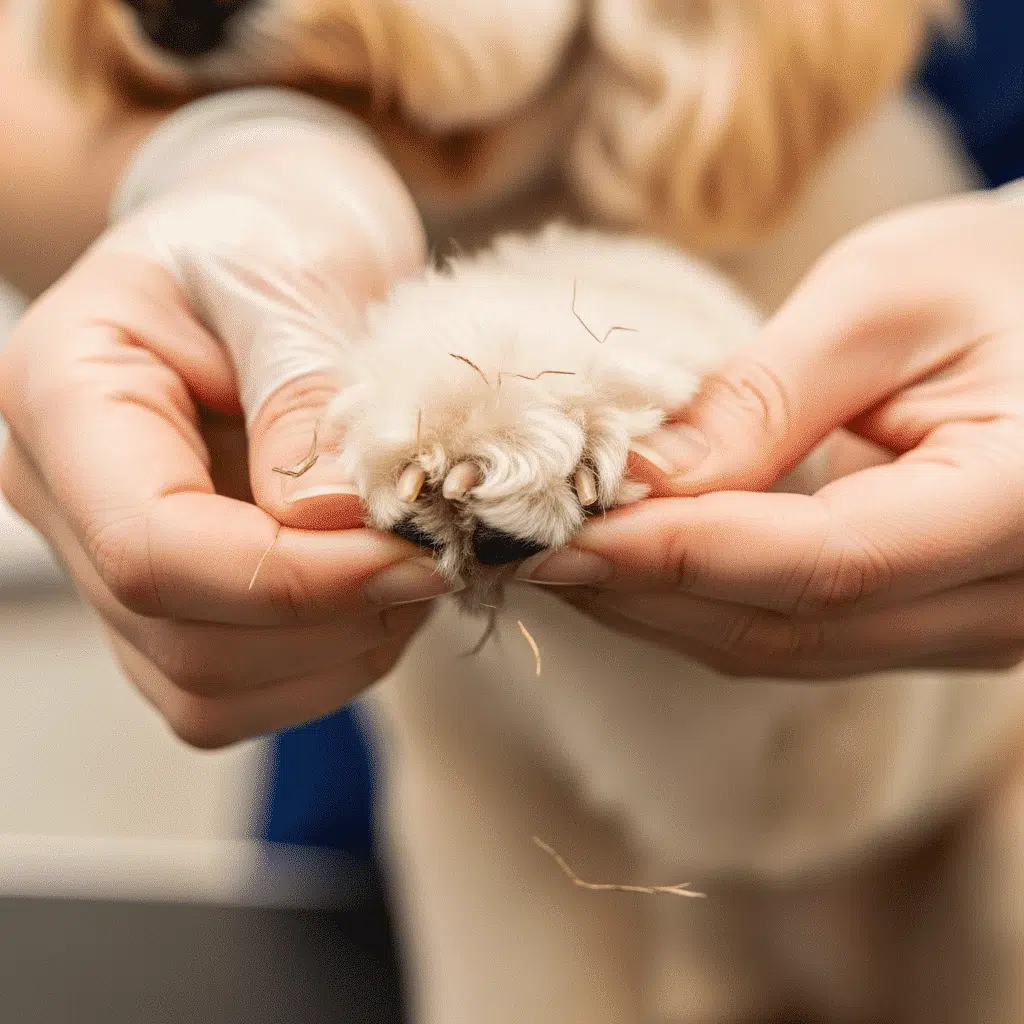
Keep Paw Fur Trimmed
This is the single most effective prevention.
Between grooms, you can:
– Ask us to trim paw pads extra short in summer
– Request “summer paw trims” between full grooms
– Learn to carefully trim the hair between toes yourself (with proper tools)
Short paw fur means seeds have nothing to grab onto and are more visible if they do lodge.
DIY Paw Trimming Tool We Actually Use
If you want to maintain paw fur between grooms, our DIY Dog Grooming Clipper Set is a budget-friendly option at just $48. It’s lightweight, cordless, and easy to handle—perfect for home use. We’d never recommend something we don’t trust ourselves: every groomer at our Cessnock salon keeps one in their kit for quick jobs like tidying up paws and pads. They’ve proven reliable for paw pads, sanitary trims, and face tidying.

Additionally, short paw fur means seeds have nothing to grab onto and are more visible if they do lodge.
Avoid High-Risk Areas
During grass seed season (October–March):
– Stick to mowed paths and short grass
– Avoid nature strips with long grass
– Skip the “bush bash” adventures
– Walk on pavement or established trails
– Check parks before letting dogs run free
The Post-Walk Check (Non-Negotiable)
After EVERY walk during grass seed season:
30-second check:
1. Run fingers through coat, feeling for seeds
2. Check between every toe
3. Look inside both ears
4. Check armpits and groin
5. Look at eyes and around face
This takes less than a minute. However, it can prevent thousands in vet bills.
Weekly Deep Checks
Once a week during peak season:
– Part the coat and look at skin level
– Use a metal comb through all fur
– Check sanitary area
– Feel for any lumps or sensitive spots
– Brush out thoroughly
Regular Grooming
Summer grooming should be more frequent:
– Every 4-6 weeks instead of 6-8
– Request shorter summer cuts
– Ask for paw pad trims between grooms
– Ear fur trimmed for airflow
What To Do If You Find a Grass Seed on Your Dog
Visible Seed (Not Yet Embedded)
If you can see the seed sitting in the fur or on the skin surface:
– Carefully remove with tweezers
– Pull in the direction of the barbs (usually outward)
– Don’t push it further in
– Clean the area with saline solution
– Monitor for any signs of irritation
Partially Embedded Seed
If the seed has started to penetrate but is still visible:
– DO NOT try to pull it out
– The barbs may break off inside
– Veterinary removal is safer
– Keep the area clean
– Prevent your dog from licking
– See your vet within 24 hours
Suspected Internal Seed
If you notice symptoms but can’t see a seed:
– Don’t wait to “see if it gets better”
– Seeds only travel deeper, never out
– Early removal is easier and cheaper
– Call your vet immediately
– Describe exactly when symptoms started
Grass Seeds and Dogs: The Vet Visit
Diagnosis
Your vet may use:
– Physical examination
– Sedation for ear or nose scoping
– X-rays (though seeds often don’t show up)
– Ultrasound for deep-tissue seeds
– CT scan in complex cases
Removal
Depending on location:
Surface seeds: Local anaesthetic, forceps removal
Ear seeds: Sedation, otoscope, specialist tools
Paw seeds: Local or general anaesthetic, minor surgery
Deep tissue: General anaesthetic, surgical exploration
Lung/chest: Major surgery, hospitalisation
Cost Reality
Grass seed removal costs vary significantly. According to Pet Insurance Australia, typical costs include:
| Location | Typical Cost Range |
|---|---|
| Visible/surface | $100-$300 |
| Ear (simple) | $200-$500 |
| Between toes | $300-$800 |
| Deep tissue/abscess | $800-$2,000 |
| Exploratory surgery | $2,000-$5,000+ |
| Lung/chest | $5,000-$10,000+ |
In comparison, prevention (paw trim + daily checks) costs nothing.
Summer Grooming for Grass Seed Prevention in Dogs
The Ideal Summer Cut
For maximum grass seed protection:
Paw pads: Trimmed short, fur between toes removed
Ears: Inner ear fur trimmed for airflow
Body: Short enough to spot seeds easily
Belly: Shorter for grass contact areas
Sanitary area: Trimmed short
This isn’t about aesthetics—it’s about safety.
What to Ask Your Groomer
When booking summer grooms, request:
– “Summer safety trim”
– “Grass seed prevention cut”
– “Extra short paw pads”
– “Ear fur thinned”
Good groomers know exactly what you mean.
Between-Groom Maintenance
You can book paw-only appointments:
– Quick paw pad trim
– Ear check
– Belly tidy
– Usually 15-20 minutes
– Fraction of full groom cost
Worth it during peak season.
High-Risk Scenarios for Grass Seeds and Dogs
Be extra vigilant during:
Beach Dune Walks
Dune grasses are loaded with seeds. The wind blows them everywhere. Therefore, a post-beach check is essential.
Bush Walks
Native grasses in bushland are prime culprits. Consider avoiding during peak season or stick to clear trails.
Dog Parks with Unmowed Sections
Those wild corners are grass seed territory. Keep your doodle on the mowed areas.
Rural Property Visits
Farms and rural properties have abundant grass seeds. Extra checks before leaving are essential.
Camping and Hiking
Extended outdoor time = extended exposure. Check multiple times daily.
FAQ: Grass Seeds and Dogs
When is grass seed season in Australia?
Peak season runs from October to March. The highest risk occurs in late spring and early summer (November-December) when grasses seed and dry out. However, risk exists year-round in some areas.
Can grass seeds kill dogs?
Yes, in severe cases. Inhaled seeds that enter the lungs can cause serious infections. Additionally, seeds that travel internally can cause abscesses in vital organs. While fatal cases are rare, serious complications are common when seeds aren’t removed promptly.
How quickly do grass seeds travel in dogs?
Seeds can move surprisingly fast—sometimes centimetres per day. A seed that enters the paw pad today could be in the leg within a week. Therefore, early detection and removal is critical.
Can I remove a grass seed myself?
Only if it’s visible on the surface and hasn’t penetrated the skin. Partially embedded or suspected internal seeds should always be handled by a vet. Improper removal can push the seed deeper or leave barbs behind.
How do I check between my doodle’s toes for grass seeds?
Gently spread each toe apart and look at the webbing and pad edges. Feel for anything sharp or unusual. Part the fur and look at skin level. Any sudden sensitivity or flinching needs further investigation.
Will pet insurance cover grass seed removal?
Most policies cover grass seed removal as it’s an accident/injury. However, check your specific policy. Excess fees still apply. Prevention is always more economical than treatment.
Should I avoid all grassy areas in summer?
Not necessarily. You should avoid long, seeding grass specifically. Mowed lawns and established paths are generally safe. The risk is in unmaintained grass that’s gone to seed.
The Bottom Line on Grass Seeds and Dogs
Grass seeds and dogs are a serious, common, and almost entirely preventable problem. The basics:
- Keep paw fur trimmed during grass seed season
- Check your dog after every walk—30 seconds can save thousands
- Avoid long grass during peak season (October-March)
- Groom more frequently in summer
- Act immediately if you notice symptoms
We see the results of grass seed injuries at the salon—dogs who’ve had surgery, areas shaved for wound care, owners who wish they’d known about prevention.
Now you know. Check those paws tonight.
Concerned about grass seed protection for your doodle? Book a summer safety groom or contact us for advice on the best cut for grass seed season.
Related guides:
– Summer Heat Safety for Doodles
– Swimming and Coat Care
– Cavoodle Grooming Guide
Last updated: January 2026
WoofSpark Melbourne | Professional Doodle Grooming
Related Reading
Continue exploring our grooming guides:
- Breed-Specific Grooming and Care: A Complete Guide for Australian Dog Owners
- Understanding Dog Skin Allergies: Types, Symptoms, and Management
- Summer Grooming Tips: Keeping Your Dog Cool and Comfortable
Ready to book a professional grooming session? Book your appointment or view our services.
Pingback: Natural Dog Shampoo vs Regular: Which is Best? | WoofSpark
Pingback: Dog Skin Allergies: Signs and Help