
Health & Wellness
How to Keep Your Dog Calm During Grooming: Tips from Professional Groomers
Jan

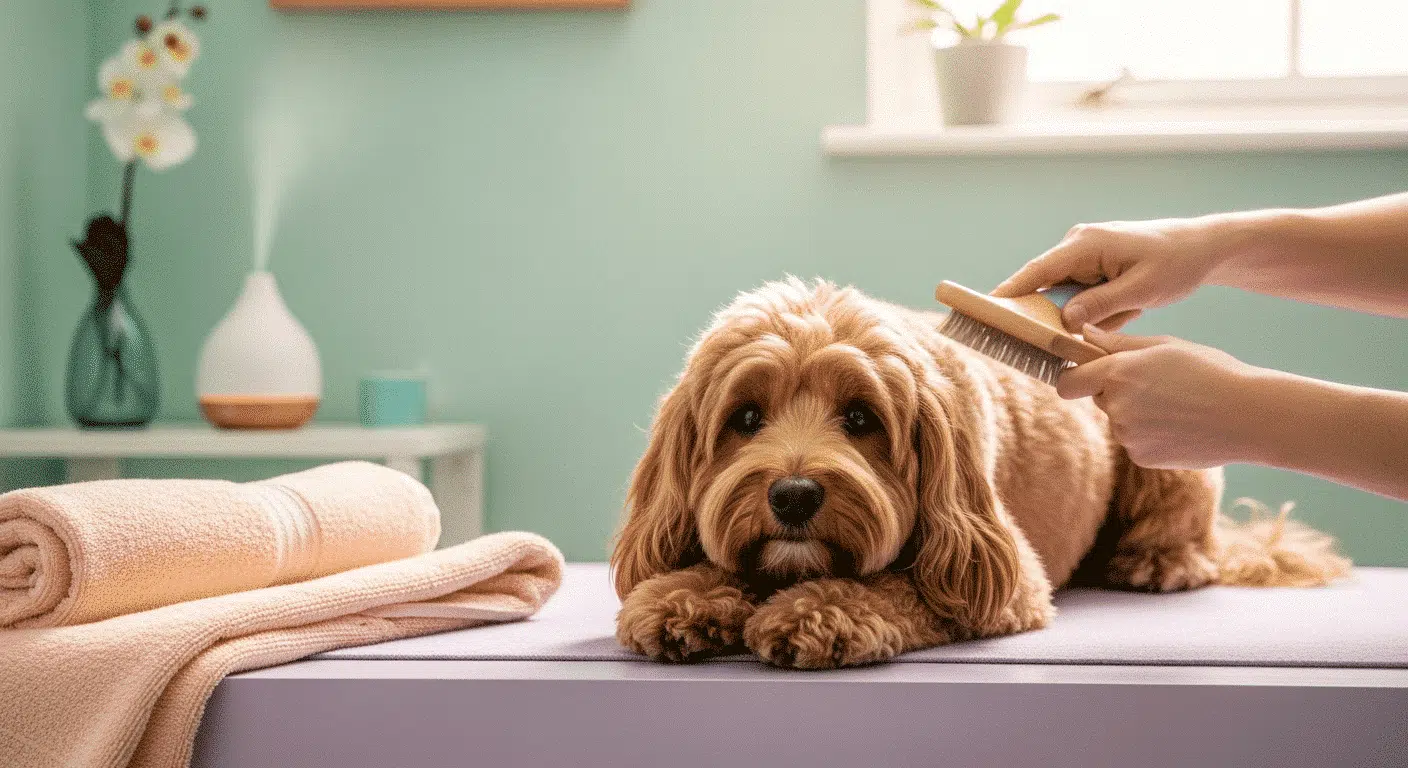
Some dogs love grooming. They settle right onto the table, enjoy the brushing, and seem to view the whole experience as a spa day. Then there are the others — the shakers, the squirmers, the ones who act like the brush is a medieval torture device.
After grooming thousands of dogs (including plenty of anxious ones), we’ve learned what works to keep dogs calm. Here’s our professional toolkit.
Why Dogs Get Stressed During Grooming
Understanding the cause helps you address it:
- Negative past experiences — A painful mat removal, a nick from clippers, or a scary grooming session
- Lack of early exposure — Dogs not introduced to grooming as puppies often fear the unfamiliar
- Sensory overload — Dryers are loud, tables are high, there are strange smells and sounds
- Physical discomfort — Standing for long periods, sensitive areas being touched
- General anxiety — Some dogs are anxious in most new situations
Tips for Calmer Home Grooming
1. Start Young and Go Slow
The best time to create a calm groomer is puppyhood. Introduce grooming gradually with lots of treats and positive associations. See our guide: When to Start Grooming a Puppy.
For adult dogs with existing anxiety, you can still improve — it just takes patience and consistency.
2. Create a Positive Association
Before you even start grooming:
- Let your dog sniff and investigate tools
- Give treats near grooming tools (without using them)
- Touch tools to fur briefly, then treat
- Gradually increase grooming duration
The goal: your dog sees the brush come out and thinks “treats happen” not “scary thing happens.”
3. Keep Sessions Short
For anxious dogs, multiple 5-minute sessions beat one 30-minute struggle. Stop before your dog gets stressed. End on a positive note with treats and praise.
As tolerance builds, gradually extend session length. For daily brushing recommendations, see: How Often Should I Brush My Dog?
4. Choose the Right Time
Groom when your dog is naturally calm:
- After a walk or play session (tired = calmer)
- Not when hungry (hangry dogs are less cooperative)
- Not right before something exciting (dinner, walk)
- In a quiet, familiar environment
5. Use Calming Techniques
Steady pressure: Firm, steady touch is more calming than light, ticklish strokes. Hold your dog securely but gently.
Calm voice: Speak in low, soothing tones. High-pitched excited voices can amp dogs up.
Breaks: If your dog tenses up, pause. Wait for them to relax before continuing.
Massage: Start sessions with a brief massage to help them relax.
6. Consider Calming Aids
For very anxious dogs, calming aids can help:
- Calming treats — Containing ingredients like chamomile, L-theanine, or hemp. Give 30-60 minutes before grooming.
- Thundershirt or anxiety wrap — The gentle pressure can be calming.
- Pheromone sprays — Dog-appeasing pheromones (like Adaptil) can reduce anxiety.
- Calming music — Yes, really. Studies show certain music calms dogs.
For dogs who need regular calming support, we have groomer-recommended calming treats in our range.
What Professional Groomers Do
Here’s what we use in our salon for anxious dogs:
Confident, Calm Handling
Dogs sense anxiety. If you’re nervous, they’ll be nervous. Professional groomers project calm confidence — even with difficult dogs. Fake it till you make it.
Strategic Positioning
We position dogs to feel secure. Many dogs do better when they can’t see what’s happening (face away from the mirror). Some prefer being against a wall or corner for security.
Distraction
A lick mat with peanut butter or a Kong with treats keeps many dogs occupied during grooming. The licking motion is naturally calming.
Knowing When to Stop
Professional groomers know pushing through severe anxiety makes things worse. Sometimes we’ll do half a groom and schedule the rest for another day. It’s better than creating lasting trauma.
Building Trust Over Time
The dogs who start nervous often become our calmest regulars. Consistency builds trust. Same groomer, same routine, same positive experience — eventually they relax.
Handling Specific Challenges
Dogs Who Hate Nail Trims
Often the most stressful part. Try:
- Desensitisation: Touch feet daily without trimming
- Counter-conditioning: Feet touch = treat
- Alternative tools: Some dogs tolerate nail grinders better than clippers
- Have professionals do it: Sometimes it’s worth outsourcing the worst bits
Dogs Who Fear Dryers
The noise and sensation startle many dogs. At home:
- Towel dry as much as possible
- Use low heat/low speed settings
- Keep the dryer moving, don’t focus on one spot
- Consider air-dry for dogs who truly can’t cope
Dogs Who Won’t Stand Still
Wigglers make grooming tough. Try:
- Shorter sessions more frequently
- Exercise before grooming
- Secure (not restrictive) handling
- A helper to offer treats and support
When Anxiety Is Severe
If your dog’s grooming anxiety is extreme (panic, aggression, escape attempts), consider:
- Talk to your vet — Prescription anti-anxiety medication may help for grooming sessions
- Find a fear-free groomer — Some groomers specialise in anxious dogs
- Work with a trainer — A professional can help with systematic desensitisation
- Keep coat short — Less grooming needed = less stress
Prevention: Building a Calm Groomer from the Start
For puppy owners, you have the advantage. Follow our puppy grooming timeline and:
- Handle feet, ears, face, tail daily from 8 weeks
- Introduce tools gradually with treats
- Keep early sessions extremely short and positive
- Book professional puppy grooms at 14-16 weeks
- Never force through fear
Our Cavoodle Puppy Kit includes tools designed for gentle introduction to grooming, plus a voucher for a professional puppy groom to start things right.
The Bottom Line
Grooming anxiety is common but manageable. Patience, positive associations, and knowing when to stop are your best tools. Most dogs can learn to tolerate — even enjoy — grooming with the right approach.
Want the full routine for stress-free coat maintenance? Our free Doodle Coat Care Guide includes techniques that keep grooming sessions calm and efficient.
Related Reading
Continue exploring our grooming guides:
- Holiday Stress: Keeping Your Dog Calm During the Festive Season
- What a Professional Groom Does for Your Dog
- Anxious Doodle Grooming: Calm Session Tips
Ready to book a professional grooming session? Book your appointment or view our services.
Skip the Guesswork. Start With the Right Tools.
The Cavoodle Puppy Kit is everything Marine wishes new owners had from the start. The right brush for a doodle coat, salon-grade shampoo, and a voucher for their first professional groom. Three tiers: Essential ($69), Complete ($149), and Premium ($249).
See What’s in the Kit