
Training
How to Train Your Dog to Enjoy Brushing: A Step-by-Step Guide
Jan

Does your dog run when they see the brush come out? Do grooming sessions involve wrestling matches and dramatic protests? You’re not alone — but it doesn’t have to be this way.
With the right approach, most dogs can learn to not just tolerate brushing, but actually enjoy it. Here’s how.
Why Dogs Hate Brushing (And It’s Not Their Fault)
Before we fix the problem, let’s understand it:
- Past painful experiences — Being brushed through mats hurts
- No positive association — Brushing has always been unpleasant
- Rushed sessions — Being held down and brushed quickly
- Wrong tools — Brushes that pull or scratch
- Sensitive areas — Some spots are ticklish or uncomfortable
The good news: with patience and the right technique, you can change your dog’s emotional response to grooming.
The Foundation: Classical Conditioning
We’re going to use the same principle that makes dogs drool when they hear a can opener: classical conditioning. Brush = treats = good feelings.
The formula:
- Present brush (neutral or negative stimulus)
- Give treat (positive stimulus)
- Repeat until dog sees brush and feels happy anticipation
This sounds simple, but the details matter. Here’s the step-by-step process.
Step 1: Reset the Association (Days 1-3)
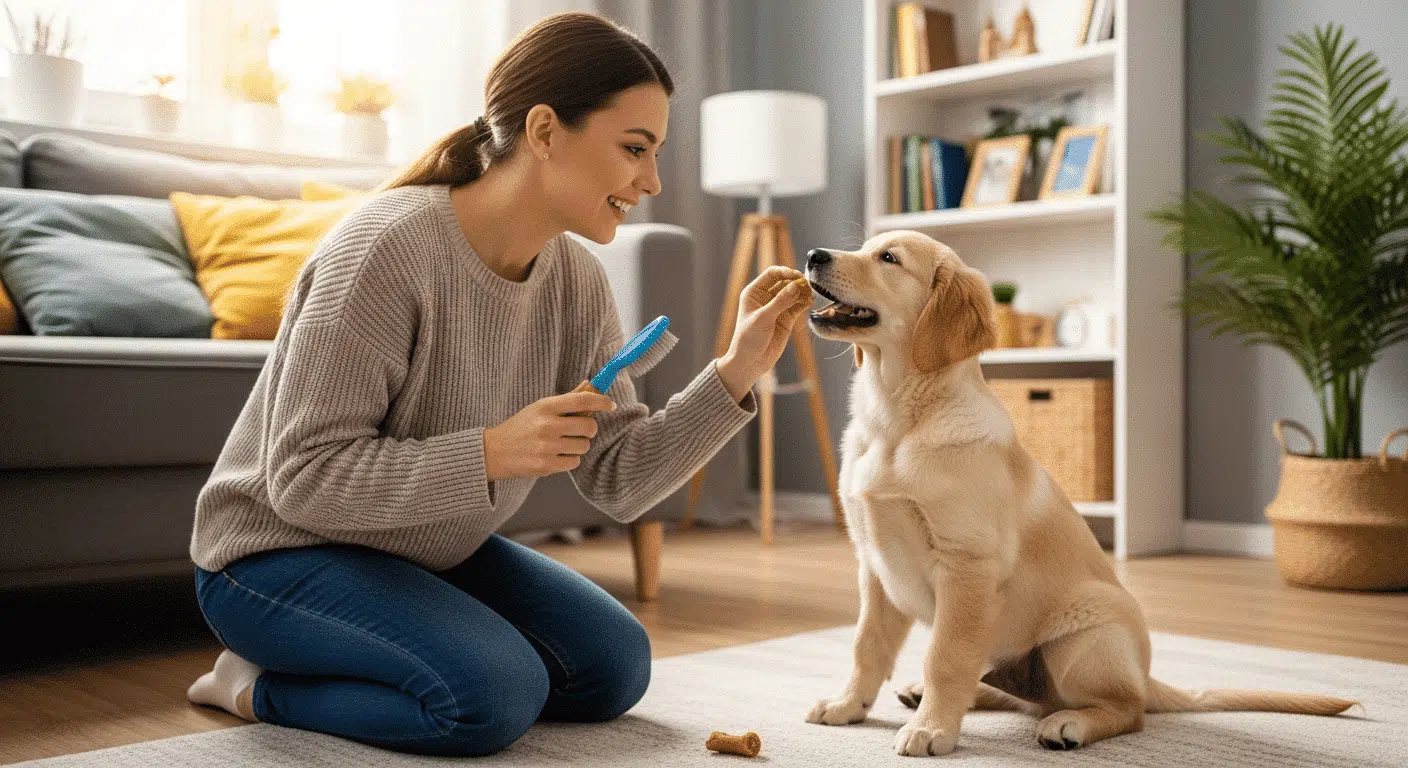
Goal: Brush = treats, with no actual brushing.
What to do:
- Get the brush out. Don’t approach your dog.
- Let your dog see the brush from across the room.
- Immediately toss a high-value treat.
- Put the brush away.
- Repeat 5-10 times per session, 2-3 sessions daily.
What you’re teaching: When the brush appears, good things happen. No brushing yet — just creating positive feelings about the brush’s presence.
Signs of progress: Dog looks at the brush expectantly instead of nervously.
Step 2: Approach with the Brush (Days 4-7)
Goal: Being near the brush feels safe.
What to do:
- Hold the brush casually.
- Approach your dog (but don’t touch them with the brush).
- Treat.
- Walk away with the brush.
- Gradually get closer over sessions.
What you’re teaching: My human approaching with the brush is a good thing.
Signs of progress: Dog stays relaxed as you approach with the brush.
Step 3: Touch (Not Brush) with the Tool (Days 8-14)
Goal: Physical contact with the brush is okay.
What to do:
- Briefly touch your dog with the back of the brush (not bristles).
- Immediately treat.
- Remove the brush.
- Gradually progress to touching with bristles (still no brushing motion).
- Focus on non-sensitive areas first (shoulder, side).
What you’re teaching: The brush touching me is fine.
Signs of progress: Dog remains relaxed when brush touches them.
Step 4: Short Brushing Sessions (Weeks 3-4)
Goal: Brief actual brushing is tolerable.
What to do:
- One gentle brush stroke on a non-sensitive area.
- Immediately treat.
- Repeat 3-5 strokes, then stop.
- Gradually increase strokes per session.
- Keep sessions short (2-3 minutes max).
Important: If your dog tenses up, you’ve moved too fast. Go back a step.
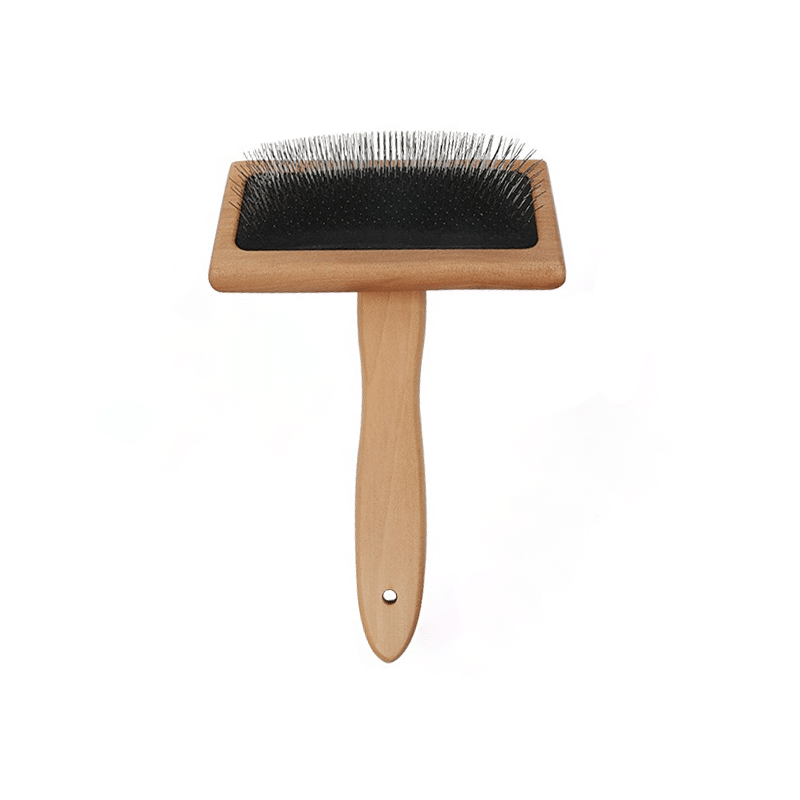
Make sure you’re using the right brush for your dog’s coat. See: Pin Brush vs Slicker Brush.
Step 5: Expand to Sensitive Areas (Weeks 5+)
Goal: All areas can be brushed.
What to do:
Using the same gradual approach, work on trickier areas:
- Legs (touch first, then single stroke, then more)
- Face (very gentle, short sessions)
- Belly (often ticklish — go slow)
- Behind ears (common mat zone — may have negative associations)
- Paws and tail
Each new area starts at Step 3 — touch with treats before brushing.
Advanced Tips for Success
Use High-Value Treats
Regular kibble won’t cut it for behaviour modification. Use:
- Small pieces of chicken, cheese, or hot dog
- Commercial training treats (soft, smelly)
- Whatever your dog goes crazy for
We have groomer-recommended treats that work well for training sessions.
Read Body Language
Watch for stress signals and stop before they escalate:
- Early stress: Lip licking, yawning, looking away, whale eye
- Increasing stress: Trying to move away, lowered body, tucked tail
- Too far: Snapping, growling, freezing
If you see early stress signals, reduce intensity or end the session positively.
End on a Good Note
Always stop while things are going well. Ending on a positive note makes the next session easier. One successful short session beats one stressful long one.
Consistency Matters
Daily short sessions progress faster than occasional long ones. Five minutes every day beats thirty minutes weekly.
Troubleshooting Common Problems
“My dog grabs the brush”
They’re trying to control the scary thing. Go back to earlier steps. Make treats more valuable than grabbing.
“My dog walks away”
Don’t chase them. Let them go. Make the next session easier. Consider treating for staying near you (before brush even comes out).
“My dog is fine until I hit a certain spot”
That area needs its own slow desensitisation. Also check: is there a mat? Is the skin irritated? See our guide on common skin problems.
“We were making progress, then backslid”
Normal. Something probably hurt or startled them. Go back two steps and rebuild. Progress isn’t always linear.
Maintaining Good Brushing Habits
Once your dog tolerates brushing:
- Continue using treats (at least occasionally)
- Keep sessions appropriate length (see: How Often to Brush)
- Use proper technique to avoid pain
- Address mats immediately, don’t brush through them (see: Mat Removal Guide)
- Make grooming a positive routine, not a surprise ambush
When to Get Professional Help
Consider working with a professional trainer if:
- Your dog has bitten or seriously snapped during grooming
- Anxiety is severe (panic, trembling, escape attempts)
- You’re not seeing progress after 4-6 weeks of consistent work
- There may be underlying pain issues (see a vet first)
For guidance on keeping dogs calm during grooming, see: How to Keep Your Dog Calm During Grooming.
The Bottom Line
Training your dog to enjoy brushing is an investment that pays off for years. The process requires patience, but the result — a dog who actually looks forward to grooming — is worth it.
Remember: you’re not training obedience, you’re changing emotional responses. That takes time. Be patient with your dog and yourself.
Need more grooming guidance? Our free Doodle Coat Care Guide covers everything from daily brushing technique to professional grooming schedules.
Gentle Brush for Puppies
For puppies and sensitive dogs, our Soft Puppy Brush ($14.95) is perfect for introducing young dogs to grooming. The gentle bristles won’t scratch delicate puppy skin, making brushing a positive experience from day one.
Related Reading
Continue exploring our grooming guides:
- How to Remove Dog Mats Without Cutting: A Groomer’s Step-by-Step Guide
- Natural Dog Shampoo vs Regular Shampoo
- What a Professional Groom Does for Your Dog
Ready to book a professional grooming session? Book your appointment or view our services.
Skip the Guesswork. Start With the Right Tools.
The Cavoodle Puppy Kit is everything Marine wishes new owners had from the start. The right brush for a doodle coat, salon-grade shampoo, and a voucher for their first professional groom. Three tiers: Essential ($69), Complete ($149), and Premium ($249).
See What’s in the Kit