
Nutrition
Best Treats for Dog Coat Health: What Groomers Recommend
Jan
As groomers, we don’t just see dogs on the outside — we see how diet affects coat quality over time. The dogs with the shiniest, healthiest coats? Their owners are almost always paying attention to nutrition.
But walk into any pet store and you’ll find hundreds of treats claiming to improve coat health. Most are marketing. Here’s what actually works.
What Actually Makes a Coat Healthy?
Before we talk treats, let’s understand what a healthy coat needs:
- Fatty acids (Omega-3 and Omega-6) — The foundation of coat health
- Protein — Fur is made of keratin, which requires amino acids to produce
- Zinc — Essential for skin cell function
- Biotin — Supports keratin production
- Vitamin E — Antioxidant that protects skin cells
Any treat claiming to improve coat health should contain meaningful amounts of these nutrients. If it’s just flavoured corn, it won’t do anything for the coat.
The Power of Omega Fatty Acids
If you only add one thing to your dog’s diet for coat health, make it omega fatty acids. Here’s why:
Omega-3 (Anti-inflammatory)
- Reduces skin inflammation and itching
- Promotes shiny, less brittle fur
- Best sources: Fish oil, salmon, sardines, flaxseed
Omega-6 (Structural)
- Maintains skin barrier function
- Supports healthy oil production
- Best sources: Chicken fat, sunflower oil, evening primrose oil
The ratio matters. Most dogs get plenty of Omega-6 from regular food but not enough Omega-3. Look for treats or supplements that boost Omega-3 specifically.
What to Look for on Treat Labels
Good Signs
- Fish as main ingredient — Salmon, sardines, mackerel, herring
- EPA/DHA listed — These are the active forms of Omega-3
- Single ingredient treats — Dried fish, freeze-dried liver
- Added fish oil or flaxseed
- Biotin or vitamin E listed
Red Flags
- Corn, wheat, or soy as first ingredients — Fillers with no coat benefits
- Artificial colours — Serve no purpose
- Sugar or corn syrup — Dogs don’t need added sugar
- Vague “animal fat” — Could be anything
- “Coat health” claims with no supporting ingredients
What We Recommend
Based on what we’ve seen work in our grooming clients, here are the types of treats worth considering:
1. Fish-Based Treats
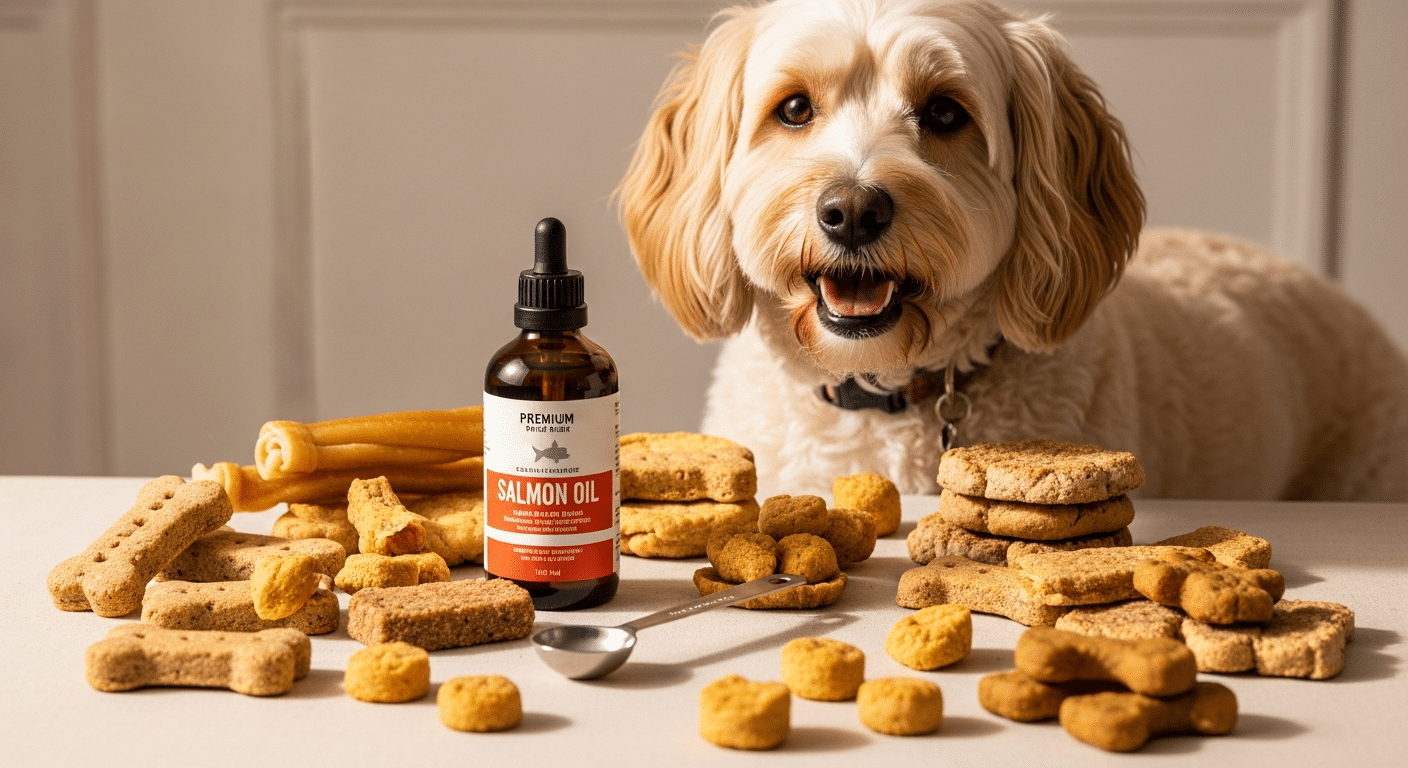
The simplest option. Single-ingredient dried fish (like salmon skins or sardines) are packed with Omega-3 and dogs love them. Yes, they’re a bit smelly. Your dog doesn’t mind.
2. Omega Chews
Soft chew supplements that deliver fish oil in treat form. Easier than adding oil to food and more consistent dosing. Look for products listing EPA and DHA amounts.
3. Skin & Coat Supplements
Combination supplements that include omega fatty acids plus zinc, biotin, and vitamin E. Good for dogs with multiple skin/coat issues.
We’ve curated a range of treats and supplements that actually work — all groomer-tested on our salon dogs. See our recommendations here.
When Will You See Results?
Nutrition changes work, but they’re not instant:
- 2-4 weeks: Reduced itching and skin irritation (if diet-related)
- 4-6 weeks: Noticeable shine and softness improvement
- 6-12 weeks: Full coat cycle for optimal results
If you’re not seeing improvement after 8-12 weeks, the issue might not be diet-related. Skin problems can also be caused by allergies, parasites, or underlying health issues — see your vet.
Beyond Treats: Complete Coat Care
Treats and supplements help, but they’re one piece of the puzzle. For the best coat results:
1. Quality Base Diet
Treats supplement a diet — they don’t replace it. Ensure your dog’s main food contains quality protein and fats. Read more about diet and coat health.
2. Regular Brushing
Brushing distributes natural oils and removes dead fur. The shiniest coats we see belong to dogs brushed regularly. See our brushing frequency guide.
3. Proper Bathing
Too-frequent bathing strips natural oils. For most dogs, every 4-6 weeks is plenty (unless they get dirty). Use gentle, moisturising shampoos.
4. Professional Grooming
Regular grooming removes undercoat, prevents mats, and keeps skin healthy. Professional groomers also spot skin issues early.
Breed-Specific Considerations
Some breeds benefit more from coat supplements than others:
Doodles and Poodle Mixes
Their curly coats are prone to dryness and brittleness. Omega supplements help maintain coat elasticity and prevent breakage. Combine with proper brushing for best results — see our guides for Cavoodles, Labradoodles, and Groodles.
Double-Coated Breeds
Golden Retrievers, Huskies, and similar breeds can benefit from omega supplements, especially during shedding season when they’re producing new coat rapidly.
Dogs with Skin Issues
If your dog has allergies, hot spots, or chronic itching, supplements can help — but work with your vet to address the underlying cause too.
How Much to Give?
Follow the dosing instructions on whatever supplement or treat you choose. More isn’t better — excess fatty acids can cause digestive upset.
General guideline for fish oil supplements:
- Small dogs (under 10kg): 500-1000mg EPA+DHA daily
- Medium dogs (10-25kg): 1000-2000mg EPA+DHA daily
- Large dogs (25kg+): 2000-3000mg EPA+DHA daily
Start at the lower end and increase gradually to avoid stomach upset.
The Bottom Line
Quality treats and supplements can genuinely improve your dog’s coat, but choose wisely. Look for omega-3 rich options, avoid filler-heavy treats, and be patient — nutrition works over weeks, not days.
Combined with regular brushing and proper grooming, you’ll see real results. The shiniest dogs in our salon aren’t lucky — their owners are intentional about nutrition.
Looking for coat-boosting treats that actually work? Browse our groomer-curated range — everything we stock is tested on our salon dogs first.
Related Reading
Continue exploring our grooming guides:
- How to Keep Your Dog Calm During Grooming: Tips from Professional Groomers
- Maltipoo Grooming: Expert Coat Care Guide
- Newfypoo Grooming: Giant Coat Care Tips
Ready to book a professional grooming session? Book your appointment or view our services.