

Grooming Tips
How Often Should I Brush My Dog? A Groomer’s Honest Answer

Jan
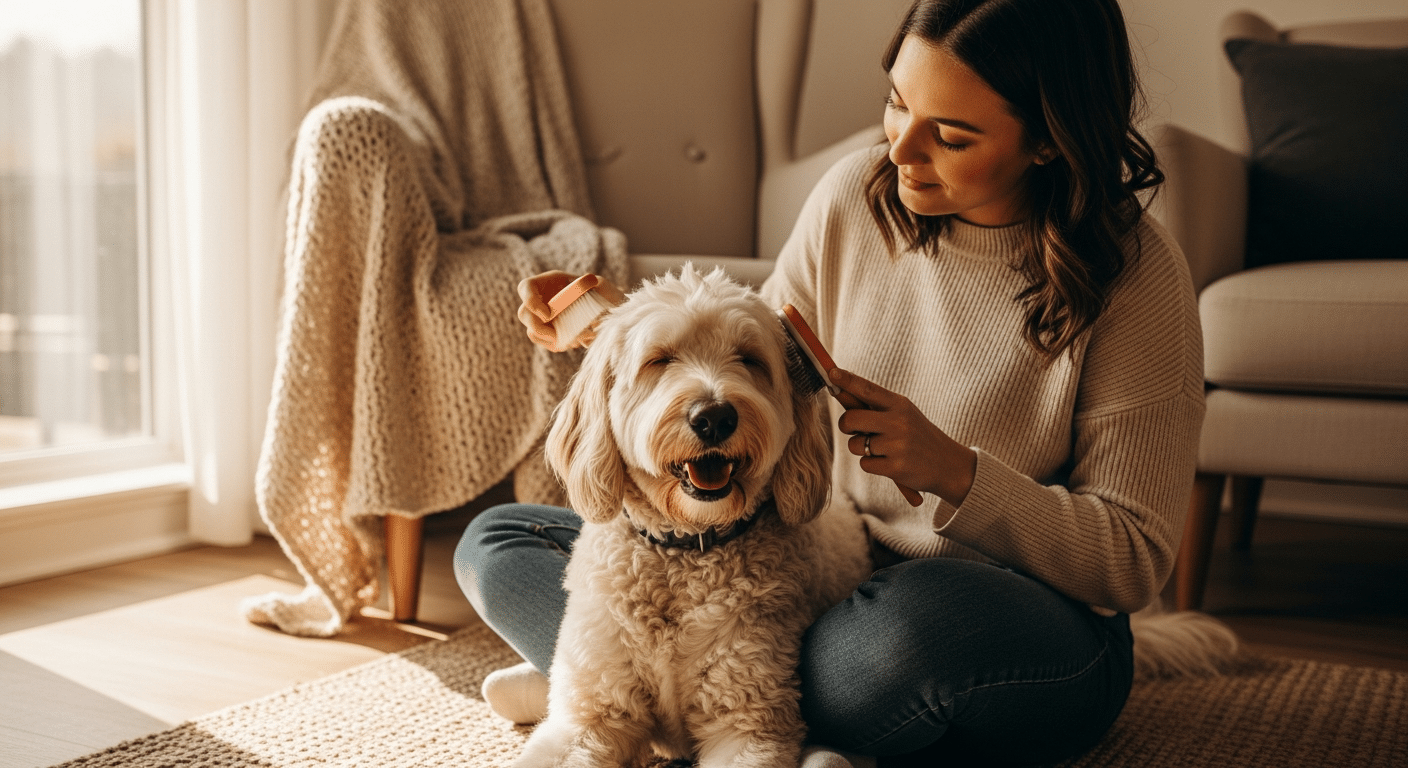
If you’ve ever Googled “how often should I brush my dog,” you’ve probably seen answers ranging from “daily” to “once a month.” The truth? It completely depends on your dog’s coat type. And getting it wrong can lead to painful mats, skin issues, or unnecessary stress for both of you.
After grooming thousands of dogs at our salon, we’ve seen what happens when brushing frequency doesn’t match coat needs. Let us share what actually works.
Quick Guide by Coat Type
| Coat Type | Brushing Frequency | Examples |
|---|---|---|
| Curly/Wavy | Daily or every other day | Poodles, Doodles, Bichons |
| Long | Every 2-3 days | Maltese, Shih Tzu, Yorkies |
| Double Coat | 2-3 times per week (daily during shedding) | Golden Retrievers, Huskies, German Shepherds |
| Short/Smooth | Once a week | Beagles, Boxers, Labradors |
| Wire/Rough | 2-3 times per week | Terriers, Schnauzers |
Curly and Wavy Coats: The High-Maintenance Group
If you have a Poodle, Cavoodle, Labradoodle, Groodle, or any doodle mix, you’re in the daily brushing camp. Sorry.
Why so often? Curly coats don’t shed the same way other coats do. Instead of falling off, loose hair gets trapped in the curls. Without daily brushing, this trapped hair tangles with the growing coat and creates mats — sometimes within 24-48 hours.
The Reality Check
We see doodle owners every week who were told “low maintenance” by breeders. That’s only true if you keep the coat clipped short. A fluffy doodle coat requires:
- 5-10 minutes of brushing daily — or every other day at minimum
- A quality slicker brush — see our slicker brush guide
- Proper technique — brushing to the skin, not just the surface
Want the full breakdown for your specific doodle? Check our breed guides: Bernedoodle, Aussiedoodle, Spoodle, Schnoodle, Moodle, or Cockapoo.
Long Coats: Every 2-3 Days
Long, silky coats like Maltese, Shih Tzus, and Yorkshire Terriers need brushing every 2-3 days. While they don’t mat quite as fast as curly coats, tangles form quickly — especially behind ears, under legs, and around the collar area.
Pro Tip
A steel comb is your secret weapon for long coats. After brushing, run a comb through to catch any tangles you missed. If the comb glides through smoothly, you’re done. If it catches, there’s a tangle to address.
Double Coats: Seasonal Matters
Golden Retrievers, Huskies, German Shepherds, and Corgis have double coats — a soft, dense undercoat beneath a longer topcoat. Their brushing needs change with the seasons:
- Normal times: 2-3 times per week
- Shedding season (spring/fall): Daily, using a deshedding tool
During coat blow (when they shed their undercoat), you might fill a garbage bag with fur over a few weeks. This is normal. Regular brushing during this time prevents matting in the undercoat and keeps your furniture somewhat hair-free.
Short/Smooth Coats: The Easy Ones
Beagles, Boxers, Pugs, and smooth-coat Labradors are the low-maintenance winners. Once a week brushing is usually plenty.
But don’t skip it entirely. Weekly brushing:
- Removes loose hair before it ends up on your couch
- Distributes natural oils for a healthy shine
- Gives you a chance to check for skin issues, bumps, or parasites
A rubber curry brush or bristle brush works well for short coats.
Signs You’re Not Brushing Enough
Not sure if you’re keeping up? Watch for these warning signs:
- Mats forming — Even small tangles mean you need to increase frequency
- Dull, greasy coat — Natural oils aren’t being distributed
- Excessive shedding on furniture — Loose hair isn’t being captured by brushing
- Skin flakes or dandruff — Dead skin building up
- Dog resisting grooming — Brushing sessions have become painful due to mats
Making Brushing Easier
The right tools make all the difference. Not sure what you need? Our tool comparison guides break it down by coat type.
For doodle owners specifically, our free Doodle Coat Care Guide includes a 5-minute daily routine that prevents 90% of matting issues. It’s based on the techniques we use in our salon.
The 5-Minute Rule
Short, frequent sessions beat long, occasional ones. A daily 5-minute brush is more effective (and less stressful) than a weekly 30-minute battle with mats.
When Brushing Isn’t Enough
Even with perfect home brushing, most dogs need professional grooming every 4-8 weeks. Professional groomers:
- Can access areas you might miss (between paw pads, inside ears)
- Have tools for stubborn mats
- Provide bathing, trimming, nail care, and ear cleaning
- Can spot skin issues early
Think of home brushing as maintenance between professional appointments — essential, but not a replacement for proper grooming.
The Bottom Line
Match your brushing frequency to your dog’s coat type, and you’ll avoid most grooming problems. When in doubt, brush more often — there’s no such thing as over-brushing (as long as you’re using proper technique).
Not sure what coat type your dog has or which brush to use? Take our quick quiz for personalised recommendations.
Related Reading
Continue exploring our grooming guides:
- How Often Should I Groom My Dog? The Complete Australian Guide
- Pin Brush vs Slicker Brush: A Groomer’s Guide to Choosing the Right Brush
- Pin Brush vs Slicker Brush: Doodle Grooming
Ready to book a professional grooming session? Book your appointment or view our services.
Skip the Guesswork. Start With the Right Tools.
The Cavoodle Puppy Kit is everything Marine wishes new owners had from the start. The right brush for a doodle coat, salon-grade shampoo, and a voucher for their first professional groom. Three tiers: Essential ($69), Complete ($149), and Premium ($249).
See What’s in the Kit